Turkey Drives Efforts to Restart Russia-Ukraine Peace Talks Amid Global Geopolitical Tensions
President Erdogan emphasizes Turkey’s role in reviving dialogue between Russia and Ukraine to end ongoing conflict.
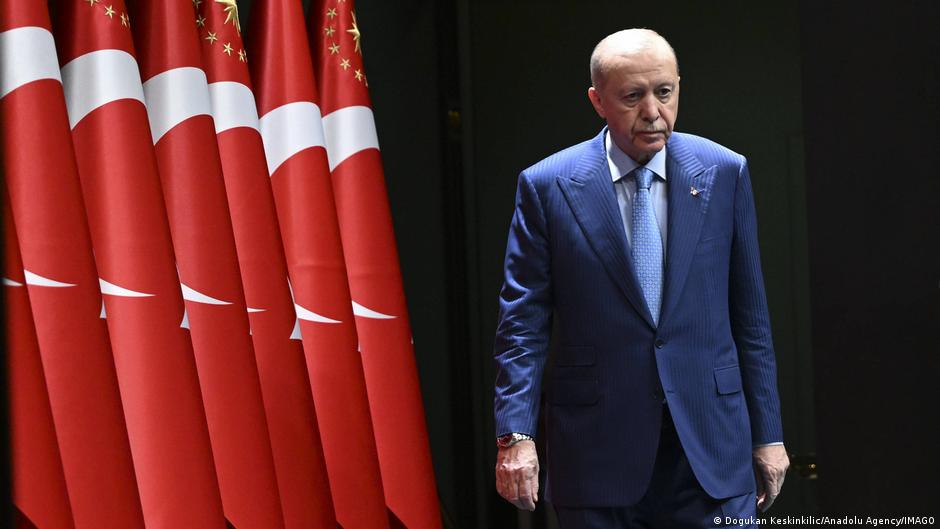
Turkey is actively working to resume peace negotiations between Russia and Ukraine, a process that has remained largely stalled since the escalation of various global conflicts earlier this year. President Recep Tayyip Erdogan underscored Ankara’s commitment to facilitating dialogue aimed at ending the ongoing war on the European continent.
Turkey’s Diplomatic Initiative Amid Complex Global Dynamics
On April 22, during a meeting with NATO Secretary-General Jens Stoltenberg in Ankara, President Erdogan highlighted Turkey’s interest in fostering peace between Russia and Ukraine. According to official statements, Erdogan emphasized that Turkey is "working on renewing negotiations and initiating dialogue at the leadership level" as part of its broader peace diplomacy efforts.
"Turkey is interested in ending the war between Ukraine and Russia through dialogue at the highest political level," Erdogan remarked.
Subsequently, Erdogan held a telephone conversation with German President Frank-Walter Steinmeier, during which he expressed concerns about the broader geopolitical reverberations of conflicts beyond Ukraine. Erdogan pointed out that recent military confrontations, including the war involving the United States and Israel against Iran, are weakening Europe’s stability. He linked these developments to the ongoing war in Ukraine, emphasizing Turkey’s dual efforts to mediate both conflicts to achieve lasting peace.
"Turkey, as in the case of Iran, is making efforts to end the conflict through negotiations and to establish a durable peace following the war between Ukraine and Russia," Erdogan stated during the call.
Ukraine’s Request and Russia’s Cautious Response
Earlier in April, Ukrainian Foreign Minister Andriy Sybiha, speaking at the Antalya Diplomacy Forum, revealed that Kyiv had formally requested Turkey to facilitate a meeting between President Vladimir Zelensky and Russian President Vladimir Putin. Sybiha suggested that such a summit could potentially include Turkish President Erdogan and former U.S. President Donald Trump to accelerate the peace process.
"We want to end this war. We have actionable proposals and hope for Turkey's role in accelerating the peace process," Sybiha stated, reflecting Ukraine’s openness to international mediation backed by Ankara’s strategic positioning.
However, Russia’s official stance remains guarded. Kremlin spokesperson Dmitry Peskov indicated that a meeting between Putin and Zelensky would only be feasible if it aimed to finalize existing agreements, signaling Moscow’s cautious approach to renewed high-level talks.
Implications for Global Economic and Political Stability
The resumption of peace talks brokered by Turkey could have far-reaching consequences for the global economy and geopolitical landscape. The prolonged conflict in Ukraine has already disrupted critical supply chains, energy markets, and regional security architectures. Turkey’s active engagement as a mediator underscores Ankara’s growing influence in navigating complex conflicts that ripple across Europe, the Middle East, and beyond.
If successful, renewed negotiations could stabilize commodity markets, reduce military expenditures, and restore investor confidence in Eastern Europe and adjacent regions. Conversely, failure to advance dialogue risks deepening geopolitical fragmentation, exacerbating economic sanctions' fallout, and prolonging uncertainty for global markets already grappling with inflation and supply shortages.
Turkey’s dual-track mediation approach, simultaneously addressing conflicts involving Iran and Ukraine, highlights the interconnected nature of 21st-century geopolitical crises. For senior policymakers and economic strategists, close monitoring of Ankara’s diplomatic moves will be essential to anticipate potential shifts in regional stability and their corresponding economic impacts.