Trump Seeks North Korea Summit at APEC to Reignite Nuclear Talks
US President aims to meet Kim Jong Un this November during the APEC summit to resume negotiations on Pyongyang’s nuclear program.
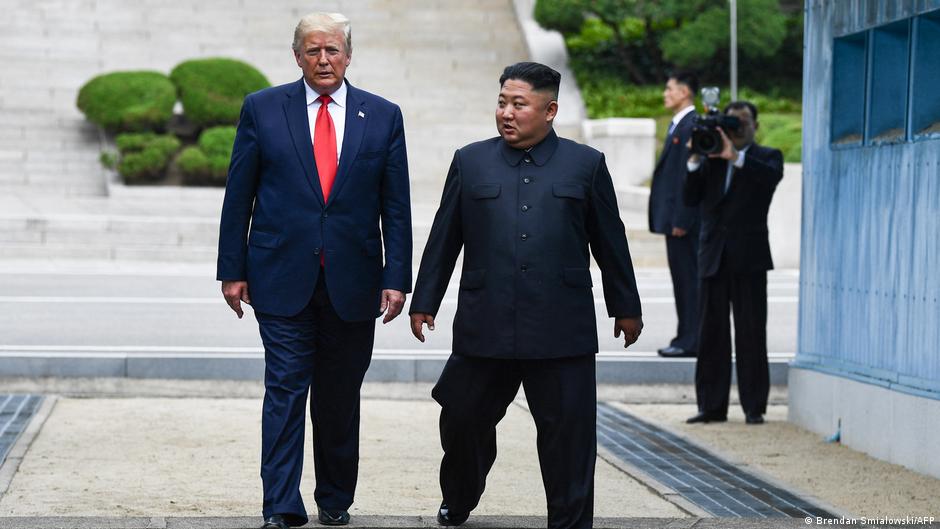
US President Donald Trump is planning to meet North Korean leader Kim Jong Un this November during the Asia-Pacific Economic Cooperation (APEC) summit in Shenzhen, China, in an effort to restart stalled negotiations on North Korea's nuclear weapons program. While no official preparations for the meeting have begun, American officials have indicated the intention to pursue dialogue.
Potential Impact on Geopolitical and Economic Stability
This planned summit signals a potential shift in US foreign policy toward North Korea that could have broader implications for regional security and global markets. During previous dialogues, Trump and Kim met three times but failed to reach substantive agreements on denuclearization. Since then, North Korea’s nuclear arsenal has expanded significantly, raising concerns in Washington and among international observers.
"Based on hundreds of displayed launch sites and the increasing annual production of plutonium and highly enriched uranium, North Korea’s arsenal likely now numbers in the hundreds," noted Jeffrey Lewis, a nuclear program expert at Stanford University’s Center for International Security and Cooperation.
In a strategic move, Trump has recently announced a scale-back of US-South Korea military exercises and extended a proposal for a peace agreement to Pyongyang. These gestures indicate a willingness to ease tensions that have historically destabilized Northeast Asia.
From an economic perspective, renewed dialogue could reduce geopolitical risk premiums in the Asia-Pacific region, potentially stabilizing supply chains disrupted by security concerns. It also bears on US-China relations, given the summit’s timing alongside Trump’s previously planned meeting with Chinese President Xi Jinping in South Korea.
In 2025, Trump expressed a similar desire to engage Kim during his Asia tour, but logistical challenges prevented a timely summit. North Korea indicated readiness then, highlighting the ongoing complexities of arranging high-level diplomatic meetings.
Should the upcoming APEC summit facilitate meaningful progress, it could signal a new phase of de-escalation on the Korean Peninsula, with long-term consequences for economic policy planning and international cooperation frameworks.