Trump Says U.S. Will Remove Tariff on Irish Whiskey Imports
The announced repeal would carve Irish whiskey out of broader U.S. duties on European Union wine and spirits exports.
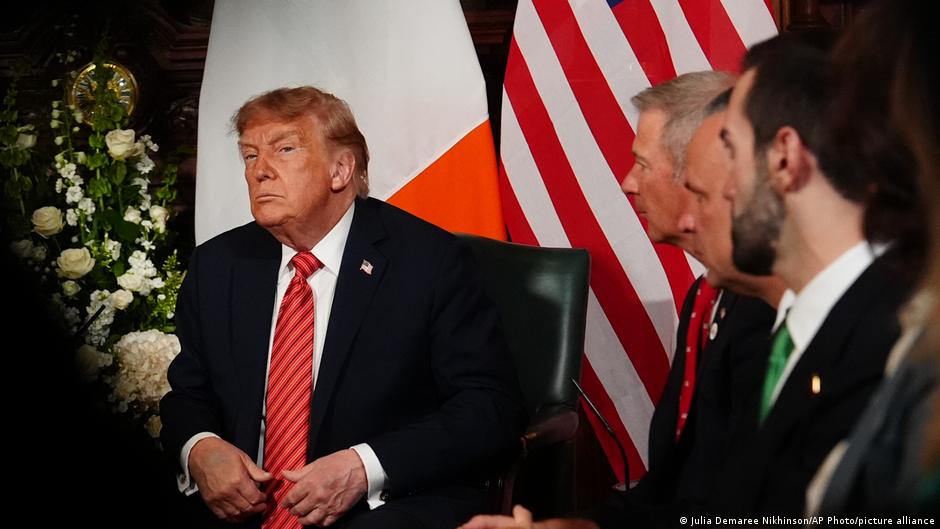
U.S. President Donald Trump said he will remove a 10 percent tariff on Irish whiskey imports, a narrow but symbolically important trade shift announced at the end of his visit to Ireland.
Trump made the statement on Sunday, September 13, while addressing a cheering crowd of Irish golf enthusiasts during a tournament at a golf club owned by his family. He said he had yielded to numerous requests to scrap the duty on Irish whiskey entering the U.S. market.
The measure currently applies as part of wider tariffs covering all European Union wine and spirits exports to the United States. Its removal, if fully implemented, would create a targeted exemption for one of Ireland’s most internationally recognizable consumer exports and could signal a more flexible U.S. approach to selected EU trade categories.
A Narrow Tariff Move With Wider Trade Signals
According to Trump, Irish Prime Minister Micheál Martin and leading Irish golfer Shane Lowry were among those who appealed to him to cancel the tariff. The setting of the announcement, a family-owned golf club in Ireland, underscored the political and personal dimensions of the decision, even as the policy implications fall squarely within transatlantic trade.
For senior economic decision-makers, the announcement matters less because of the size of the whiskey category than because of what it may suggest about future tariff management. A product-specific reversal inside a broader EU-facing tariff framework could point to a more discretionary trade posture, in which national industries or politically salient goods are separated from larger negotiating blocs.
That approach can create short-term relief for affected exporters, importers and distributors, while also introducing uncertainty for companies still covered by the wider duties. If Washington is willing to exempt Irish whiskey, other EU sectors may press for similar treatment, potentially complicating efforts to maintain a unified negotiating position across the bloc.
“Nothing characterizes trade relations between the United States and Ireland better than Irish whiskey,” IWA director Eoin O’Caitin said in a statement.
The Irish Whiskey Association welcomed the U.S. president’s statement and expressed hope that the decision would be fully implemented, Reuters reported. That note of caution is significant: a presidential declaration does not by itself complete the administrative and legal process needed to change tariff collection at the border.
Implications for Ireland, the EU and U.S. Importers
For Ireland, the repeal would protect a premium export sector at a time when consumer goods producers remain exposed to policy shifts, currency movements and softer demand in some overseas markets. Irish whiskey has become a visible marker of Ireland’s brand in global food and beverage trade, and access to the U.S. market remains commercially important for producers seeking scale.
For U.S. importers, retailers and hospitality businesses, eliminating a 10 percent duty could ease cost pressure on Irish whiskey and create room for more stable pricing. Whether those savings reach consumers would depend on contracts, inventories, distribution margins and competitive conditions. Still, the removal of a tariff generally improves flexibility across the supply chain.
For the European Union, however, the decision raises a broader policy question. The existing duty is not limited to Irish whiskey; it forms part of a wider U.S. tariff structure on EU wines and spirits. A carve-out for one product may be welcomed in Dublin but viewed more cautiously in other European capitals whose exporters remain subject to the same U.S. trade burden.
Longer term, the announcement highlights the persistent fragility of transatlantic trade relations. Even small tariff changes can influence investment decisions, inventory planning and lobbying strategies when companies believe future access to major markets may depend on political intervention as much as formal trade architecture.
The immediate economic effect of removing the Irish whiskey duty would likely be concentrated in a specific consumer segment. The larger consequence may be strategic: Washington is showing that it can modify sectoral trade pressure selectively, rewarding particular industries or bilateral relationships without dismantling the broader tariff regime.
Until the repeal is formally implemented, Irish whiskey producers and U.S. buyers will be watching for procedural follow-through. The Irish industry has welcomed the announcement, but the current levy remains part of the broader duties on EU wine and spirits exports to the United States.