Russian Strikes Across Ukraine Kill 20, Disrupt Urban Infrastructure
Attacks on transport, commercial and industrial sites underscore the mounting human and economic costs facing Ukrainian cities.
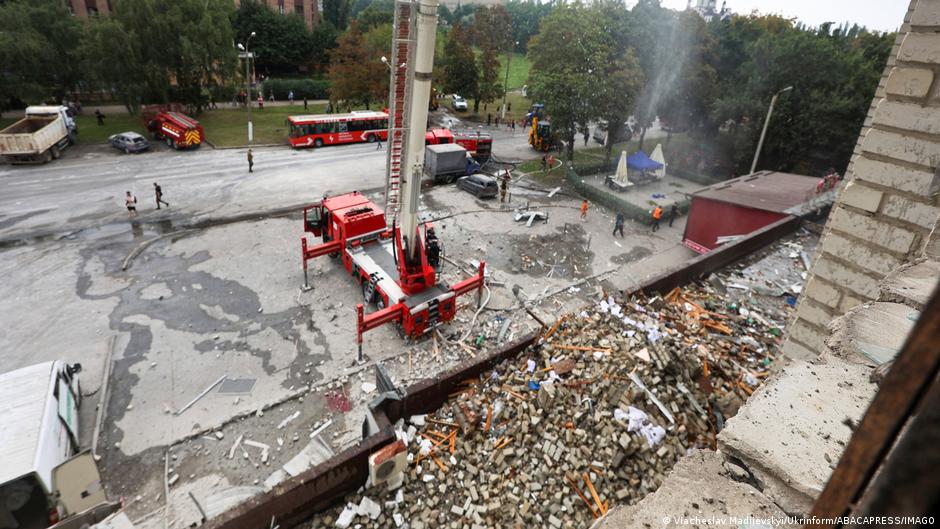
Russian strikes across several Ukrainian regions killed at least 20 people on October 29, including two 15-year-old girls in Chernihiv and 14 people at a railway station in Dnipro. Dozens more were injured as attacks damaged transport, residential, commercial and industrial infrastructure, adding to the economic burden on Ukrainian cities and emergency services.
In central Chernihiv, two 15-year-old girls were killed when a Russian Banderol, or S8000, munition struck an ordinary street, according to regional military administration head Vyacheslav Chaus. The weapon was described as a compact hybrid combining characteristics of a cruise missile and a jet-powered attack drone.
At least 25 people were injured in Chernihiv, including four children: a 10-month-old girl, a 10-year-old girl, and boys aged 16 and 17. Chaus said eight people remained hospitalized, while others received treatment at the scene or were being treated as outpatients.
“Two children — a brother and sister — are in serious condition. A total of eight people are now in hospitals,” Chaus said.
Ukraine’s State Emergency Service said houses, shops and cars were damaged, describing the location as a civilian street with “no military purpose.” Chernihiv declared October 30 a day of mourning.
Transport and productive assets come under pressure
The heaviest reported loss of life occurred in Dnipro, where a drone strike on the railway station killed at least 14 people and wounded another 14. Damage to a major railway facility has implications beyond the immediate casualties: Ukraine’s rail network is a critical channel for civilian mobility, domestic commerce and the movement of goods through an economy operating under wartime constraints.
In Kremenchuk, three residents were killed and 25 people were injured in another Russian attack, according to Ukraine’s emergency service. In Zaporizhzhia, two men, aged 41 and 66, were injured and received medical assistance. Four passenger cars and an open area caught fire, while a warehouse, four additional cars and four buses were damaged.
The destruction of vehicles, shops, warehouses and transport facilities creates a cumulative economic shock even when individual incidents appear localized. Replacement costs, business interruptions and higher insurance and logistics expenses can weaken municipal finances and private investment, while repeated attacks require labor and public funds to be redirected toward emergency response and reconstruction.
Later on October 29, a Russian missile struck Kharkiv’s Slobidskyi district, the emergency service said. Fires broke out in a production building and the surrounding area, covering 400 square meters. At another location, remnants of various materials burned across 80 square meters. Two trucks were also damaged. Authorities did not specify why the explosion caused the fire or what had been stored in the production building.
Kharkiv Mayor Ihor Terekhov said the Slobidskyi district was struck with a Banderol munition. Damage to production premises and freight vehicles points to the continuing vulnerability of industrial capacity in eastern Ukraine, where repeated disruption can affect employment, supply networks and the ability of companies to maintain output.
Kyiv strike damages warehouses and residential property
Kyiv was targeted with a Russian ballistic missile on the evening of October 29, according to Mayor Vitali Klitschko. Warehouse buildings were hit in the Darnytskyi district, starting a fire. In the Dniprovskyi district, missile debris burned in the courtyard of a residential complex.
Klitschko said blast waves shattered windows in one residential building. At another address in the same district, windows and cars parked in a courtyard were damaged. A shop building near the residential complex where missile fragments fell was partially destroyed. The Kyiv City Military Administration said one person was killed in the attack.
The strikes illustrate how damage to housing and commercial property can amplify wartime inflationary and fiscal pressures. Repairs increase demand for scarce construction materials and skilled labor, while warehouse losses can disrupt inventories and local supply. For policymakers and senior business leaders, the pattern reinforces the difficulty of planning capital expenditure and maintaining predictable distribution networks under persistent missile and drone threats.
Warnings of further ballistic attacks
Earlier on October 29, Ukrainian President Volodymyr Zelenskyy said in his daily address that intelligence indicated Russia was preparing to attack Ukraine again with ballistic missiles. Continued warnings of this kind raise the prospect of further pressure on air-defense resources and additional disruption to transport, manufacturing and urban services.
Russia’s Defense Ministry said later that its forces had used drones to strike Ukrainian port infrastructure and vessels it alleged were operating in the interests of Ukraine’s armed forces. It also reported a strike on a temporary Ukrainian troop deployment point in the Kharkiv direction and said Russian forces had identified and destroyed enemy FPV-drone control points in the Dnipropetrovsk direction.
Beyond the immediate humanitarian toll, attacks spanning rail, port, warehouse and production assets deepen the longer-term challenge facing Ukraine’s economy. Repeated damage raises reconstruction needs, complicates trade and logistics, and increases the resources required to protect cities and critical infrastructure.