Russian Ship Registry Expands as Sanctions Pressure Reshapes Oil Flows
A CREA analysis says pressure on shadow fleet registries is pushing sanctioned vessels toward Russia’s flag, raising policy and maritime risk concerns.
Russia’s ship registry expanded by 36% between January 2025 and June 2026 as diplomatic pressure narrowed the options available to vessels in the country’s so-called shadow fleet, according to an analysis by the Centre for Research on Energy and Clean Air published Friday, September 25.
The figures point to a structural shift in the enforcement environment around sanctioned energy trade. Over the period reviewed, 107 vessels were added to the list of ships sailing under the Russian flag. CREA said the increase reflects changing behavior by open registries, which are becoming less willing to allow sanctioned cargoes to be carried on shadow vessels under their flags.
The peak came in December 2025, when 25 new entries were added in a single month. For policymakers and energy-market executives, the trend is significant because it suggests that sanctions enforcement is no longer only a question of individual cargoes, insurers or shipowners. It is increasingly becoming a contest over registry infrastructure, maritime jurisdiction and the ability of states to impose costs on evasion networks.
Open registries tighten oversight
CREA said Barbados and Palau had fully cleared their registries of sanctioned vessels. Panama, one of the world’s most important ship registries, cut the number of such vessels by nearly two-thirds compared with its May 2025 peak. The world’s largest ship registries have also launched a shared database, RISC, intended to counter reflagging and other forms of sanctions circumvention.
That shift is squeezing ship operators that previously relied on frequent flag changes to preserve access to international routes. According to CREA, the shadow fleet is being pushed toward a stark choice: continue sailing under false flags and risk detention, or transfer into Russia’s own ship registry.
By June 2026, 46 vessels that had previously sailed under the flags of the Comoros or Gambia had been registered in Russia. Other ships moved to the flags of Sierra Leone and Equatorial Guinea, while some continued operating without a recognized flag.
The sanction profile of the vessels entering Russia’s registry underscores the policy stakes. Of the 107 ships added, 93 had previously been sanctioned, while 90 were subject to restrictions imposed by more than one jurisdiction. CREA also found that vessels carrying Russian oil before the first sanctions were introduced changed flags three times more often than before. Sixteen of them had also carried Iranian or Venezuelan oil.
Energy trade continues despite pressure
After switching to the Russian flag, the vessels continued transporting Russian fuel around the world. CREA said oil worth 5.2 billion euros was delivered mainly to China. Ship-to-ship transfer schemes in Egypt and the Red Sea were also used.
For global markets, the pattern highlights the limits as well as the effects of sanctions. Restrictions appear to be reshaping the logistics chain and increasing compliance pressure on open registries. Yet sanctioned flows have not stopped. Instead, they are being rerouted through a more concentrated and potentially less transparent network, with greater reliance on Russian registration and complex transfer arrangements.
That creates a broader economic concern for governments and companies exposed to maritime trade. If more vessels move outside established compliance systems, risk may shift from the sanctioned state and its trading partners to coastal states, ports, insurers and emergency responders that may be forced to deal with accidents involving poorly supported or opaque fleets.
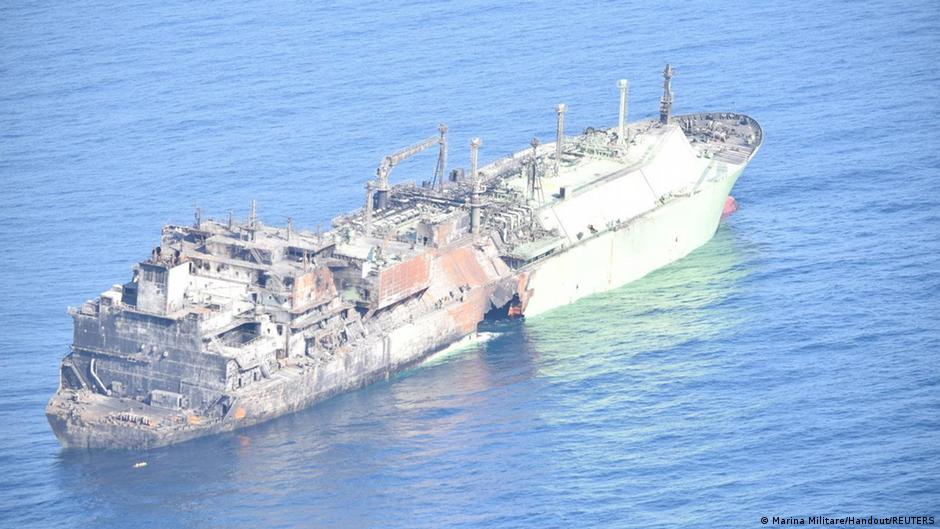
The March fire aboard the Russian-flagged liquefied natural gas carrier Arctic Metagaz in the Mediterranean illustrated that problem. Libya, Malta and Italy were left to manage the crisis on their own.
“The Arctic Metagaz incident showed the Russian flag for what it really is: a shield for dangerous vessels, providing no support in the event of a disaster and leaving coastal states to manage the risks and clean up the consequences,” analyst Luke Wickenden said.
Arctic Metagaz is one of roughly 10 gas carriers used to transport sanctioned LNG from Russia’s Arctic LNG 2 terminal to the port of Beihai on China’s southern coast. In February 2026, the vessel left the port of Murmansk after loading and was probably heading toward the Egyptian port of Suez, gCaptain reported. Since 2024, the vessel has been under sanctions imposed by the United States and the United Kingdom.
The registry expansion therefore has implications beyond Russia’s oil and gas export revenues. It indicates that enforcement pressure can alter the institutional geography of shipping, pushing sanctioned assets toward registries willing or compelled to absorb them. That may reduce the attractiveness of permissive open registries, but it can also concentrate operational, environmental and safety risks in a fleet that remains active in global commodity markets.
For senior decision-makers, the emerging picture is one of partial containment rather than full disruption. Diplomatic pressure on registries is changing incentives and narrowing loopholes. At the same time, the continued movement of billions of euros in Russian oil, primarily to China, suggests that sanctions regimes will need sustained coordination across maritime authorities, flag states, port states and financial-service providers if they are to affect long-term trade flows rather than simply redirect them.