Russian Drone Strikes Kill Three in Ukraine as Port Risks Persist
The overnight attacks on Zaporizhzhia and Odesa regions highlight continuing pressure on civilian areas and infrastructure tied to Ukraine’s trade routes.
Russian attack drones struck Ukraine’s Zaporizhzhia and Odesa regions overnight on Sunday, September 27, killing at least three civilians and injuring four others, according to preliminary information from regional authorities. The attacks underscored the continuing human cost of the war while also pointing to the wider economic risks created by repeated strikes on settlements, transport routes and port-linked infrastructure.
In Zaporizhzhia region, acting head of the regional military administration Mykhailo Semykin said Russian forces hit the settlement of Kamyshevakha and the village of Novotavriiske. According to the preliminary toll cited by local officials, three civilians were killed and four more were wounded.
Russian forces struck Kamyshevakha and Novotavriiske, where preliminary reports said three civilians were killed and four were injured.
In Novotavriiske, Russian troops attacked a car that was traveling through the village, Semykin said. After the strike, the vehicle caught fire. A man and a woman died at the scene. In Kamyshevakha, one house was destroyed and several neighboring homes were damaged, authorities added.
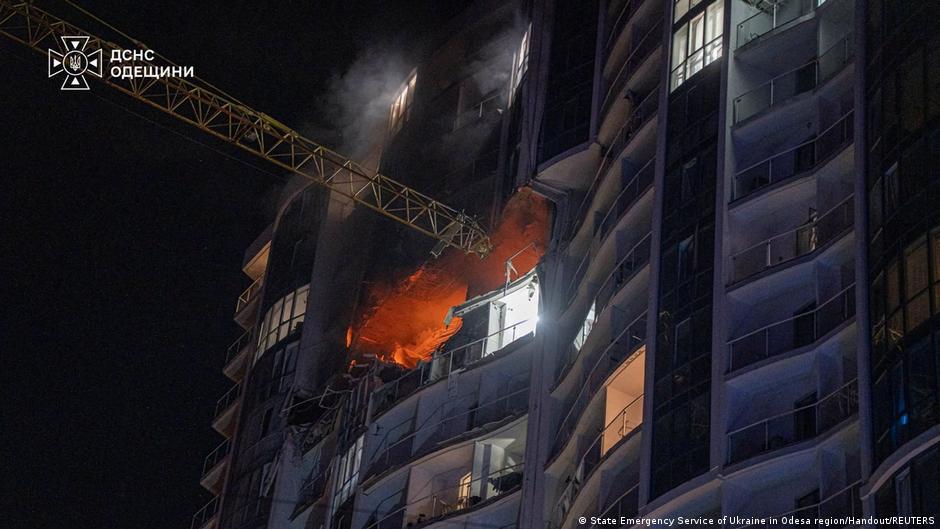
Russia also targeted port and civilian infrastructure in the city of Kiliia in Odesa region, the Izmail district administration reported. Preliminary information indicated that no one was injured in that attack. A fire that broke out at the strike site was extinguished by emergency services.
Economic pressure beyond the battlefield
For senior economic and policy decision-makers, the strikes carry significance beyond the immediate casualty figures. Zaporizhzhia and Odesa occupy different but important places in Ukraine’s wartime economy. Zaporizhzhia remains a region where civilian communities sit close to persistent military pressure, complicating reconstruction planning, household stability and local labor retention. Odesa region, meanwhile, is central to Ukraine’s access to maritime and river-linked trade routes, including infrastructure that supports the movement of goods through the Danube corridor.
The reported strike on Kiliia, a city in Odesa region, is especially relevant because attacks on port and civilian infrastructure can have consequences for logistics, insurance costs and trade confidence even when no casualties are reported. Damage to such infrastructure, or the recurring threat of damage, can force businesses and public authorities to spend more on repairs, air defense, rerouting and contingency planning. Those costs accumulate over time, adding friction to exports and imports and reducing the predictability that investors and trading partners require.
Ukraine’s wartime economy has had to adapt to repeated attacks on energy, transport and civilian infrastructure. Each new strike adds to the burden on emergency services, local budgets and national fiscal planning. Destroyed homes and damaged neighborhoods require immediate humanitarian support, while wounded civilians place additional pressure on health services already operating under wartime constraints. Even when infrastructure damage is limited, the need to maintain readiness and repair capacity diverts resources from longer-term development.
The attack on a civilian car in Novotavriiske also illustrates the microeconomic effects of insecurity in frontline and near-frontline communities. Movement within villages and between settlements becomes riskier, limiting access to work, markets, medical care and administrative services. Over time, that insecurity can contribute to population displacement, weaken local demand and reduce the labor base needed for recovery.
Policy implications for Ukraine and partners
The latest attacks reinforce the policy challenge facing Ukraine and its international partners: protecting civilians and maintaining economic circulation at the same time. Military support, air defense capacity, emergency response funding and infrastructure resilience are increasingly intertwined with macroeconomic stability. For Ukraine, the destruction of homes in Kamyshevakha and the targeting of infrastructure in Kiliia are not isolated local incidents; they are part of a broader operating environment in which public finance, trade policy and security planning overlap.
For external partners, the strikes point to the importance of sustained support for civilian protection and critical infrastructure. The absence of casualties in Kiliia does not eliminate the economic risk associated with attacks on port and civilian facilities. Businesses price in repeated disruption, while governments must consider how to keep trade corridors functioning under threat. In practical terms, resilience is becoming a core economic policy issue, not only a security concern.
The preliminary casualty toll from Zaporizhzhia region may still be subject to clarification by local authorities, but the immediate facts reported by officials are stark: three civilians killed, four wounded, a vehicle burned after being hit, one home destroyed and several neighboring homes damaged. In Odesa region, port and civilian infrastructure in Kiliia was struck, no injuries were reported, and emergency services put out the resulting fire.
Together, the attacks show how the war continues to impose direct civilian losses while also generating longer-term economic uncertainty. For Ukraine, the damage is measured not only in destroyed buildings and disrupted infrastructure, but in the compounding cost of defending trade routes, sustaining local communities and preserving the conditions for recovery.