Putin Tells Armenia EU Bid Would Mean Exiting Eurasian Economic Union
The Kremlin framed Yerevan's European turn as incompatible with EAEU membership, raising the stakes for regional trade, policy alignment and geopolitical risk.
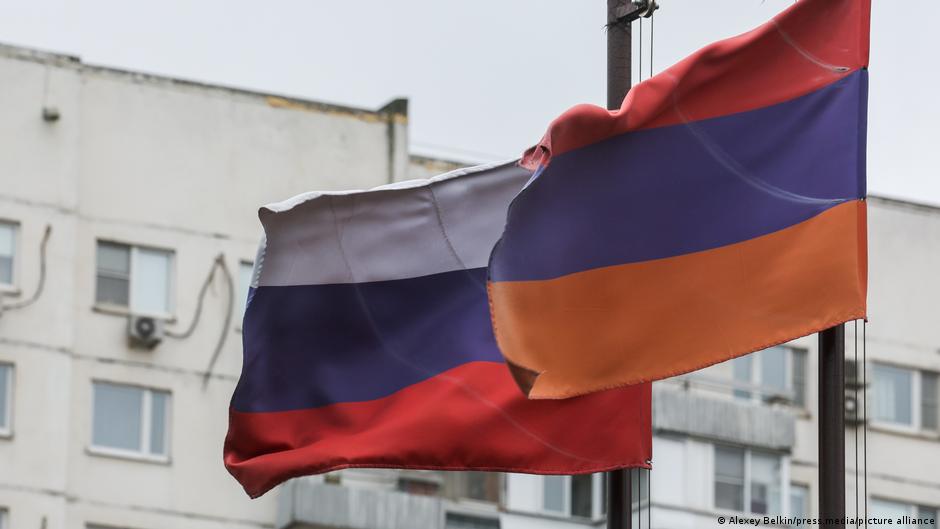
Russian President Vladimir Putin has told Armenian Prime Minister Nikol Pashinyan that Armenia's move to begin the process of joining the European Union would, in practical terms, amount to leaving the Eurasian Economic Union, sharpening a dispute with implications that extend beyond South Caucasus politics into regional trade architecture and long-term economic alignment.
The two leaders met in Bishkek on the sidelines of a summit of the Shanghai Cooperation Organisation. According to a transcript published on the Kremlin website on Tuesday, September 1, the central issue in their talks was Yerevan's plan to submit an application for EU membership.
Putin argued that a law launching accession procedures toward another economic organization was effectively a declaration of exit from the Russia-led bloc. He said Armenia could not remain in both structures at once and again called for a referendum in Armenia on whether to choose the EU or the EAEU.
"You said that you had not declared an exit. The adoption of a law on the start of the procedure for joining another economic organization in fact means a declaration of exit from ours, because staying there and there is incompatible. That is the problem."
By the "other organization," Putin was referring to the EU; by "ours," he meant the Eurasian Economic Union. The Russian leader said Armenia should "turn to the people, ask them," reiterating his argument that such a strategic shift requires direct public backing.
Pashinyan rejected the suggestion that Armenia had breached any commitments. He said Yerevan had analyzed the contractual framework between Russia and Armenia as well as the rules operating within the EAEU and had found no violations of Armenia's obligations to either Russia or the union. He added that by adopting a law on European integration in 2025, Armenia had in effect ruled out holding a referendum on a choice between the EU and the EAEU.
Economic blocs and strategic incompatibility
For senior decision-makers, the clash matters because it goes to the heart of how economic blocs define market access, regulatory convergence and political leverage. The EAEU is built around a shared customs and economic framework led by Russia, while EU accession is a rule-based process requiring progressive alignment with the bloc's legal, regulatory and institutional standards. Putin's warning underscores Moscow's position that these tracks are not merely politically different but structurally incompatible.
That interpretation, if enforced, could carry broad consequences for Armenia's trade orientation, investor signaling and policy room. Even before any formal accession negotiations, the act of opening a path toward the EU may be read by markets and regional partners as a directional commitment toward different standards, compliance systems and external relationships. For the EAEU, Armenia's pivot would also test the bloc's cohesion at a time when Russia is highly sensitive to signs of weakening integration on its periphery.
Pashinyan first said on August 24 that Armenia intended in the near future to begin the process of filing an application to join the EU. The European Commission responded by saying Armenia is now "closer to the European Union than ever," while stressing that EU accession takes place through a "clearly defined process based on merit." That formulation left the political door open while also reminding Yerevan that symbolic movement and actual membership are separated by a long, conditional path.
From a macro-economic perspective, that gap is crucial. Armenia is signaling a strategic reorientation, but the practical benefits of EU accession would be distant and contingent, while frictions with Russia and the EAEU could emerge much sooner. That creates a transition risk for businesses, supply chains and policymakers trying to assess Armenia's medium-term operating environment.
In June, Pashinyan had said there were no grounds for holding a referendum on joining the European Union. He made that statement in response to a joint declaration by the leaders of Russia, Belarus, Kazakhstan and Kyrgyzstan. Putin had previously argued that EU and EAEU membership cannot be combined, and he also said the so-called "Ukrainian scenario" began with Kyiv's attempt to join the EU.
The comparison matters because it suggests Moscow views EU integration bids in neighboring states not only as economic choices but as strategic moves with wider security and geopolitical implications. That raises the possibility that economic pressure could continue to accompany political messaging.
Indeed, ahead of Armenia's parliamentary elections on June 7, Moscow increased pressure on Yerevan, including by banning imports into Russia of several Armenian products. The elections were ultimately won by Pashinyan's Civil Contract party. His September 1 meeting with Putin in Bishkek was their first face-to-face encounter since those elections.
For executives and policymakers watching the region, the immediate question is less whether Armenia can swiftly join the EU than how its declared trajectory will reshape relations with Russia and the EAEU. Any prolonged standoff could affect trade expectations, regulatory planning and the credibility of regional integration frameworks. It also exposes a broader policy fault line: whether post-Soviet economies can diversify strategically toward Europe without absorbing immediate economic retaliation from existing partners.
The outcome will likely set a precedent well beyond Armenia. If Moscow hardens the principle that movement toward the EU is incompatible with EAEU participation, the union may become more explicitly binary in the choices it demands from members and neighbors. That would mark a significant shift in the economic geography of the region, with long-term implications for market access, political risk premiums and the durability of competing integration projects.