Lula Wins Brazil Runoff as Bolsonaro Challenges Election Result
The disputed vote raises questions over policy continuity, institutional stability and the outlook for Latin America’s largest economy.
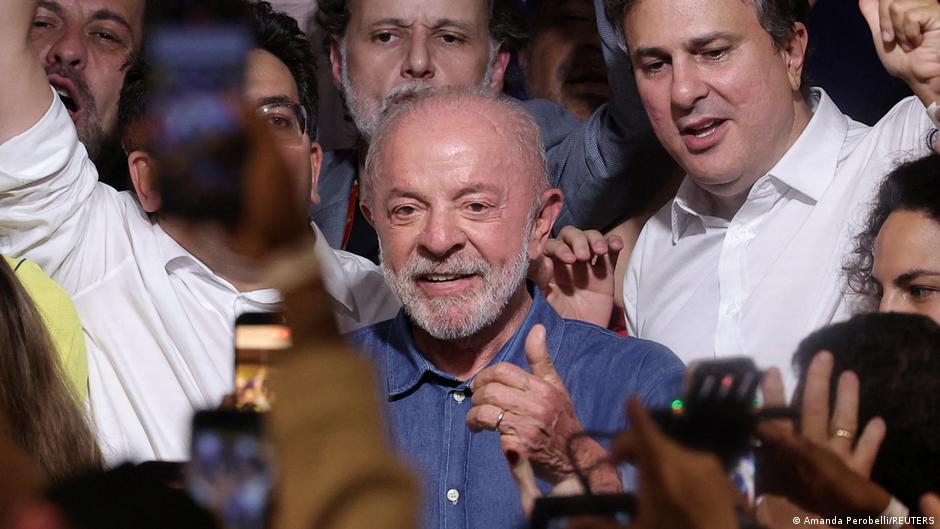
Brazilian President Luiz Inácio Lula da Silva has won a fourth, non-consecutive term after securing a narrow victory in the second round of the country’s presidential election, according to official results. His opponent, right-wing populist Senator Flávio Bolsonaro, has refused to concede and is demanding that the result be annulled.
The outcome places Brazil at a consequential economic and institutional juncture. Lula’s victory offers the prospect of continued center-left government, but the challenge from Bolsonaro introduces uncertainty over the political transition and the durability of public confidence in the electoral process. For senior decision-makers, the immediate issue is whether the dispute remains contained within Brazil’s institutions or develops into a wider source of instability for Latin America’s largest economy.
Lula, 80, received 51.8% of the vote in the runoff held on Sunday, October 25. Bolsonaro won 48.2%. The defeated candidate is the son of Jair Bolsonaro, Brazil’s former far-right president. The official count produced the first result in Brazilian history in which a candidate who finished second in the initial round went on to win the presidency.
A narrow mandate amid economic pressure
The relatively tight margin underscores the polarized environment in which Lula will begin another term. His reelection campaign faced persistent voter concern over the cost of living and rising crime, while the wider contest unfolded against a backdrop of corruption scandals, economic instability and allegations of interference by the United States.
Those pressures will shape the incoming administration’s room for maneuver. A narrow victory may complicate efforts to secure broad support for economic policy, particularly when households remain sensitive to living costs and public anxiety over security is elevated. It may also raise the political cost of measures that demand short-term sacrifices in exchange for longer-term economic gains.
For businesses and investors, the result signals policy continuity at the presidency but not necessarily a reduction in political risk. The election dispute could delay the emergence of a clear post-election agenda and intensify scrutiny of Brazil’s courts and electoral authorities. Institutional credibility will therefore be an important variable in assessments of investment conditions, fiscal policymaking and the government’s ability to respond to economic shocks.
The central economic question is whether Brazil’s institutions can absorb a contested result without allowing political polarization to weaken policy execution.
Voting extension becomes focus of challenge
Flávio Bolsonaro based his demand for annulment on the decision to extend voting hours. Earlier, both Lula and Bolsonaro had requested that polling stations remain open longer because of public transport problems and adverse weather conditions in some parts of Brazil.
Supreme Court Justice Cristiano Zanin ultimately ordered voting to be extended nationwide by two hours. The ruling was issued only three minutes before polling stations had been scheduled to close. Bolsonaro has cited that extension in refusing to recognize his defeat, according to the Associated Press.
The fact that both candidates had previously sought longer voting hours will be central to how the challenge is viewed politically and institutionally. The dispute nevertheless adds uncertainty at a moment when Brazil must address economic instability and widespread household concerns. Even without an immediate change in policy, prolonged conflict over the legitimacy of the result could weigh on decision-making by companies, consumers and public institutions.
Public celebration and a divided electorate
Celebrations followed the announcement of the result. Fireworks and vuvuzelas were heard in Rio de Janeiro, while thousands of people wearing red—the color of Lula’s Workers’ Party—took to the streets of São Paulo to celebrate, AFP reported.
The public response demonstrated the strength of Lula’s political base, but the vote totals also showed that nearly half of participating voters supported his opponent. That division will be a defining constraint on the president’s fourth term. Lula must respond to demands for economic relief while governing a country in which the election has exposed deep disagreements over political leadership and national priorities.
The longer-term implications extend beyond Brazil. As the region’s largest economy, Brazil has an outsized role in shaping confidence in Latin American markets and democratic institutions. A stable resolution would reinforce the capacity of national institutions to manage close elections and support a more predictable policy environment. A prolonged confrontation, by contrast, could deepen uncertainty and distract the government from inflation-sensitive living costs, crime and broader economic weakness.
Lula’s return therefore represents more than an electoral comeback. It tests whether a center-left administration with a narrow mandate can translate victory into credible governance while preserving institutional legitimacy. The speed and clarity with which Bolsonaro’s challenge is addressed will help determine whether the new term begins with policy momentum or with an extended period of political and economic caution.