Kyiv Power Crisis Exposes Governance Risks to Ukraine’s Wartime Economy
A dispute between Ukraine’s president and Kyiv’s mayor highlights how damaged energy networks and policy coordination failures could deepen economic disruption.
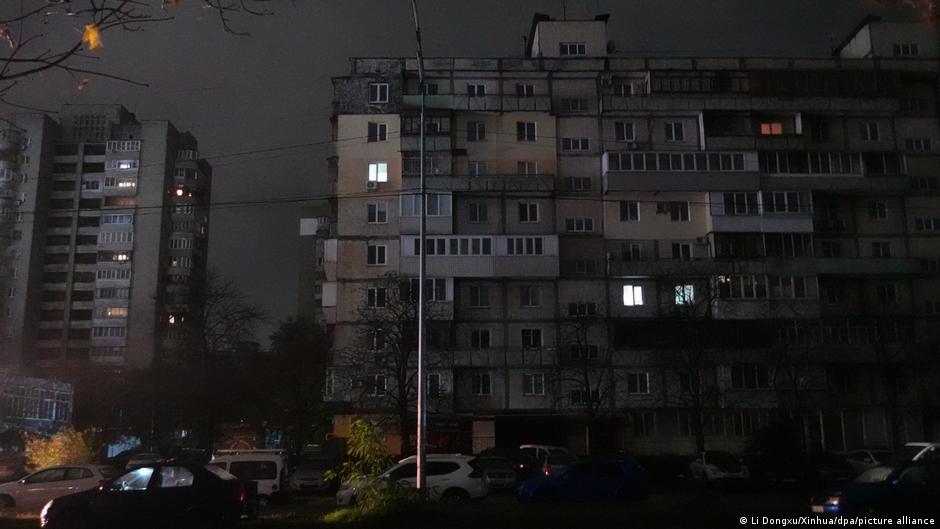
Ukraine’s escalating energy crisis has opened a public dispute between President Volodymyr Zelensky and Kyiv Mayor Vitali Klitschko, exposing tensions over responsibility for infrastructure resilience as Russian attacks intensify pressure on the country’s wartime economy.
Zelensky on Friday, November 6, criticised Kyiv’s municipal authorities over prolonged interruptions to electricity and water supplies caused by Russian attacks. He said preparations had failed at the city level and linked the disruption to the alleged non-implementation of decisions intended to prepare the capital for the heating season and for Russia’s campaign against Ukrainian energy infrastructure.
“At the city level, preparations have failed,” Zelensky said in his evening address.
The president added that the government had discussed with energy companies the need to deploy additional crews and accelerate infrastructure restoration. The immediate policy response, he said, would include bringing in more repair teams and involving Ukraine’s armed forces in efforts to address the consequences of the attacks.
Political dispute over a nationally integrated grid
Klitschko rejected the criticism several hours after the president’s statement. Writing on Telegram, the mayor questioned how the capital could have prevented what Zelensky described as a Russian operation against Ukraine’s energy sector. He also asked why discussions about Kyiv’s preparedness and response efforts had taken place without representatives of the city authorities.
The mayor argued that Ukraine operates a single interconnected power system, meaning severe damage across the country cannot be treated as a purely municipal failure. In Klitschko’s formulation, electricity cannot remain fully available in one place while responsibility for outages elsewhere is attributed solely to Kyiv’s administration.
Klitschko accused the central government of repeatedly portraying Kyiv as the country’s worst-performing city and relying on manipulation and falsehoods. He further alleged that the authorities, in seeking to remove him while withholding support from the capital, were effectively destroying Kyiv.
The confrontation underscores a broader economic governance challenge. Ukraine’s power system is nationally interconnected, but the operational consequences of disruptions are experienced locally by households, public services and businesses. That structure can blur accountability between central policymakers, municipal governments, grid operators and energy companies precisely when rapid coordination is most important.
Network damage threatens activity beyond power generation
Zelensky said Russia’s tactics were focused on destroying electricity networks, transformers and distribution equipment. As a result, he explained, some regions continued to face shortages even where electricity generation was sufficient. Repairs and the speed with which they could be completed were therefore critical.
This distinction has significant economic implications. Adequate generating capacity does not guarantee reliable supply when transmission and distribution assets have been damaged. For businesses, the resulting uncertainty can interrupt production, raise operating burdens and complicate planning even when power remains available elsewhere in the system. Water and heating disruptions extend the impact beyond industrial output to labour availability, urban services and household welfare.
In recent weeks, the Russian military has intensified missile and drone strikes against Ukraine’s energy infrastructure. Millions of Ukrainians have consequently been forced to endure autumn cold without heating while also facing interruptions to electricity and water supplies.
The persistence of these outages points to a long-term economic constraint as well as an immediate humanitarian emergency. Repeated damage requires scarce labour and equipment to be directed toward restoration, while the need for additional repair teams increases pressure on institutions already operating under wartime conditions. The participation of the armed forces in recovery efforts also illustrates how civilian infrastructure management and national defence have become increasingly intertwined.
Coordination becomes a core economic policy issue
The exchange between Zelensky and Klitschko suggests that institutional coordination may now be as important as physical repair capacity. Central authorities can mobilise national resources and engage energy companies, while municipal governments manage many of the services through which outages affect residents. If either level is excluded from planning, restoration efforts risk becoming slower or less closely aligned with local conditions.
For senior decision-makers, the dispute highlights the economic consequences of fragmented crisis management. Prolonged uncertainty over responsibility can weaken confidence in emergency planning, while public political conflict may distract from decisions on repair priorities, resource allocation and winter preparedness.
The immediate objective is to restore damaged networks quickly enough to maintain electricity, water and heating through colder conditions. The longer-term task is more demanding: strengthening the resilience of an interconnected energy system under continued attack while establishing clear lines of authority between the national government, Kyiv’s administration and infrastructure operators.
Ukraine’s experience also demonstrates that energy security depends not only on generating electricity but on protecting and rapidly repairing the networks that deliver it. As attacks continue, the effectiveness of that repair system—and the ability of political institutions to coordinate around it—will shape the scale and duration of the broader economic damage.