Reported Strike on Oryol Optoelectronics Plant Exposes Supply Risks
Damage reported at a Russian defense-linked manufacturer highlights the economic vulnerability of specialized industrial supply chains.
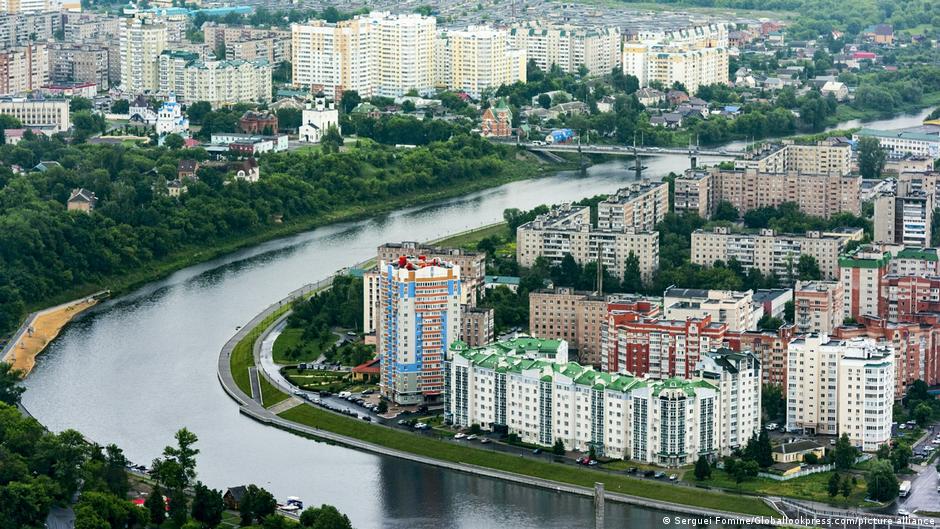
The Russian city of Oryol came under what regional authorities described as a large-scale missile attack overnight into Saturday, January 7, raising renewed questions about the resilience of Russia’s specialized industrial base. Andrei Klychkov, governor of the Oryol region, confirmed that an enterprise in the city’s Sovietsky district sustained damage, although he did not identify the facility.
Open-source analysis by the Russian outlet ASTRA indicated that the strike caused a major fire at the Proton plant, one of Russia’s most important manufacturers of optoelectronic equipment. The assessment has not been independently confirmed, and the extent of any disruption to production remains unclear.
Klychkov said that “the production premises of an enterprise in the Sovietsky district were partially damaged.” He did not provide information about casualties. Emergency services were working at the site, according to the governor.
A concentrated industrial vulnerability
Proton is located in Oryol’s Sovietsky district, matching the general location cited by the governor. The plant’s significance extends beyond its immediate output because optoelectronic components are specialized inputs that can be difficult to replace quickly. Any prolonged shutdown could therefore affect downstream manufacturers even if the physical damage is confined to part of the facility.
Ukrainian open-source intelligence channels Exile+ and Supernova+ have reported that Proton products are used in several Russian weapons systems. These reportedly include S-71 Kover air-launched cruise missiles, 9M723 Iskander-M ballistic missiles and Pantsir-S1 surface-to-air missile and gun systems. The claims concerning specific applications have not been officially detailed by the regional authorities.
Concentrated production of specialized components can turn damage at a single enterprise into a wider supply-chain constraint.
From a macroeconomic perspective, the reported incident illustrates the growing exposure of Russia’s defense-related manufacturing network to disruption far from the immediate battlefield. Repeated attacks on specialized plants can force companies and the state to spend more on air defense, physical protection, redundant capacity, inventory buffers and the relocation of sensitive production.
Such measures may preserve output, but they also raise the effective cost of industrial production. Capital and skilled labor directed toward duplication and security cannot be used as efficiently elsewhere. Over time, this can deepen the trade-off between sustaining defense manufacturing and supporting civilian investment, productivity growth and regional development.
Implications for policy and industrial planning
The economic impact will depend primarily on the scale of the damage, the duration of any outage and the availability of substitute components. Optoelectronics is a technically demanding field, and production may depend on specialized machinery, qualified personnel and tightly controlled processes. Even when buildings can be repaired, restoring full output may require equipment replacement, recalibration and renewed testing.
A disruption at Proton could also prompt greater stockpiling by downstream producers. While additional inventories improve resilience, they tie up working capital and can create inefficiencies across procurement networks. If substitute supplies are scarce, buyers may face longer delivery times or higher prices, potentially transmitting the effects of the attack beyond the plant itself.
The incident also underscores the limits of geographical depth as a form of economic protection. Oryol is an established regional industrial center, yet the reported strike suggests that enterprises situated away from front-line areas may still need to incorporate military risk into ordinary investment and operating decisions. That change can affect insurance, logistics, construction standards and the location of future production.
For Russian policymakers, repeated attacks on facilities linked to strategically important supply chains may strengthen the case for dispersing production across multiple sites. The alternative is to reinforce existing industrial clusters. Dispersal can reduce dependence on a single plant but is expensive and may sacrifice economies of scale; concentration is more efficient in normal conditions but leaves production more exposed to localized shocks.
Proton has previously been targeted repeatedly by Ukrainian attacks, according to the source report. That history makes the latest reported fire relevant not only as an isolated event but as part of an accumulating pressure on fixed industrial assets. The longer-term consequence could be a structural rise in the resources required to maintain the same level of defense-related output.
For international decision-makers, the key issue is whether such incidents begin to constrain Russia’s production of complex military systems or instead accelerate adaptation through redundancy and substitution. With no official assessment of the plant’s identity, casualties or operational losses, firm conclusions remain premature. Nevertheless, the reported damage highlights how attacks on specialized component suppliers can generate economic effects extending well beyond the immediate cost of repairs.