Israel Detains Humanitarian Aid Ships En Route to Gaza Amid Ongoing Maritime Blockade
Israeli naval forces intercepted multiple vessels from the Global Sumud Flotilla delivering aid to Gaza, enforcing a maritime blockade supported by Egypt.
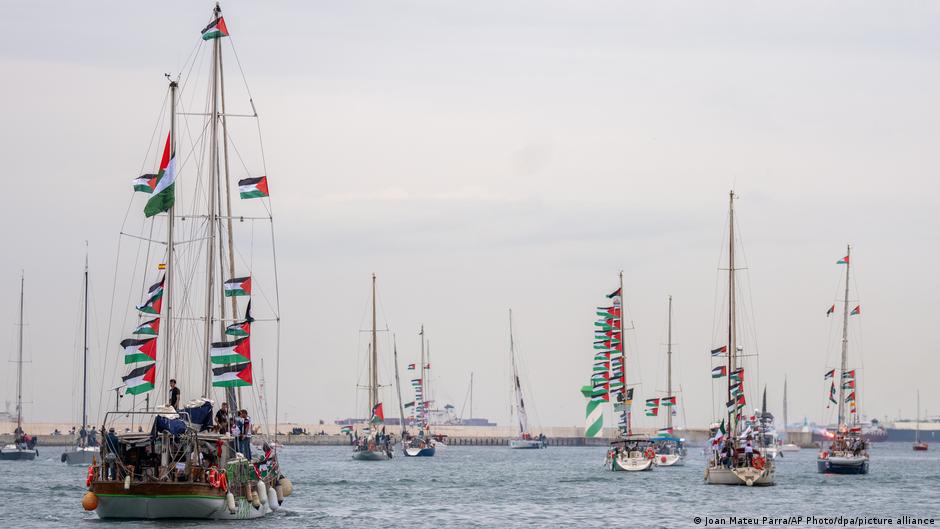
On April 30, Israeli naval forces detained several vessels from the Global Sumud Flotilla, a humanitarian convoy attempting to deliver aid to the Gaza Strip. The flotilla had set sail on April 26 from a port in Sicily, marking one of the largest efforts to breach the Israeli maritime blockade imposed on Gaza since 2007.
According to reports from the organization behind the flotilla, communication with some of the boats was lost, and a distress signal (SOS) was sent. Some of the detained vessels are being towed to the Israeli port of Ashdod. The Israeli military confirmed it is actively enforcing the maritime blockade of Gaza, citing security concerns.
Context and Global Economic Implications
The blockade of Gaza, jointly supported by Israel and Egypt, has long been a point of contention with significant humanitarian and economic consequences. The interruption of supply routes not only restricts the flow of essential goods and humanitarian aid but also impacts the economic stability of the region.
Pro-Palestinian activists, including notable figures like Swedish environmentalist Greta Thunberg who confirmed her participation in a related aid flotilla in August 2025, aim to establish a permanent humanitarian corridor to facilitate sustained aid delivery to Gaza. The flotillas represent a challenge to the blockade and bring to the forefront the geopolitical tensions that affect regional trade and economic development.
In October 2025, a ceasefire agreement brokered by the United States, Turkey, Qatar, and Egypt aimed to stabilize the region. The agreement included prisoner exchanges and sought to create conditions for peaceful governance transitions. However, the continued enforcement of maritime restrictions underscores ongoing security and political complexities that influence international aid and economic flows.
The White House announced in January 2026 the initiation of the second phase of a US-led peace plan involving a National Committee to govern Gaza temporarily, with the goal of transitioning control to the Palestinian National Authority. This administrative shift could potentially ease economic restrictions and open avenues for reconstruction and development, but the maritime blockade remains a critical barrier.
"The enforcement of the maritime blockade highlights the delicate balance between security concerns and the urgent humanitarian needs of Gaza, with significant ramifications for regional stability and economic recovery," analysts note.
For senior decision-makers, these developments signal the complex intersection of security policies, humanitarian considerations, and economic consequences in a geopolitically sensitive region. The blockade affects not only local economies but also broader regional trade networks and international diplomatic relations, with implications for policy formulation and economic forecasting.


