US Issues Commemorative Passports Featuring President Trump for 250th Independence Anniversary
Washington launches limited edition passports with President Trump's portrait, marking a notable policy shift amid broader symbolic commemorations.
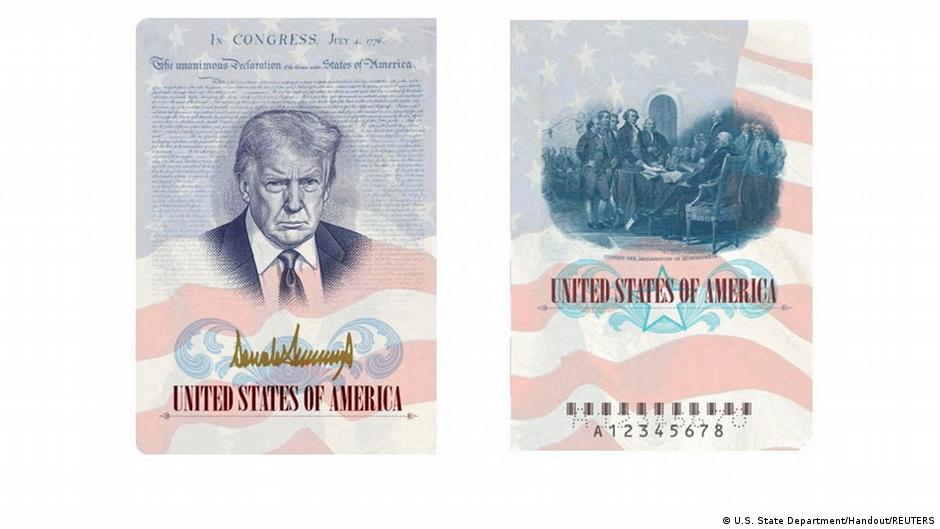
In a move underscoring the intertwining of politics and national symbolism, the United States government announced the release of a special series of passports featuring the portrait of the sitting President, Donald Trump, in celebration of the country's 250th anniversary of independence. These passports will be issued exclusively in Washington, D.C., with the exact distribution volume remaining undisclosed.
Symbolism and Policy Implications of Commemorative Passports
The U.S. State Department revealed that the new passport design will incorporate a gold-lettered signature of President Trump alongside his portrait on the inside front cover. The back cover will display a segment of John Trumbull's iconic painting, "Declaration of Independence." Traditionally, the standard passport design features artwork by Edward Percy Moran depicting Francis Scott Key, author of the U.S. national anthem, inspired by the 1814 bombardment of Fort McHenry.
"This initiative marks a significant departure from conventional passport iconography, reflecting an administration keen to imprint its identity on key national symbols."
The commemorative passport issuance complements other symbolic gestures by the Trump administration, including replacing the U.S. Treasurer's signature with President Trump's on the $100 bill—the first such change in 165 years. Additionally, a 24-carat gold coin depicting Trump with the inscription "Liberty" is slated for release as part of the 250th independence celebrations.
The timing and nature of these honors coincide with administrative restructuring, notably the dismissal of all members of the U.S. Commission of Fine Arts by the Trump administration in October 2025, replaced by appointees aligned with the President. This move signals a strategic consolidation of influence over national cultural institutions and commemorations.
Beyond currency and commemorative items, the Trump administration has also rebranded prominent institutions and military assets. The U.S. Institute of Peace has been renamed after President Trump, while the John F. Kennedy Center for the Performing Arts is now titled the "Donald J. Trump and John F. Kennedy Performing Arts Center." Furthermore, plans have been announced to construct a new class of naval vessels named after Trump, equipped with advanced weaponry.
Global Economic and Political Considerations
These symbolic and institutional shifts are not merely ceremonial but highlight a broader strategic emphasis on personalization and consolidation of presidential legacy within U.S. domestic and foreign policy frameworks. For global economic actors and policymakers, these developments may signal a deeper alignment of economic nationalism with political branding efforts.
The elevation of President Trump's image onto currency, passports, and national monuments reflects an assertive posture that could influence international perceptions of U.S. stability and continuity. For senior decision-makers, this raises questions about the implications for diplomatic engagement, soft power projection, and the management of institutional norms.
Moreover, the administration's move to intertwine political symbolism with economic instruments may affect investor confidence and market perceptions, particularly if such actions are accompanied by shifts in regulatory or fiscal policies aligned with nationalistic priorities.
As the U.S. approaches its 250th anniversary, the intersection of political identity and economic symbolism embodied in these commemorations merits close observation for its potential to reshape narratives surrounding American governance and its global economic role.