Iran Introduces Detailed Vessel Declaration for Strait of Hormuz Passage Amid Rising Geopolitical Tensions
New Iranian regulations mandate extensive vessel disclosure prior to Strait of Hormuz transit, signaling potential shifts in regional maritime governance and economic security.
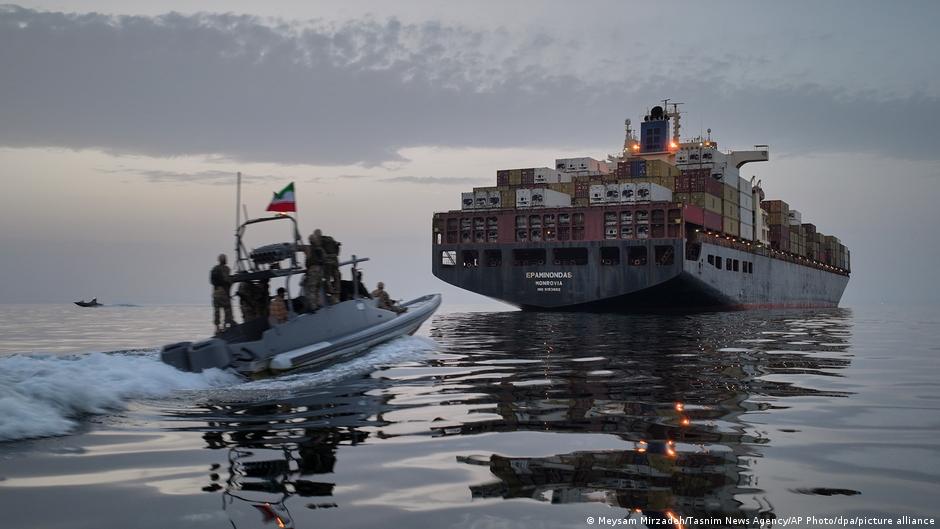
Iran has implemented a new regulatory framework requiring shipping companies to complete a "Vessel Information Declaration" before their tankers can transit through the Strait of Hormuz, a critical chokepoint for global oil supplies. The declaration, compiled by Iran's Persian Gulf Strait Administration (PGSA) on May 5, comprises over 40 questions demanding detailed data about each vessel, its ownership, crew, and cargo.
Implications for Global Maritime and Energy Security
The declaration requires shipping operators to provide the vessel's name, identification number, previous names, country of origin, and destination port. Additionally, it seeks information on the citizenship of owners, operators, and crew members, as well as comprehensive details about the cargo being transported. This information must be submitted electronically to the PGSA ahead of passage through the strait.
"Responsibility for providing false or incomplete information lies solely with the applicant, who will bear all resulting consequences," the PGSA stated in a notice obtained by international media.
While the document does not explicitly state whether Iran will impose transit fees, prior statements by Tehran have suggested the possibility of monetizing passage through the strait to generate revenue aimed at reconstruction efforts following purported damage from Western military actions. Current intelligence suggests fees could reach up to $2 million per vessel.
However, any such payments would face significant restrictions. The U.S. Treasury has clarified that payments to the Iranian government or the Islamic Revolutionary Guard Corps (IRGC) for safe passage are prohibited for U.S. persons, including financial institutions and U.S.-controlled foreign entities.
This regulatory development emerges amid heightened tensions in the region. On May 4, the United States launched "Operation Sentinel," a military initiative to escort commercial vessels through the Strait of Hormuz, a vital artery for global oil transport. U.S. President Donald Trump warned of retaliatory measures against Iran should American ships come under attack. U.S. Secretary of State Mike Pompeo characterized the operation as defensive, emphasizing that U.S. forces will not initiate hostilities.
Notably, on May 6, President Trump announced a temporary pause in "Operation Sentinel" to explore potential negotiations with Iran, reportedly at the behest of Pakistan and other countries, signaling a nuanced approach to managing escalating regional risks.
Macro-Economic and Policy Perspectives
The Strait of Hormuz is a strategic maritime corridor through which approximately 20% of the world's petroleum passes. Iran's new declaration requirements and potential levying of fees could alter shipping costs and insurance premiums, impacting global oil prices and supply chain stability. For senior decision-makers, these developments underscore the fragility of energy transit routes and the interplay of regional political dynamics with global economic security.
Moreover, Tehran’s insistence on detailed vessel disclosures enhances its leverage over maritime traffic, potentially enabling it to monitor and control the flow of energy exports. This intensification of regulatory oversight may prompt shipping companies and international stakeholders to reassess risk management strategies and diplomatic engagement frameworks.
In the broader geopolitical context, the situation highlights ongoing U.S.-Iran tensions and the risk of escalation affecting global markets. The temporary pause in U.S. military escort operations suggests space for diplomacy but also reflects uncertainties facing policymakers balancing security and economic stability.