Houthi Missile Attempt on Riyadh Raises New Risks for Saudi Energy Routes
The intercepted strike underscores widening pressure on Saudi Arabia’s oil infrastructure as regional conflict disrupts key shipping corridors.
Saudi Arabia said Yemen’s pro-Iranian Houthi movement attempted to strike Riyadh with a ballistic missile overnight, marking a serious escalation in a conflict that is increasingly centered on energy infrastructure, export routes and the strategic waterways linking Gulf producers to global markets.
The Saudi-led “Coalition to Restore Legitimacy in Yemen” said on Saturday, September 19, that Houthi rebels had tried for the first time the previous night to hit the Saudi capital with a ballistic missile. Brigadier General Turki al-Maliki, the coalition’s official spokesman, said on X that the missile had been “intercepted and destroyed.”
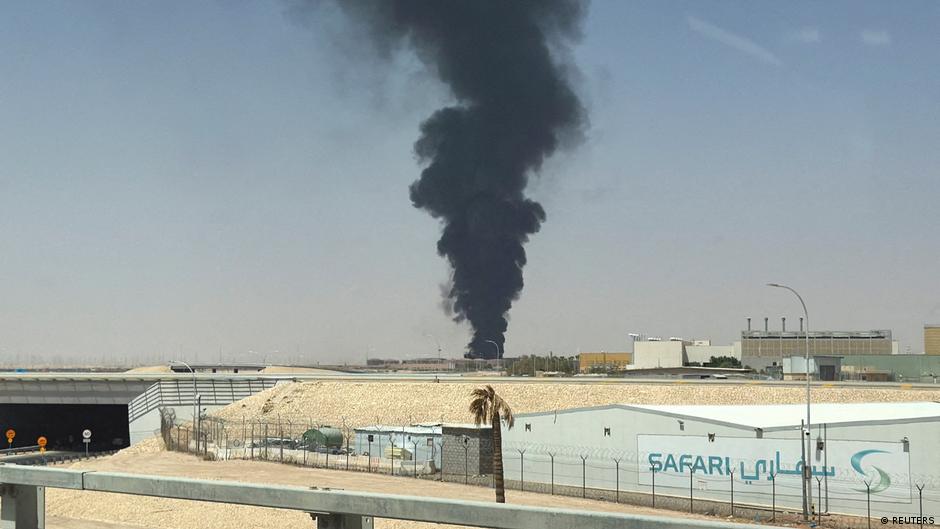
An air raid alert was declared in Riyadh during the night, and some residents reported hearing an explosion. Saudi authorities reported no casualties or damage. Later, a column of smoke was visible near the airport. AFP, citing its correspondent, said a fuel tank belonging to Saudi Aramco, the kingdom’s largest oil company, had caught fire and that the blaze had been extinguished. It remains unclear whether the fire was connected to the attempted missile strike. Aramco did not respond to journalists’ request for comment.
Saudi officials also said the Houthis tried to attack civilian infrastructure, including targets in the Red Sea port city of Yanbu, but that those attempts were thwarted. The Houthis, for their part, claimed they had used drones, cruise missiles and ballistic missiles to strike “important facilities” in Riyadh and Aramco infrastructure in Yanbu.
Energy Infrastructure Moves to the Center of the Conflict
For senior economic decision-makers, the incident matters less as an isolated security event than as a signal of mounting pressure on the redundancy systems that allow Saudi Arabia to export oil when traditional routes become vulnerable. Riyadh has long treated its East-West pipeline, which ends at Yanbu, as a strategic bypass to the Strait of Hormuz. That bypass has become more important since the start of the U.S.-Israeli war with Iran, which has substantially complicated tanker traffic through Hormuz.
On September 11, the Financial Times reported that Saudi Arabia had halted operations on the East-West pipeline after a drone attack launched from Iraqi territory. On September 18, Bloomberg reported that Saudi Aramco had informed at least two European refineries that it would not supply them with oil in October. According to Bloomberg, the pipeline is expected to restart partially within days and be fully restored within a month and a half.
The disruption comes after Saudi Arabia had increased exports through the East-West pipeline as passage through Hormuz became more difficult. In recent weeks, however, the route’s effective capacity has declined because of Houthi attacks on Saudi tankers in the Red Sea. The International Energy Agency said about 2.5 million barrels per day were shipped through Yanbu in August, the lowest level since 2013.
Saudi Arabia’s export strategy is being tested on two fronts: tanker access through Hormuz and alternative flows through the Red Sea corridor.
The risk is not simply that one facility may be hit, but that multiple points in the supply chain are becoming contested at the same time. The East-West pipeline, Yanbu, Red Sea shipping lanes and the Bab el-Mandeb Strait now form part of the same economic risk map. For oil buyers, insurers, refiners and governments, that means contingency planning must account for simultaneous constraints rather than a single chokepoint shock.
Bab el-Mandeb Adds a Global Trade Dimension
On September 11, Reuters and AFP reported that the Houthis had seized strategically important islands in the Bab el-Mandeb Strait, which links the Red Sea with the Arabian Sea. Roughly 12% of global cargo traffic, including oil trade, passes through the strait. It has become especially important for Saudi Arabia after the closure of Hormuz to reliable tanker movement.
The Houthis said shipping through Bab el-Mandeb was “safe for all commercial vessels except Saudi ones.” That claim, even if intended as a political message, introduces a market-relevant distinction: commercial shipping may continue, but not all vessels face the same perceived security risk. In practice, that can raise insurance costs, reroute cargoes, delay deliveries and complicate contracts linked to Saudi crude and refined products.
The previous day, it also emerged that the Houthis had taken control of the port of Mocha on Yemen’s Bab el-Mandeb coast. Reuters reported that the Houthi advance was being directed by Iran’s Islamic Revolutionary Guard Corps. Sources in Tehran said Iran’s aim was to open a new front in its confrontation with the United States.
The coalition led by Saudi Arabia also said on September 16 that the Houthis had attacked Mecca, Islam’s holiest city, with a drone and that the aircraft was shot down as it approached. The Yemeni rebels denied the accusation.
The broader economic implication is that the conflict is evolving from periodic attacks on infrastructure into a more systematic contest over maritime corridors and export resilience. Saudi Arabia’s ability to reassure customers depends not only on repairing pipelines and extinguishing fires, but also on maintaining credible alternatives when one route is degraded. The reported October supply notices to European refineries show how quickly security events can feed into downstream planning.
For policymakers, the risks now extend beyond immediate oil-price volatility. A sustained threat to Red Sea logistics could affect energy security planning in Europe, shipping premiums across the region and the strategic calculus of Gulf producers. It could also intensify pressure on governments to revisit stockpiling, sanctions enforcement, naval protection and emergency supply agreements.
The Riyadh missile attempt, whether or not directly connected to the reported fire near the airport, highlights the economic fragility created when military escalation overlaps with infrastructure dependence. Saudi Arabia still holds significant production and export capacity, but the latest events show that spare capacity is not the same as frictionless delivery. In a market already adjusting to constrained routes through Hormuz, repeated threats to Yanbu and Bab el-Mandeb would carry consequences well beyond the Arabian Peninsula.