EU's Unity Challenged by Russia, China, and US Strategic Divisions, Says Top EU Diplomat
EU High Representative highlights 'divide and conquer' tactics by Russia, China, and the US aimed at undermining European Union cohesion.
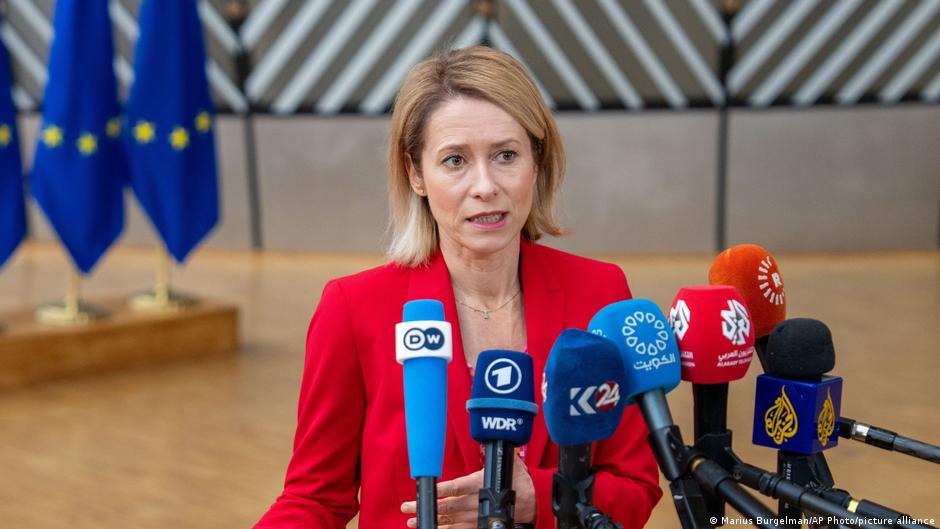
The European Union faces coordinated efforts by Russia, China, and the United States to weaken its unity, according to EU High Representative for Foreign Affairs and Security Policy, Kaja Kallas. Speaking at the Lennart Meri Conference in Tallinn, Kallas emphasized that these global powers prefer a fragmented Europe, asserting that their divide-and-rule strategies reflect concerns over a strong, unified EU acting as an equal global actor.
Strategic Implications of a Fragmented Europe
Kallas underscored that the EU's strength lies in its unity: "If we stick together, if we act collectively, then we are strong." She highlighted that Russia, China, and the US are skeptical and often openly hostile toward the EU's cohesion because a united Europe represents a powerful geopolitical force. The preference for engaging with individual member states rather than the bloc itself simplifies foreign policy maneuvers for these external powers.
"They do not like the European Union, that is absolutely clear," Kallas stated, pointing to the underlying political calculus driving these powers to undermine EU solidarity.
The High Representative cautioned EU member states against concluding bilateral agreements with the US that could weaken the union's collective stance. She expressed concern over recent trends where some EU countries have pursued direct channels with Washington, potentially playing into US strategies aimed at division.
Since Donald Trump's second term began, several EU nations have sought to maintain their own direct relationships with the US, sometimes bypassing EU mechanisms. For instance, Italian Prime Minister Giorgia Meloni had positioned herself as an intermediary between Europe and the US, though this approach faltered amid criticism from Trump, highlighting the risks of fragmented diplomacy within the EU.
Moreover, Kallas rejected Russian President Vladimir Putin's proposal to appoint former German Chancellor Gerhard Schröder as the EU's negotiator for peace talks with Russia. She deemed it ill-advised to allow Russia to have a role in selecting EU representatives, signaling a refusal to concede diplomatic ground that could compromise EU agency.
Long-Term Economic and Geopolitical Consequences
The divide-and-rule tactics aimed at the EU have far-reaching implications beyond politics, particularly for the global economic landscape. A fragmented Europe risks diluting its collective bargaining power in trade negotiations, investment decisions, and regulatory standards, potentially disadvantaging the region in a global economy already marked by intensifying US-China rivalry and Russian geopolitical assertiveness.
Kallas’ warnings resonate amid ongoing challenges such as energy security, supply chain resilience, and technological sovereignty, where EU unity is critical to maintaining leverage and safeguarding long-term economic interests. Disunity could undermine coordinated responses to external economic pressures, weaken the EU single market, and invite opportunistic external interventions.
In this context, the EU's strategic posture requires reinforcing cohesion to sustain its role as a major global economic and political actor. Kallas’ call to resist external pressures that encourage bilateralism reflects a broader imperative to safeguard the EU’s integrated governance structures, which underpin its influence in shaping global economic norms and policies.