EU Summons Russian Envoy Following Missile Strike on Kyiv Military Range
EU condemns Russia's missile attacks on Ukrainian territory and vows to expand sanctions on Russian defense sector.
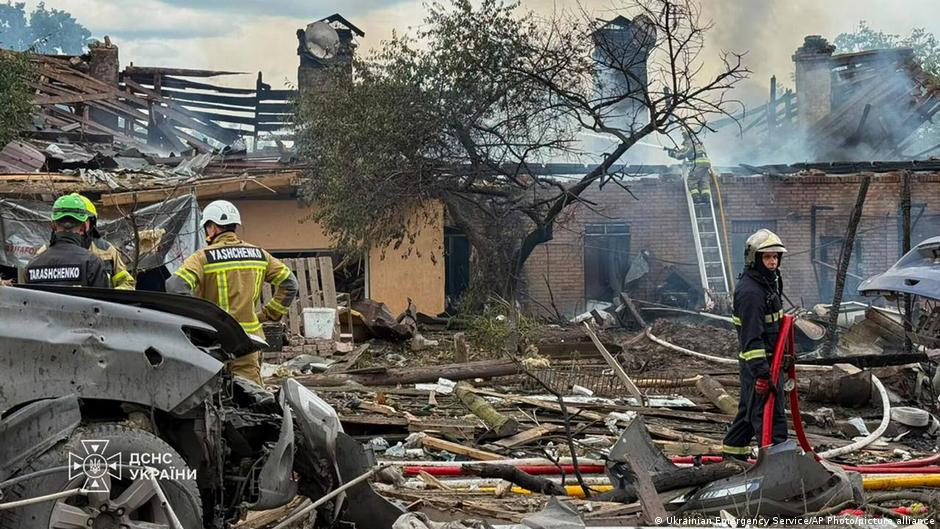
The European Union has summoned the Russian permanent representative to the EU following a series of missile strikes by Russia that targeted a military exhibition in the Kyiv region and the honorary Latvian consulate in Sloviansk. These attacks, which caused civilian casualties and damaged diplomatic premises, have been strongly condemned by EU officials as violations of international law.
Escalation of Targeted Strikes and EU Response
On July 24, the EU's High Representative for Foreign Affairs and Security Policy, Kaja Kallas, publicly denounced the "indiscriminate" Russian missile strikes across Kyiv and other Ukrainian regions. She characterized the strikes as part of a "deliberate policy" by Moscow to inflict maximum disruption and harm.
"One of the strikes hit the honorary Latvian consulate in Sloviansk, highlighting Moscow's total disregard for international norms," Kallas said.
In response, the European External Action Service has handed a formal note of protest to Russia's envoy to the EU. Kallas also announced plans to propose expanding the EU sanctions list to include additional enterprises and entities within the Russian military-industrial complex, aiming to further isolate Moscow economically and politically.
Earlier that day, Russian forces launched ballistic Zircon missiles against a private military range in Bucha district, where a weapons exhibition featuring drones was underway. Ukrainian monitoring channels reported the attack, which left ten dead and approximately 100 wounded, according to Ukraine's Prosecutor General Ruslan Kravchenko. An investigation into the organization and conduct of the event is ongoing.
The Russian Ministry of Defense confirmed the strike, stating that key developers and producers of drones, Ukrainian drone command representatives, and intelligence officers responsible for attacks on Russian territory were present during the attack.
Implications for Drone Warfare and Regional Security
Ukrainian President Volodymyr Zelensky, in an interview published July 24, revealed plans to develop drones with a range of up to 10,000 kilometers by 2027. Currently, Ukraine possesses drones capable of striking targets up to 3,000 kilometers away, comparable to those of Russia.
Furthermore, Ukraine intends to enter into an agreement with the United States to establish domestic drone production facilities. Zelensky emphasized the dynamic nature of drone warfare, noting, "Drones cannot simply be stored in warehouses. They are not artillery or missiles. They change every six months on the battlefield, sometimes every three months." This reflects the rapid evolution and tactical importance of unmanned systems in the ongoing conflict.
In a strategic move, Zelensky has ordered the creation of a "Special Command for Long-Range Influence on Russia" within Ukraine's armed forces. This unit is tasked with orchestrating drone strikes deep inside Russian territory, an operational approach Kyiv deems highly effective in undermining Moscow's war efforts.
Macro-Economic and Geopolitical Considerations
The EU's firm diplomatic stance and potential broadening of sanctions are indicative of a deepening economic confrontation with Russia, particularly targeting its defense manufacturing capabilities. This escalation signals a shift toward more comprehensive measures designed to degrade Russia's military-industrial base over the long term.
The emphasis on advanced drone technology and indigenous production capacity highlights the increasing role of unmanned systems as force multipliers in modern warfare. For global policymakers, this underlines the necessity to anticipate shifts in defense procurement, technology transfer, and regional security dynamics.
Moreover, the targeting of diplomatic facilities and civilian-adjacent sites raises concerns about the erosion of established international norms, potentially prompting recalibrations in diplomatic engagements and security guarantees across Europe and beyond.
As this conflict evolves, senior decision-makers must consider the interplay of military innovation, economic sanctions, and geopolitical signaling when formulating policies to support Ukraine, manage Russia's aggression, and maintain regional stability.