Colombia Declares National Emergency After Devastating 7.4 Magnitude Earthquake
Colombia’s government mobilizes resources following a major earthquake with significant casualties and infrastructure damage, prompting international aid and potential economic repercussions.
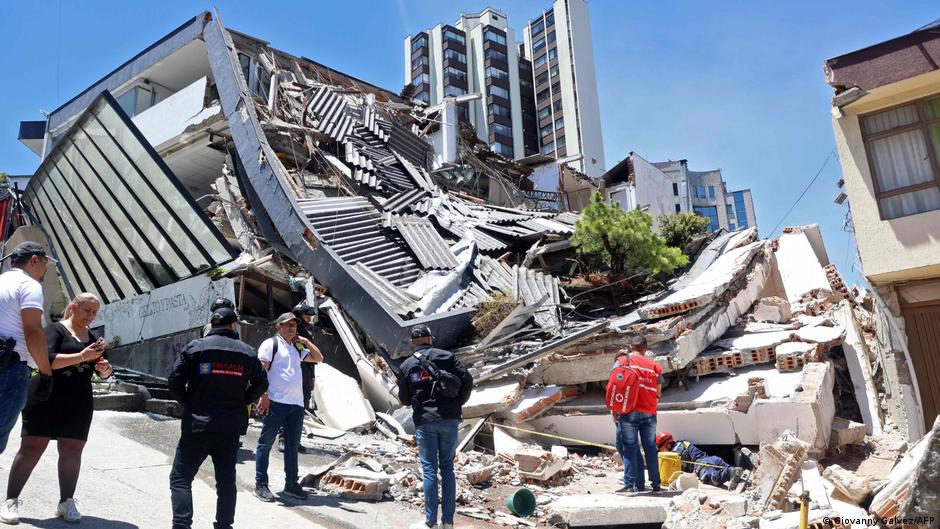
Colombia has declared a nationwide state of emergency following a powerful 7.4 magnitude earthquake that struck the western part of the country on August 10. The quake, the strongest recorded in Colombia in the 21st century, resulted in at least 132 fatalities and over 570 injuries, according to national authorities.
President Abelardo de la Espriella, who assumed office just days before the disaster, announced the mobilization of all institutional resources to respond effectively to the catastrophe. Priorities include rescuing those trapped under rubble and addressing the immediate humanitarian needs. The earthquake caused severe damage to over 1,500 residential buildings in key cities such as Pereira, Cali, and Manizales, with approximately 60 buildings collapsing entirely. Essential infrastructure, including 18 hospitals and 52 schools, also sustained significant damage.
Economic and Policy Implications of the Earthquake
The quake’s epicenter was located near San José del Palmar at a depth of approximately 103 kilometers, triggering numerous aftershocks that continue to affect the region. The extensive destruction poses substantial challenges for Colombia's emerging administration, led by President de la Espriella, who recently took office with a mandate focused on security and economic deregulation.
“All institutional resources will be mobilized to adequately respond to the disaster, with saving lives under the debris as the top priority,” stated President de la Espriella.
The disaster arrives at a critical moment for Colombia’s economy and governance. The new administration has emphasized combating armed groups involved in narcotics through enhanced military measures and intends to pursue economic deregulation to stimulate growth. However, the scale of destruction from the earthquake will require substantial public expenditure and reconstruction efforts that may temporarily divert resources from other policy priorities.
The impact on infrastructure, particularly hospitals and schools, threatens to disrupt public services and human capital development, potentially slowing Colombia’s economic progress. Additionally, reconstruction demands may increase public debt or necessitate international financial support, altering fiscal dynamics.
International Response and Strategic Considerations
The United States has pledged $15.5 million in emergency aid to Colombia, underscoring close bilateral ties and Washington’s interest in regional stability. The U.S. Department of State expressed solidarity with the Colombian people and support for President de la Espriella, who enjoys favorable relations with the U.S. administration.
Washington’s engagement is particularly relevant given Colombia’s strategic importance in hemispheric security and economic cooperation, especially regarding anti-narcotics efforts and migration control. Newly elected President de la Espriella has prioritized strengthening regional security partnerships and economic ties with the U.S., signaling continuity in these areas despite the natural disaster.
Nevertheless, Colombia’s government will face the dual challenge of managing immediate disaster relief and maintaining momentum on its broader policy agenda. The earthquake’s long-term economic consequences, including reconstruction costs and potential shifts in foreign investment or trade flows, will be closely monitored by international investors and policymakers.
As reconstruction efforts unfold, the Colombian experience may also provide insights into disaster resilience and governance in emerging markets, highlighting the intersection of natural shocks and political transitions in shaping economic trajectories.