Bulgaria Heads to Presidential Runoff as Low Turnout Clouds Policy Outlook
The November 1 runoff will test Bulgaria’s foreign-policy direction as security risks and institutional uncertainty weigh on confidence.
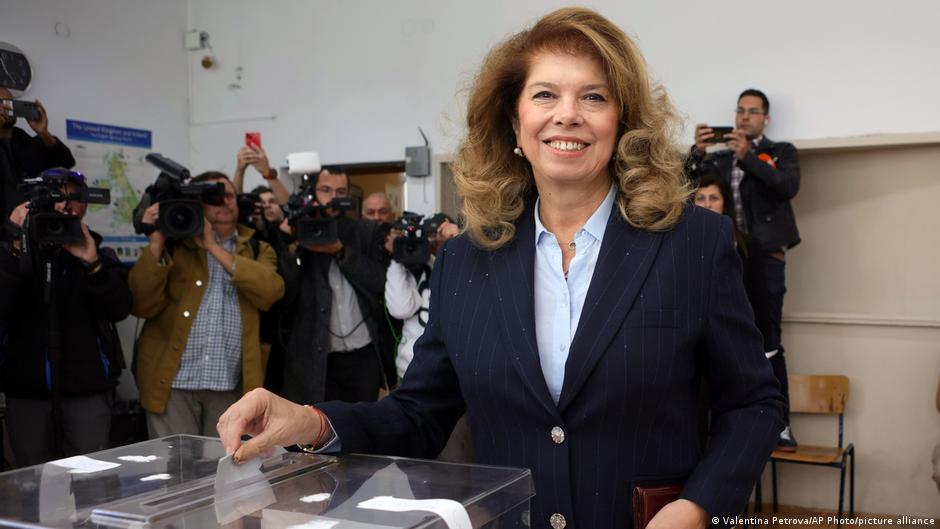
Bulgaria is heading for a second round of presidential voting after no candidate secured the absolute majority required for a first-round victory, extending political uncertainty at a time when the country faces heightened regional security risks and potentially consequential policy choices.
With 95.3% of ballots processed, incumbent President Iliyana Yotova had received 34.6% of the vote, according to the country’s Central Election Commission. Pro-Western former prime minister Andrey Gyurov was in second place with 32%. The runoff is expected to take place on November 1.
Turnout was only 22.2%, far below the threshold of more than 50% required for the election to be valid in the first round. The weak participation rate is economically and institutionally significant: it points to limited public engagement at a moment when Bulgaria must navigate regional instability, investment uncertainty and difficult decisions over its international alignment.
Security risks enter the economic equation
The second round carries particular foreign-policy importance because of Bulgaria’s proximity to the war in Ukraine and its position on the Black Sea. During October alone, four merchant vessels off the Bulgarian coast were reportedly struck by drones. A Starlink station near Sofia was also damaged in an arson attack.
Yotova and Bulgaria’s government, led by Rumen Radev, responded cautiously to the incidents, offering no definitive assessment and declining to identify those responsible. That restrained reaction became an issue during the campaign, illustrating how security policy can affect perceptions of political stability and the country’s ability to manage risks to trade, communications infrastructure and investor confidence.
The runoff is not only a contest over diplomatic positioning; it is also a test of how Bulgaria intends to manage the economic exposure created by war near its borders.
For senior economic decision-makers, the attacks near the Black Sea coast are especially relevant. Merchant shipping, communications systems and other strategic infrastructure are integral to regional commerce. Any prolonged uncertainty over their security could raise operating costs, complicate insurance and logistics decisions, and influence capital allocation across southeastern Europe.
Ukraine policy separates the candidates
The early stages of the presidential campaign featured few rallies, no televised debates and numerous personal attacks against the two leading candidates. In the final weeks, however, their differing approaches to support for Ukraine became the dominant dividing line.
Yotova has advocated a diplomatic end to the war and sought to reassure voters that Bulgarian troops would not be deployed to Ukraine, even though such a deployment had not been the subject of broad public debate. Gyurov has previously expressed support for Ukraine and, while serving as prime minister, signed a security cooperation agreement with Kyiv.
The contrast may shape expectations about Bulgaria’s relationships with European and transatlantic partners, as well as its approach to defense commitments and regional security cooperation. Although the presidency does not directly control most economic policy, a change in political tone could affect perceptions of policy continuity and Bulgaria’s position in wider European debates over security spending, support for Ukraine and protection of critical infrastructure.
Limited office, meaningful leverage
Bulgaria’s president has formally restricted powers, but the office retains several instruments with potentially important economic and institutional consequences. The president represents the country internationally, with some exceptions, and serves as commander in chief of the armed forces.
The officeholder also signs decrees appointing the prosecutor general and the heads of the highest courts. In addition, the president appoints an acting prime minister from a constitutionally defined group of eligible officials and can veto legislation approved by parliament.
Those responsibilities give the presidency influence over institutional continuity, judicial leadership and the pace of lawmaking. A presidential veto can delay legislation and force renewed parliamentary consideration, while the power to appoint an interim prime minister becomes particularly important during periods of government instability. For businesses and investors, these mechanisms can affect the predictability of regulation and the credibility of public institutions even when the president is not the primary architect of fiscal or monetary policy.
The narrow gap between Yotova and Gyurov leaves the outcome open, while the exceptionally low turnout raises questions about the mandate available to either candidate. Mobilizing disengaged voters will therefore be central to the second round. The result will offer a signal not only about Bulgaria’s approach to Ukraine, but also about how the country intends to balance security, diplomatic alignment and institutional stability over the longer term.