Western Tutors Educate Putin’s Alleged Children, Revealing Elite Language Training Practices
Putin’s presumed children receive high-cost language education from Western governesses, highlighting elite international labor use amid geopolitical tensions.
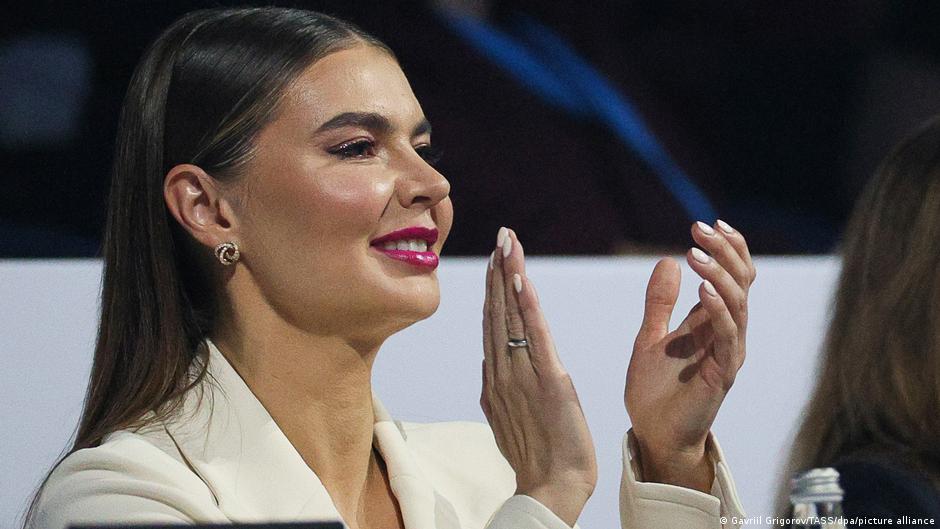
Investigations have revealed that the presumed children of Russian President Vladimir Putin and Olympic champion Alina Kabaeva are being taught English and German by foreign governesses from Western countries. These language tutors, sourced from nations including the United Kingdom, New Zealand, Germany, Austria, and Ireland, have been employed over a nearly decade-long period, with annual costs reaching hundreds of thousands of dollars.
Between 2017 and 2026, about 20 such highly qualified specialists have been engaged to educate the children, according to a detailed inquiry conducted by the investigative project "Sistema." Notably, in January 2026 alone, salaries paid to three governesses amounted to no less than 3.5 million rubles. This level of expenditure underscores significant investment in cultivating linguistic skills within Russia’s highest political echelon.
Employment Structure and Operational Secrecy
The tutors are officially employed as "senior translators" at the Institute for Professional Retraining under the International Medical Center "Sogaz." This designation enables them to obtain Russian work visas under the category of highly qualified specialists, a status granting streamlined legal permissions. Such an arrangement reflects both a desire for discretion and a strategic approach to circumvent potential bureaucratic obstacles.
Recruitment and management of these educators are reportedly conducted by the cousins of Alina Kabaeva, Olesya Fedina and Ekaterina Golovacheva. The documentation makes no direct mention of Putin or Kabaeva, listing the children only as "wards." However, a 2019 document references a name—Ivan Fedin—which differs from the actual son of Olesya Fedina, suggesting deliberate obfuscation to preserve confidentiality.
Previous journalistic investigations by independent outlets have suggested the names of the children as Ivan (born in 2015) and Vladimir (born in 2019), but official confirmation remains absent.
"By the age of four, Ivan must be fully immersed in a 'language bath', with his English speech comparable to that of a proficient European," stated Olesya Fedina in 2019, outlining the rigorous linguistic expectations set for the child.
These linguistic immersion strategies extend to German language instruction as well, emphasizing a broader multilingual competency. The educators reportedly reside with the children at the presidential residence in Valdai, where stringent health monitoring protocols are enforced to ensure continuity and stability in instruction.
Operational guidelines forbid the tutors from imposing religious, political, or ideological views on the children, and prohibit discussions on topics such as sexual education or LGBTQ+ issues. This controlled educational environment reflects a curated upbringing aligned with specific cultural and political sensibilities.
Global Economic and Policy Implications
This revelation sheds light on the paradox of Russia’s elite utilizing Western expertise and human capital even amidst escalating geopolitical tensions and economic sanctions. The employment of foreign professionals for private educational purposes within Russia’s highest circles illustrates a nuanced facet of globalization and interdependence that transcends political divides.
For policymakers and economic strategists, the case exemplifies the challenges of decoupling national elites from global labor markets, as well as the resilience of niche service sectors catering to high-net-worth individuals. The importation of specialized educational services underlines the persistent demand for cross-border knowledge transfer and talent mobility despite broader economic frictions.
Moreover, the covert nature of these arrangements and the use of formal institutions to facilitate visas and employment highlight adaptive strategies to maintain access to Western expertise. This has implications for sanction design and enforcement, where loopholes in visa regimes and professional classifications may undermine intended policy objectives.
Finally, the focus on early childhood multilingual education among Russia’s political elite signals a long-term investment in global communicative competence, potentially influencing future diplomatic and economic engagement capabilities.
Attempts to obtain responses from involved parties, including the tutors and Kremlin representatives, have been unsuccessful, underscoring the opacity surrounding elite private education.