US Reshuffles 50% Tariffs on Canadian Goods in Targeted Trade Shift
Washington will lift steep duties on selected Canadian imports while extending tariffs to new consumer and industrial product categories.
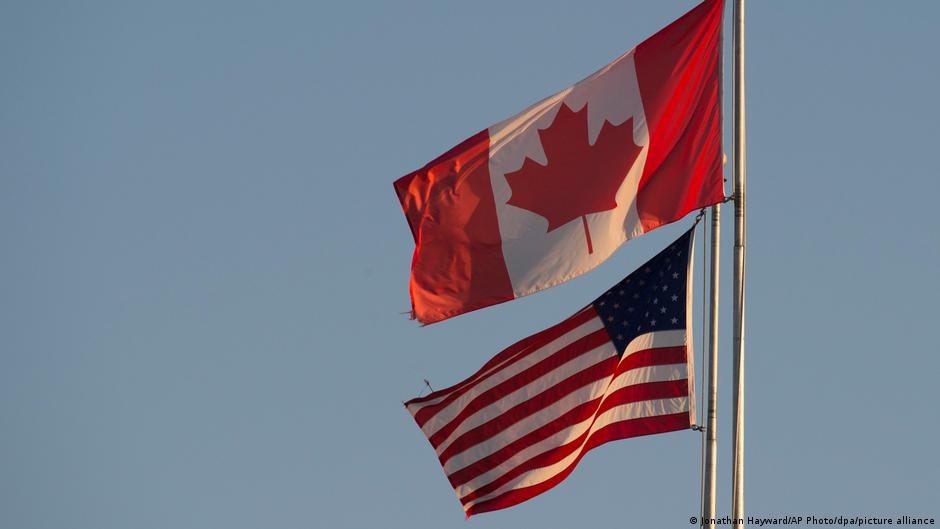
US President Donald Trump has ordered the removal of 50% customs duties on a group of Canadian products from October 30, while simultaneously imposing tariffs on other categories of imports from the neighboring country. The recalibration offers selective relief to parts of the cross-border supply chain but leaves the broader trade dispute between Washington and Ottawa unresolved.
Trump signed the order on Friday, October 23. The products released from the 50% tariff include plywood, certain paper products, machinery used by the pulp and paper industry, packing cases and cardboard boxes, as well as fresh and dried seaweed.
The decision could lower costs for US companies that use Canadian wood, paper, packaging and specialized machinery. These inputs connect resource extraction, manufacturing, logistics and retail, meaning that exceptionally high border charges can affect prices beyond the industries directly covered by the measure. Removing the duties may therefore ease pressure in selected supply chains, although the overall economic effect will depend on trade volumes and how quickly importers adjust their sourcing and pricing.
Tariff burden moves to new sectors
The White House balanced the exemptions by adding other Canadian products to the tariff list. The newly covered categories include carpets, paints, shampoos, cocoa powder, wooden coffins, ice-pop sticks, air conditioners, freezers, archery goods and canoes.
The shift indicates that Washington is changing the composition of its trade restrictions rather than pursuing a broad normalization of commercial relations. For companies operating across the US-Canada border, the resulting pattern is uneven: producers and buyers in some sectors gain relief, while businesses in newly targeted categories face higher costs and greater uncertainty.
Such product-level changes can influence procurement decisions, inventory management and investment planning even when their aggregate impact is limited. A tariff regime that moves repeatedly between sectors may also encourage companies to diversify suppliers or hold additional stock, increasing operating costs. Consumer prices could be affected where importers, distributors or retailers pass tariff expenses through to buyers, although the source material provides no estimates of the scale of that effect.
Canada is assessing the US action, according to Dominic LeBlanc, the Canadian minister responsible for intergovernmental affairs and trade with the United States. Ottawa signaled that it remains open to negotiations while emphasizing that any revised arrangement must recognize Canadian priorities.
Ottawa is “ready to work constructively and in good faith to build a more mutually beneficial trade relationship that takes Canadian interests into account,” LeBlanc said.
Political tensions complicate the economic outlook
The dispute over the US-Canada trade agreement and reciprocal tariffs of 50% has become one of the clearest signs of deteriorating relations between Washington and Ottawa since Trump returned to the presidency. The US president has also repeatedly raised the possibility of incorporating Canada into the United States as its 51st state, adding a political dimension to an already consequential economic confrontation.
The current tariff adjustment follows a series of escalating trade measures. At the end of September, the United States suspended imports of several Canadian products for an indefinite period. The affected goods included alcoholic beverages, beer, sparkling wine and whey, some dairy products, and motorcycles.
Washington took that step after Ottawa decided to respond in kind to higher customs duties introduced by US authorities in August. The sequence illustrates how retaliatory measures can spread from an initial tariff decision into a broader set of restrictions, affecting industries that were not necessarily central to the original disagreement.
For senior decision-makers, the central issue is less the immediate relief granted to individual products than the growing unpredictability of trade policy between two deeply integrated economies. Canada and the United States share extensive production networks, and changes at the border can move through manufacturing, transportation, wholesale distribution and consumer markets.
The October 30 revisions may reduce disruption for selected industrial inputs, particularly in paper, packaging and wood-related supply chains. At the same time, extending duties to household products, appliances and recreational goods preserves the risk of cost increases elsewhere. The simultaneous removal and addition of tariffs also makes it difficult to interpret the move as a durable de-escalation.
Ottawa’s assessment will be important for the next phase of the dispute. A restrained response could create space for negotiations over a more stable framework, while further reciprocal restrictions could widen the economic exposure on both sides of the border. Until the two governments establish a clearer direction, companies are likely to treat the latest order as a tactical adjustment within a continuing trade conflict rather than a return to predictable North American commerce.