US Plans to Remove Syria from Terrorism Sponsors List, Signaling Policy Shift
The Trump administration's move to lift sanctions on Syria marks a significant change with broad economic and geopolitical implications.
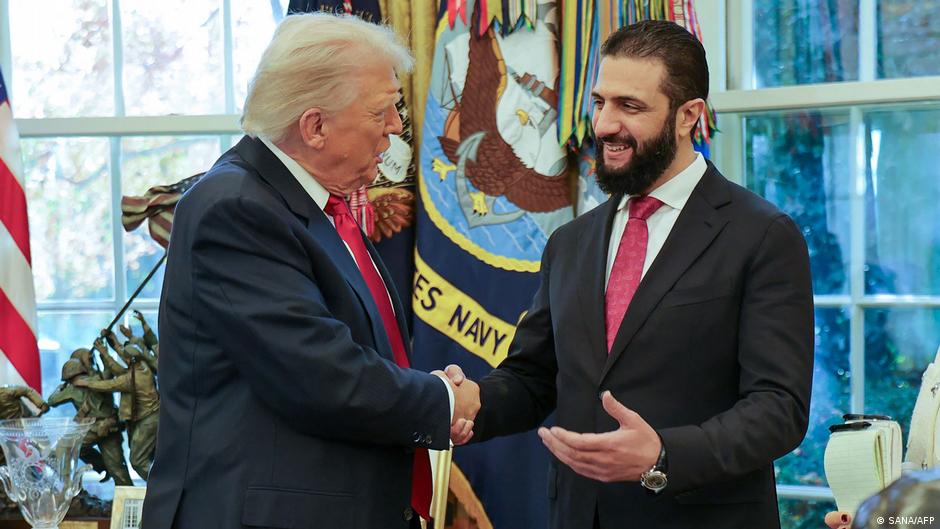
In a notable shift of US foreign policy, President Donald Trump has pledged to remove Syria from the US list of state sponsors of terrorism. This decision, communicated in a letter to Syria's interim president Ahmed al-Sharaa, reflects a broader strategy to encourage economic reconstruction and reintegration of Syria into the global economy after years of conflict.
The announcement coincided with the NATO summit in Ankara, where Trump met al-Sharaa personally. The US president stated that American companies are ready to invest in Syria to help restore the country’s prosperity. This development follows a prior executive order lifting sanctions on Syria and a directive to Secretary of State Marco Rubio to formally consider Syria’s removal from the terrorism sponsors list.
Economic and Geopolitical Implications
"We have American companies ready to invest in Syria and help make your country greater and more prosperous than ever," Trump wrote to al-Sharaa.
The designation of Syria as a state sponsor of terrorism has long restricted US foreign aid, arms exports, and financial transactions with the country. Removing this label could open the door for substantial foreign direct investment, especially in reconstruction efforts devastated by the prolonged Assad regime and civil war.
Several Saudi companies have already expressed interest in investing in Syria’s recovery, signaling a possible regional realignment. Syria’s new leadership has emphasized that the US policy change not only enables economic recovery but also paves the way for Syria’s reintegration into the international system.
Significantly, this is the first high-level contact between US and Syrian leaders in 25 years, with previous meetings dating back to the Clinton administration. The meeting in Riyadh in May 2025 between Trump and al-Sharaa was pivotal, setting the stage for these policy shifts and deeper diplomatic engagement.
Alongside the political developments, all US troops have been withdrawn from Syrian territory, marking a symbolic end to direct American military involvement. The Syrian Foreign Ministry welcomed the handover of former US military facilities back to Damascus, underscoring a new constructive phase in US-Syrian relations.
The US Central Command confirmed that while troops have left the country, the US will continue to support partner-led counterterrorism operations crucial to combating ISIS and maintaining regional security.
Long-Term Economic Consequences
Removing Syria from the terrorism sponsors list and lifting sanctions could have profound long-term economic effects. It opens Syria to international investment, potentially accelerating reconstruction in infrastructure, energy, and resource extraction sectors.
However, this pivot also entails risks, including the management of US investments amid complex geopolitical tensions and the Syrian regime’s authoritarian governance. The move may reshape US relations with Gulf states and other regional powers, as economic interests increasingly intersect with strategic considerations.
For senior economic decision-makers, understanding this policy shift is critical. It signals a US willingness to reengage economically with a previously isolated regime, potentially unlocking new trade routes and resource access, but also requiring careful navigation of the geopolitical landscape.
Overall, these developments suggest a recalibration of US Middle East policy with strategic economic motives, aiming to leverage economic tools to influence regional stability and security.