US Military Strikes Iranian Targets Amid Rising Gulf Tensions
US airstrikes on Iranian military and infrastructure assets escalate regional conflict with retaliatory attacks on American bases.
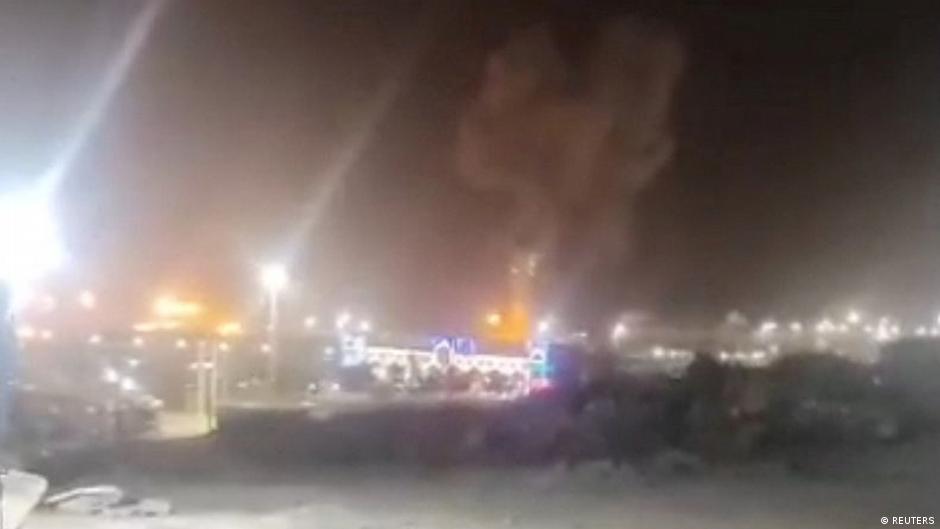
The United States military conducted two waves of strikes targeting Iranian military and infrastructure sites, alongside an attack on an oil tanker in the Persian Gulf. In response, Iran launched retaliatory strikes against US bases in Bahrain and Kuwait, marking a significant escalation in regional tensions.
Details of the Military Engagement
On July 16, US Central Command (CENTCOM) reported air operations targeting facilities in Iran’s port areas of Sirik and Bandar Abbas along the strategic Strait of Hormuz. The strikes included three air raids on Bandar Abbas and damage to a fishmeal production plant near Qeshm Island. Additional attacks reportedly hit sites in Ahvaz, Khuzestan province, as well as explosions near Rasak and the port of Kenarak in the southeastern provinces of Sistan and Baluchestan.
The second wave of attacks focused on Iranian command centers, air defense systems, missile and drone infrastructure, and coastal observation posts. CENTCOM emphasized these were intended to degrade Iran's ability to threaten commercial maritime traffic.
"These operations aim to further weaken Iran's capacity to pose risks to maritime crews and shipping lanes," a CENTCOM statement noted.
There are no confirmed civilian casualties reported to date.
In a notable escalation, US forces disabled an unmanned oil tanker attempting to breach the maritime blockade on Iranian ports. The commercial tanker M/T Belma, sailing under the flag of Curaçao towards Hargeh Island, was targeted after ignoring warnings. US aircraft fired Hellfire missiles at the vessel’s smoke stack, rendering it inoperative.
The maritime blockade was reinstated on July 14 to limit Iranian maritime activities. Within the first day of enforcement, CENTCOM diverted two commercial vessels and used force against one.
Iranian Counterstrikes and Regional Impact
In retaliation, Iranian forces launched attacks on US military bases in Bahrain and Kuwait. Iranian media reported at least ten explosions at the US Navy Fifth Fleet headquarters in Bahrain and additional attacks at US installations in Kuwait. Following these strikes, Saudi Arabia and Jordan partially closed their airspace, signaling rising regional instability.
Iran’s Islamic Revolutionary Guard Corps air defenses claimed to have shot down a US MQ-9 drone, further intensifying hostilities.
Amid these developments, US Vice President J.D. Vance acknowledged the complexity of the situation in a recent podcast, describing the trajectory as "challenging but moving in the right direction." He emphasized a dual approach combining economic pressure with diplomatic engagement with more pragmatic Iranian officials.
"I don't know exactly where this will lead, but fundamentally, I believe we are moving in the right direction. It will be a tough process, with many pauses and renewals," Vance said.
Global Economic and Policy Implications
This resurgence of hostilities in the Persian Gulf presents significant challenges for global economic stability, particularly in energy markets. The Strait of Hormuz is a critical chokepoint, responsible for transporting approximately 20% of the world’s seaborne oil. Disruptions caused by military actions or blockades risk triggering volatility in oil prices, potentially exacerbating inflationary pressures worldwide.
Moreover, the US decision to enforce a maritime blockade and directly target Iranian maritime assets signals a shift towards a more confrontational policy stance. This may prompt Iran to adopt asymmetric warfare tactics, increasing risks to commercial shipping and regional security.
For senior policymakers, the unfolding conflict underscores the necessity of balancing military deterrence with diplomatic efforts to prevent a broader escalation that could destabilize global energy supplies and trade routes. The US strategy combining sanctions with dialogue reflects this dual approach, though the path forward remains uncertain.