US Drastically Reduces Joint Military Exercises with South Korea Amid Regional Policy Shift
The Trump administration orders a significant scale-back of US-South Korea drills, signaling a shift in strategy towards North Korea and altering regional security dynamics.
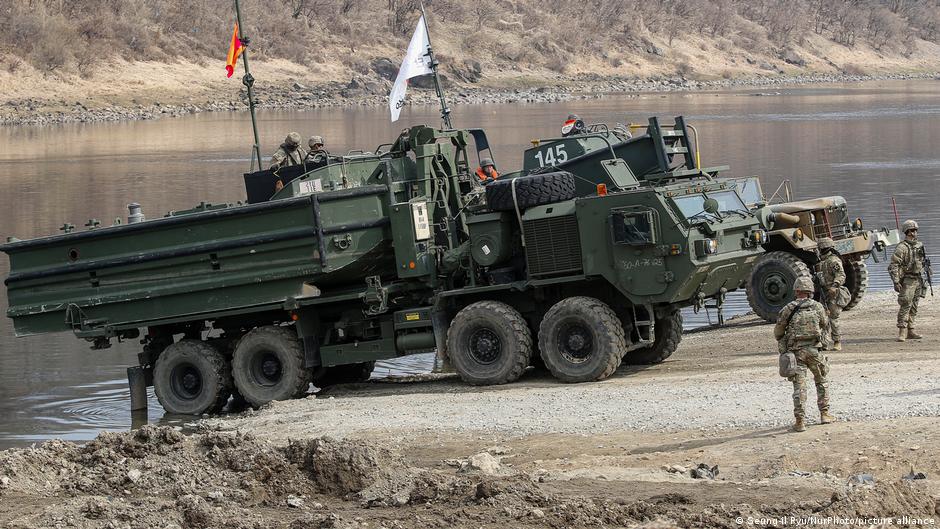
The United States has announced a substantial reduction in the scale of joint military exercises with South Korea, marking a notable shift in Washington's regional security posture. President Donald Trump directed the US Department of Defense to downsize the upcoming Ulchi Freedom Shield exercises, which have traditionally been a key component of preparedness against potential North Korean aggression.
Strategic and Economic Implications of the Scale-Back
President Trump, citing his "very good relationship" with North Korean leader Kim Jong Un, expressed reluctance over the continuation of these drills, describing them as costly and provocative. He emphasized that the financial burden disproportionately falls on the US, which has long funded the majority of these exercises. Trump also criticized South Korea for its lack of support in US-led efforts against Iran, highlighting a shift in his administration's approach to alliances and military commitments.
“These exercises not only are expensive, with the US covering the majority of costs (as usual!), but they also send an inappropriate and hostile signal to a country that, while I am President, has posed no threat and has behaved respectfully.”
The decision to scale back exercises like Ulchi Freedom Shield, an 11-day operation scheduled to begin in mid-August and focused on readiness against North Korean attacks, signals a possible recalibration of US military engagement in the region. With approximately 28,500 American troops stationed in South Korea, the move could influence both deterrence capabilities and diplomatic relations on the Korean Peninsula.
Broader Regional and Global Economic Consequences
The reduction of joint military activities comes amid ongoing efforts by South Korean President Lee Jae-myung to foster reconciliation with North Korea. Lee recently proposed peace talks to formally end the Korean War, which has technically been in a ceasefire state since 1953 without a peace treaty. The absence of direct conflict has supported regional economic stability, but military tensions remain a significant risk factor for global markets.
From a macroeconomic perspective, the scale-back could yield savings on defense expenditures for the US, potentially redirecting funds to other priorities. However, it also raises questions about the future of the US-South Korea alliance and the geopolitical equilibrium in East Asia, a region critical to global supply chains and trade routes. Any shift in security guarantees may affect investor confidence and economic policies in allied nations.
Moreover, the move may influence China's strategic calculations, as Beijing closely monitors US military commitments in the region. A decreased US military footprint could embolden regional actors, potentially destabilizing the delicate balance and prompting shifts in economic partnerships and security frameworks.
Overall, the Trump administration’s directive to reduce the scale of joint exercises reflects a broader trend toward reevaluating US military engagements overseas, with significant implications for global economic and geopolitical stability.