United Russia Set for Duma Supermajority as Vote Signals Policy Continuity
Early official results point to a strengthened ruling-party mandate, reinforcing expectations of policy continuity in Russia despite Western criticism.
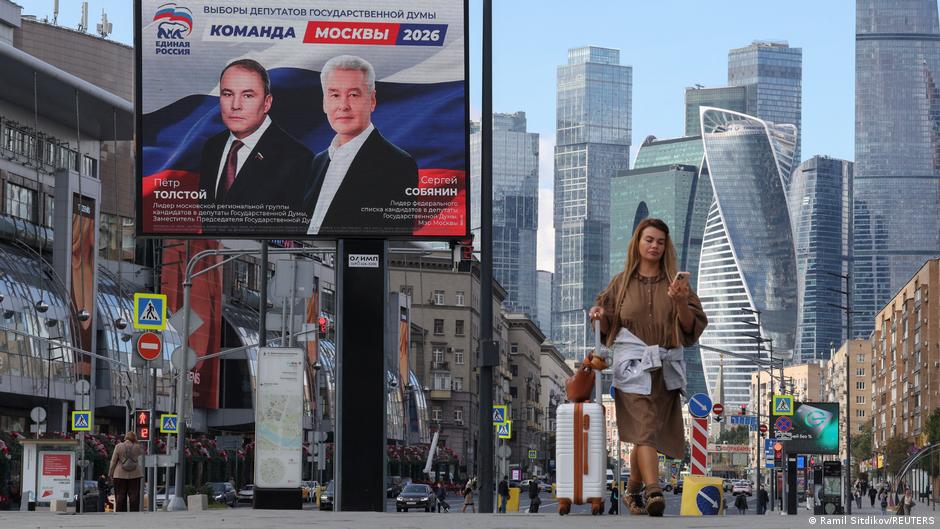
Russia’s ruling party, United Russia, is on course to win the election to the ninth convocation of the State Duma, according to early official figures released by the Central Election Commission after 82.19 percent of protocols had been processed.
The commission reported late on Monday, September 21, that United Russia had received 57.76 percent of the vote. The Communist Party of the Russian Federation was in second place with 13.89 percent, followed by the Liberal Democratic Party of Russia with 8.77 percent. The New People party stood at 7.97 percent, while A Just Russia had 4.99 percent, leaving it at risk of failing to clear the five percent threshold required for party-list representation.
The result, if confirmed in the final count, would mark a stronger performance for United Russia than in the 2021 State Duma election, when it received 49.82 percent of the vote. Candidates from the ruling party were also leading in 208 of the 225 single-mandate constituencies, according to the commission’s figures. On that basis, United Russia would secure more than 301 seats, the number required for a constitutional majority in the lower house of parliament.
Continuity Over Reform
For senior economic decision-makers, the central implication is not a change in direction but the reinforcement of policy continuity. A constitutional majority would preserve the ruling party’s ability to support major legislative and institutional decisions without depending on opposition parties. In practical terms, that would strengthen the predictability of Russia’s domestic policy framework, even as the country remains under pressure from sanctions, wartime expenditure and strained relations with Western governments.
The vote comes at a moment when Russia’s economic model is already being shaped by a prolonged confrontation with the West, increased state intervention, redirected trade flows and a growing role for budgetary and industrial policy. A larger parliamentary majority for United Russia would signal that the political system is likely to continue backing existing priorities rather than pursuing structural liberalization or major political opening.
United Russia’s projected result points to a parliament aligned with the executive at a time when Russia’s economy is being reorganized around security, state spending and geopolitical separation from the West.
The composition of the next Duma matters because parliament is central to budget approval, regulatory changes and the legislative architecture supporting Russia’s domestic and foreign policy. A ruling-party supermajority can smooth the passage of measures linked to defense spending, taxation, industrial subsidies, import substitution and social commitments. It can also reduce visible legislative resistance to policies that carry long-term fiscal or investment consequences.
That does not mean the election result provides clarity on every economic variable. Russia’s macroeconomic outlook will continue to depend on energy revenues, sanctions enforcement, inflation dynamics, labor-market pressures and the cost of sustaining wartime priorities. But the political signal is clear: the legislature is unlikely to become a source of policy constraint.
Western Criticism and Investment Risk
The election was held over three days and, this time, voting for the Russian parliament also took place in territories of Ukraine occupied by Russia. That fact is likely to deepen the divide between Moscow and Western capitals over the legitimacy of Russia’s political process.
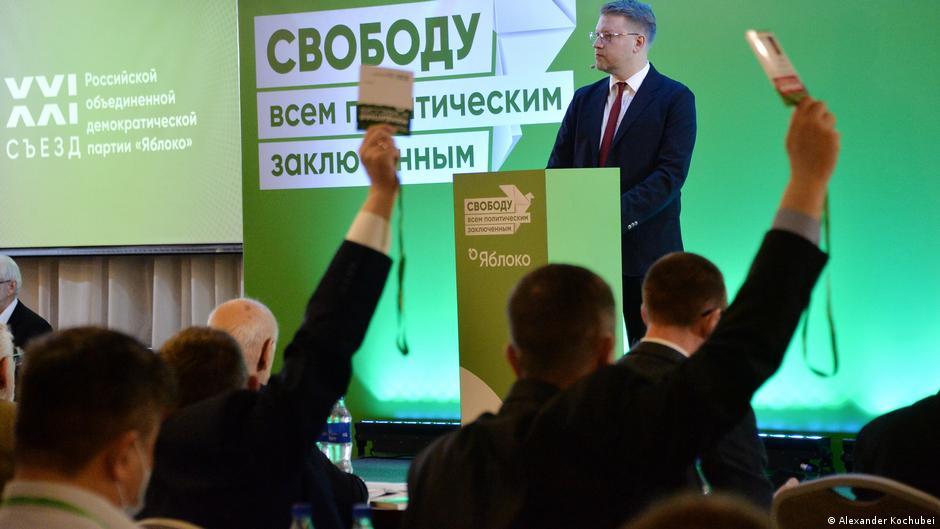
Germany and the European Union criticized the parliamentary elections in Russia, pointing to what they described as their staged character and to repression against the opposition. The only major party that had opposed the war, Yabloko, was removed from the election.
Those criticisms matter for economic policy because they reinforce the political conditions under which sanctions, diplomatic isolation and restrictions on capital flows are likely to persist. For multinational companies, banks and commodity traders, the vote does not reduce compliance risk or reputational exposure. Instead, it underscores that political normalization between Russia and the European Union remains distant.
From a macroeconomic perspective, the election therefore strengthens two parallel expectations. Domestically, Russia is likely to maintain a highly centralized political economy with strong parliamentary support for the executive’s agenda. Externally, Western governments are likely to continue treating Russian institutions as politically compromised, especially given voting in occupied Ukrainian territories and the exclusion of a major anti-war party.
The immediate market effect of such an election may be limited because the result was broadly aligned with the structure of Russian politics and did not suggest a transfer of power. The longer-term implications are more significant. A larger ruling-party majority could make policy execution more efficient, but it also narrows the scope for institutional pluralism and reduces the likelihood of corrective political feedback if economic pressures intensify.
For policymakers and corporate strategists outside Russia, the key takeaway is that the election points to entrenched continuity. Russia’s parliament is set to remain a vehicle for the ruling party’s agenda, while Western criticism indicates that the political environment surrounding Russia will remain a source of sanctions risk, legal uncertainty and geopolitical fragmentation.
For Russia itself, the reported vote share gives United Russia a stronger formal mandate than in 2021. Combined with leads in the overwhelming majority of single-mandate districts, that position would give the party the parliamentary strength needed to sustain constitutional-level authority. In an economy increasingly shaped by war, state direction and external constraint, that legislative dominance is likely to have consequences well beyond the electoral cycle.