UN Peacekeeping Forces at 25-Year Low Amid Geopolitical and Financial Strains, SIPRI Reports
SIPRI highlights a sharp decline in UN peacekeeping personnel, signaling risks to global conflict resolution and multilateral cooperation.
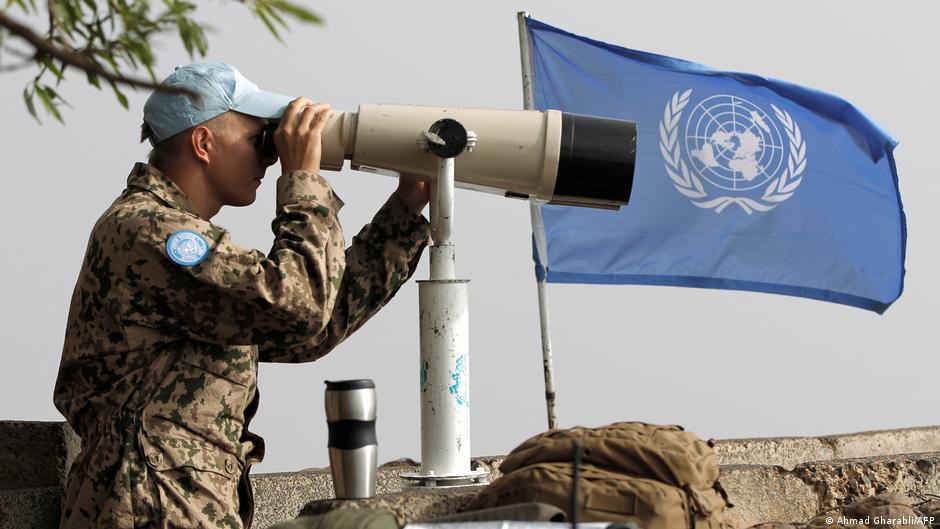
According to the Stockholm International Peace Research Institute (SIPRI), the number of United Nations peacekeepers worldwide has fallen to its lowest level since 2000, driven by geopolitical tensions, political pressures, and a critical funding crisis.
Declining Peacekeeping Capacity and Its Implications
As of December 31, 2025, the international peacekeeping contingent stood at 78,633 personnel—a 49% decrease compared to 2016 levels and the most significant annual drop of 17% recorded in the past decade. SIPRI's May 2026 report attributes this decline to strained global relations and delayed or incomplete contributions from major donors, which led to a $2 billion shortfall in July 2025. This deficit accounted for 35% of the UN’s $5.6 billion peacekeeping budget for 2024–2025 and forced substantial staff reductions across multiple missions.
"If this trend continues, we will witness a dramatic weakening of multilateral conflict resolution efforts and a near-total loss of relevance for institutions like the UN," warned Yair Van Der Leyn, SIPRI’s director for peacekeeping operations and conflict resolution.
The reduction in UN peacekeepers impacts 58 international missions across 34 countries and territories, four fewer than in the previous year. Africa south of the Sahara and Europe hosted 18 missions, the Middle East and North Africa 14, the Americas five, and Asia and Oceania three. Notably, 73% of peacekeepers were concentrated in just five operations, primarily located in sub-Saharan Africa.
Political challenges have also constrained the renewal of peacekeeping mandates. For example, despite ongoing ceasefire violations between Israel and Lebanon in 2024, the United States pushed for termination of the UN Interim Force in Lebanon (UNIFIL) during mandate renewal talks in August 2025. The UN Security Council ultimately extended the mission only until December 2026 as a compromise. Since 2014, no new UN peacekeeping mandates have been authorized, while regional organizations like the African Union and the Economic Community of West African States (ECOWAS) have deployed their own operations amid similar funding and political obstacles.
SIPRI experts emphasize that regional bodies lack the comprehensive capabilities and stable financing that the UN traditionally provides. Claudia Pfeiffer Cruz, senior researcher at SIPRI, explains, "As UN-led conflict resolution diminishes, an expanding gap emerges that alternative models cannot fill effectively." She argues that despite regional efforts, multilateral peacekeeping under the UN remains indispensable for successful crisis management.
Despite the ongoing challenges, political support for UN peacekeeping remains broadly stable. The Peacekeeping Ministerial Forum held in Berlin in May 2025 involved over 130 UN member states, demonstrating widespread backing for future peace operations. However, SIPRI stresses that member states must move beyond rhetorical support and commit to predictable financing and political frameworks that enable effective multilateral missions.
The report serves as a caution to senior policymakers that the erosion of UN peacekeeping capacity carries significant risks for global stability. Reduced international presence and weakening of established peace norms may contribute to escalated conflicts with harsher humanitarian consequences. The need for strategic policy shifts and investment in international peace infrastructure is urgent to sustain effective multilateral conflict resolution mechanisms and manage long-term global security challenges.