Ukraine Talks May Shift to UAE or Switzerland in November
A potential trilateral meeting could test whether technical diplomacy can advance toward leader-level talks and reduce economic uncertainty.
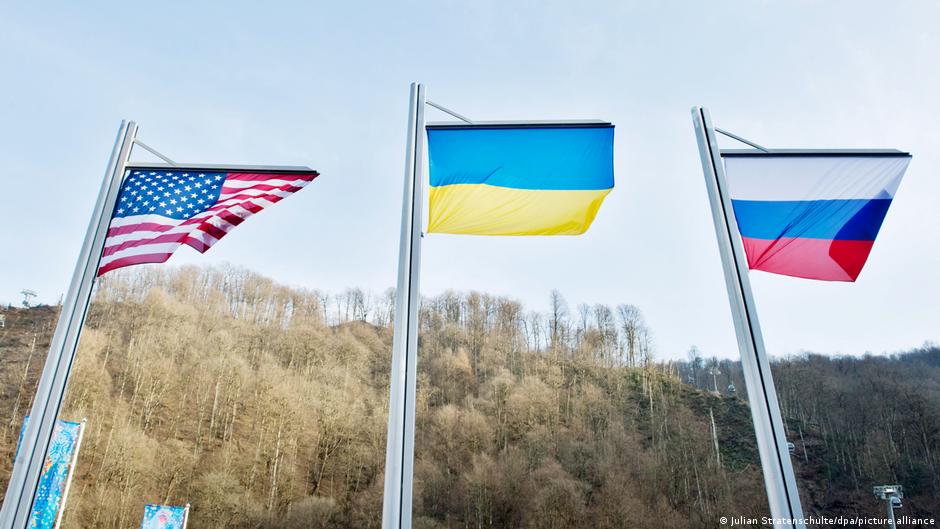
A new round of talks involving delegations from the United States, Ukraine and Russia could take place within weeks in Abu Dhabi or Switzerland, according to Reuters, citing government sources who requested anonymity.
The discussions would focus on efforts to end Russia’s war against Ukraine. It remains unclear whether Ukrainian and Russian representatives would negotiate directly or communicate through US mediation. A Washington representative said the ultimate objective of the possible talks would be to prepare a meeting at the highest political level.
For senior economic decision-makers, the choice of venue matters less than whether the process produces a credible route from technical negotiations to political commitments. Any progress toward ending the war could influence assessments of geopolitical risk, regional security and the longer-term economic outlook for Ukraine, Russia and Europe. Conversely, another inconclusive round would underscore the persistence of uncertainty surrounding the conflict.
Technical talks intended to prepare a leaders’ meeting
Ukrainian President Volodymyr Zelensky said on October 23 that an agreement had been reached to hold a trilateral meeting involving Ukraine, the United States and Russia at the negotiating-team level. He said the parties were planning to meet during the first half of November, while emphasizing that Ukraine was prepared to begin sooner.
“We plan to meet in the first half of November. We are ready to meet on any day—even tomorrow. But everything depends on the Russians,” Zelensky said.
The Ukrainian president made the remarks by video link during an appearance at the Hudson Institute, a conservative US think tank. He characterized the planned discussions as technical and argued that the diplomatic process would ultimately have to move to the leadership level.
“It is necessary to move from trilateral talks at the technical level to a meeting of leaders, because the key issues can only be resolved at that level,” he said.
Zelensky’s comments place a clear limit on the expected role of the next negotiating round: the teams may prepare options, establish procedures and narrow disagreements, but the most consequential decisions would still require political approval from national leaders. That distinction is important for policymakers and markets assessing whether renewed diplomatic activity represents substantive movement or only another preparatory stage.
Abu Dhabi named by Moscow as the expected venue
Shortly before Zelensky’s statement, the Kremlin said the trilateral negotiations would take place in Abu Dhabi during the first half of November. Kremlin spokesman Dmitry Peskov said the talks would address the security of Russia and Ukraine after the war ends.
Peskov also said representatives of the European Union would not participate. Their absence would leave the United States as the external party in the three-way format, even though any postwar security framework could have wider consequences for Europe’s policy environment and economic planning.
Reuters’ reporting, however, indicates that Switzerland remains a possible alternative to the capital of the United Arab Emirates. Both options would place the discussions outside the territories of the combatants, while the uncertainty over the venue suggests that elements of the negotiating framework may still be under consideration.
Previous Abu Dhabi rounds produced no breakthrough
The latest diplomatic activity follows a meeting in St. Petersburg two days earlier between Russian President Vladimir Putin and Steven Witkoff, the US president’s special envoy. Afterward, Russian presidential aide Yuri Ushakov said Moscow was ready to resume trilateral negotiations with the United States and Ukraine.
Delegations from Ukraine, Russia and the United States have already held two rounds of closed-door talks in Abu Dhabi. The first took place on January 23-24, followed by a second round on February 4-5. Neither meeting produced a breakthrough toward ending the war in Ukraine.
That record raises the threshold for judging the next session. The immediate measure of progress will be whether the participants can establish a pathway to the leaders’ meeting described by Washington and advocated by Zelensky. Without such a transition, the negotiations may remain confined to technical exchanges rather than decisions capable of altering the course of the conflict.
The proposed agenda also points beyond a possible cessation of hostilities. By identifying Russian and Ukrainian security after the war as a central subject, Moscow has framed the talks around arrangements intended to endure after fighting stops. The design of any such framework would shape confidence in the durability of a settlement and, by extension, expectations for longer-term economic stabilization.
For governments and businesses, the next round will therefore be significant primarily as a signal of political capacity. A confirmed meeting, agreement on mediation and movement toward leader-level engagement would indicate that the diplomatic channel is becoming more structured. Failure to settle even those procedural questions would show that substantial barriers remain despite the renewed public commitment to talks.