Ukraine Anti-Corruption Agencies Search Prosecutor General’s Office
The operation links alleged call-center fraud protection to a prosecutor’s office employee as Kyiv weighs tougher penalties.
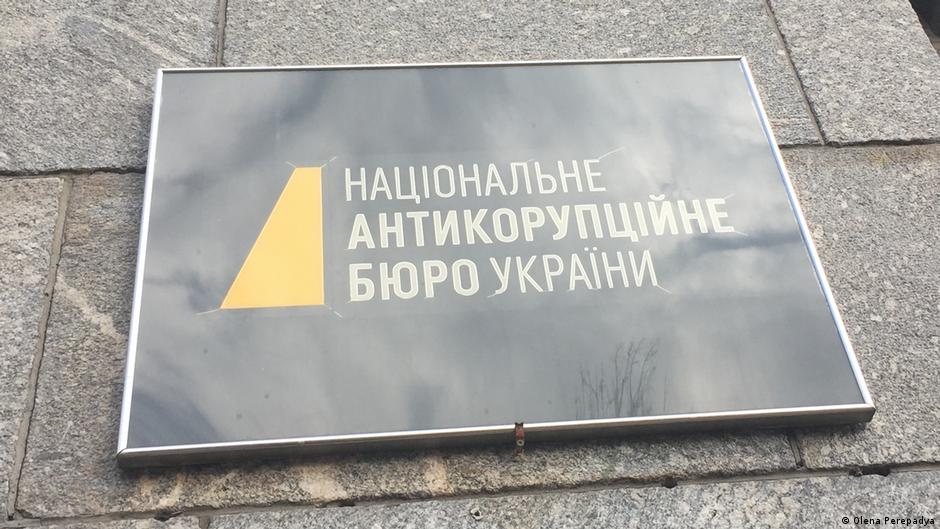
Ukraine’s anti-corruption authorities have announced an operation targeting public officials suspected of involvement with fraudulent call centers, bringing scrutiny to an employee of the country’s Prosecutor General’s Office and underscoring the governance pressures facing Kyiv during wartime.
The National Anti-Corruption Bureau of Ukraine, known as NABU, and the Specialized Anti-Corruption Prosecutor’s Office, or SAP, said they were conducting an operation to expose what they described as a criminal organization involved in protecting a network of fraudulent call centers and laundering property. According to investigators, the organization is headed by an employee of the Prosecutor General’s Office, the agencies said in statements published on their Telegram channels on Friday, September 4.
The agencies said further details of the operation would be provided later. On the same day, searches were carried out at the Prosecutor General’s Office. The office confirmed investigative actions were taking place, while stressing that the suspicions raised by NABU and SAP did not directly concern Ukraine’s prosecutor general, Ruslan Kravchenko.
“The Office of the Prosecutor General will provide the anti-corruption bodies with full assistance and all necessary information within the law,” the office said.
The statement added that the employee whose possible involvement in unlawful activity is being checked would be suspended from official duties for the duration of the pre-trial investigation. For Ukraine’s institutions, the move signals both the political sensitivity of anti-corruption enforcement and the economic importance of public trust in the state’s wartime legal architecture.
Governance Risk Meets Wartime Economic Policy
The case arrives at a moment when Ukraine’s anti-corruption framework is not merely a domestic legal issue but a macroeconomic concern. Kyiv remains heavily reliant on external financing, military aid and long-term reconstruction commitments from partners that place institutional integrity near the center of their policy conditions. Any allegation involving senior state institutions, even when limited to individual employees, can therefore carry wider implications for investor confidence, donor oversight and Ukraine’s integration trajectory with Western institutions.
According to the Ukrainian outlet Ukrainska Pravda, NABU and SAP suspicions fell on Serhiy Kropyva, deputy head of the international legal cooperation department of the Prosecutor General’s Office. The outlet reported, citing sources “in business circles,” that he had been detained. There has been no official confirmation of the individuals affected by the searches or of the suspects.
Journalists also reported that searches were conducted at the premises of Ukrainian official Oleh Kiper. Kiper previously held several positions in the Prosecutor General’s Office and in 2023 was appointed head of the Odesa regional military administration. Before taking his latest role in the Prosecutor General’s Office, Kropyva had been Kiper’s deputy in the Odesa regional military administration, though earlier he had also worked in the Prosecutor General’s Office in the cybersecurity department.
The Odesa connection is economically relevant because the region remains one of Ukraine’s most strategically important gateways for trade, logistics and military administration. Allegations touching officials associated with such structures can heighten scrutiny of how wartime institutions manage risk, personnel networks and the enforcement of rules in regions critical to export flows and infrastructure resilience.
Call Centers Become a Policy Target
The anti-corruption operation followed a separate legislative move by President Volodymyr Zelensky. On September 3, one day before the NABU and SAP operation, Zelensky submitted a bill to the Verkhovna Rada that would toughen penalties for organizing fraudulent call centers and for links to their activity.
Under the proposed legislation, organizers of such call centers could face up to 12 years in prison with confiscation of property. Working in such a center could carry a penalty of up to 10 years in prison. Recruitment into call centers could be punishable by up to five years in prison, while repeated recruitment could carry up to 10 years. Even landlords renting premises for such call centers could face prison terms of up to 10 years.
The severity of the proposed penalties indicates a shift in how Kyiv views call-center fraud: not only as consumer crime, but as a broader threat to financial integrity, social stability and wartime security. Fraudulent call centers can extract hard currency from households, launder assets, corrupt public officials and exploit gaps in enforcement. In a country managing wartime budgets and reconstruction planning, such activity imposes costs that go beyond direct victim losses.
Shortly before the latest developments, Ukraine’s National Police carried out a large nationwide operation to expose fraudulent call centers. As a result, the activity of 94 such organizations was halted. During searches, law enforcement officers seized, among other items, about $2 million, 64,000 euros, gold bars and jewelry.
The scale of the seizures points to an illicit economy with meaningful liquidity. While the figures do not by themselves establish the full size of the sector, they suggest that call-center fraud has developed into a cash-generating ecosystem capable of sustaining property purchases, protection networks and cross-border laundering channels. For senior economic decision-makers, the issue intersects with financial supervision, cyber enforcement, property-market compliance and anti-money-laundering controls.
Cross-Border Security and Economic Fallout
Victims of such call centers include not only Ukrainians but also Russians. The problem became especially visible after the start of Russia’s full-scale invasion of Ukraine, as fraudsters began persuading deceived people to carry out various acts of sabotage. Kyiv and Moscow have each accused the other of organizing the work of such “sabotage” call centers.
That cross-border dimension complicates the economic and security calculus. Fraud schemes that evolve into instruments of sabotage blur the line between criminal enterprise and hybrid warfare. They can raise enforcement costs, intensify information-security demands on financial institutions and deepen mistrust between states already locked in conflict.
For Ukraine, the immediate legal question is whether investigators can substantiate allegations of official protection and property laundering. The broader economic question is whether enforcement can demonstrate that wartime institutions remain capable of policing themselves. The answer matters for aid conditionality, private-sector risk assessments and the credibility of Ukraine’s longer-term reconstruction agenda.