UK and Netherlands Expand Ukraine Aid With Focus on Defence and Recovery
New British and Dutch commitments combine winter military support with financing intended to strengthen Ukraine’s longer-term recovery.
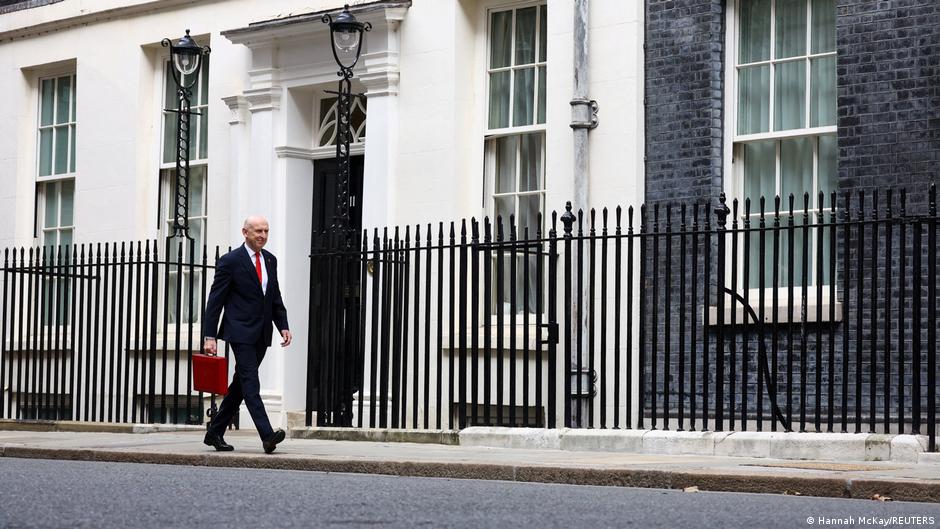
The United Kingdom and the Netherlands have announced new assistance for Ukraine that blends immediate military requirements with longer-term financing for reconstruction, energy repairs and industrial investment. The commitments highlight how European support is increasingly being structured not only around battlefield needs, but also around Ukraine’s economic resilience and its capacity to attract private capital.
London has agreed to provide an additional £10 billion, equivalent to about €12 billion, according to UK Finance Minister John Healey. Addressing the House of Commons, Healey said the package would include loans, export finance guarantees and £500 million in emergency military assistance for the coming winter.
A British government spokesperson quoted by Reuters said the £500 million allocation was intended to address gaps in Ukraine’s air defences that require urgent attention. The emphasis on winter preparedness reflects the close relationship between military protection and economic stability: damage to power generation, logistics and urban infrastructure can disrupt production, increase fiscal pressure and raise reconstruction costs.
Guarantees broaden the economic scope of support
The use of loans and export finance guarantees makes the British package economically significant beyond its headline value. Such instruments can support trade and investment while limiting some of the immediate fiscal burden associated with direct grants. They may also help mobilise commercial financing for projects that private lenders would otherwise consider too risky during an active conflict.
Healey said that he and UK Prime Minister Andy Burnham had spoken with Ukrainian President Volodymyr Zelensky before the parliamentary announcement. According to Healey, Zelensky responded to the news by saying, “You made my day.”
Zelensky later described the British financial and military assistance on Telegram as “a truly powerful and timely step.” He said it came at a moment when Moscow “must see and feel that Ukraine will not be left alone with the problems that Russia is so eager to scale up.”
“Every step to strengthen Ukraine brings Russia closer to understanding that it must end this war,” Zelensky said.
The Ukrainian president added that sanctions policy was another subject discussed with Burnham. He said Britain would continue to maintain a principled position on the issue, calling that stance an important example for the rest of the world.
The measures come amid continuing diplomatic and economic friction between London and Moscow. On October 27, Russia’s Foreign Ministry said that, in response to what it called Britain’s hostile anti-Russian course, seven representatives of UK defence plants would be added to Russia’s entry-ban list.
Dutch funding links defence with reconstruction
The Netherlands is separately committing €500 million in military assistance for the coming winter. Dutch Prime Minister Rob Jetten announced the funding after meeting Zelensky in The Hague on October 28. Reuters reported that the money would finance drones and other materials required to reinforce Ukraine’s defences.
The Dutch government will also allocate €1.2 billion in non-military assistance over the next three years. Of that total, €380 million is earmarked for reconstruction in 2027, followed by €410 million in each of 2028 and 2029.
Part of the funding is expected to go to vehicles that help Dutch companies invest in Ukraine’s reconstruction. Additional resources will support urgent repairs to Ukrainian energy infrastructure and purchases of machine tools for industry. This approach connects public assistance with productive capacity, potentially helping Ukraine preserve employment, restore exports and reduce the long-term cost of war-related economic disruption.
For European policymakers and businesses, the Dutch structure offers a model in which reconstruction funding serves several objectives simultaneously. It addresses immediate infrastructure failures, supports Ukraine’s industrial base and creates channels for companies willing to participate in rebuilding. The multiyear schedule also provides greater predictability than short-term emergency allocations, although implementation will remain exposed to security conditions.
Zelensky said on X that he and Jetten also met Ukrainian and Dutch companies working in defence, energy and software. Following those discussions, teams from both countries were instructed to develop a special air-defence project called Bliksem.
Long-term implications for European policy
Taken together, the British and Dutch announcements show a broadening of Europe’s economic response to the war. Immediate defence funding remains central, particularly as winter increases the risks facing Ukraine’s energy system. At the same time, export guarantees, industrial equipment, corporate investment support and multiyear reconstruction allocations point toward a longer planning horizon.
For senior decision-makers, the key shift is from emergency assistance alone toward financial structures designed to sustain trade, production and eventual recovery. These commitments also signal that European governments expect Ukraine’s defence, reconstruction and investment requirements to remain interconnected for years. The durability of that strategy will depend on continued political support, credible sanctions policy and the ability of public guarantees to unlock private financing without creating unmanageable fiscal risks.