Trump Says SpaceX Restored Starlink Access as Ukraine Risks Persist
The episode underscores Ukraine’s dependence on private infrastructure and the growing economic leverage of technology providers in wartime.

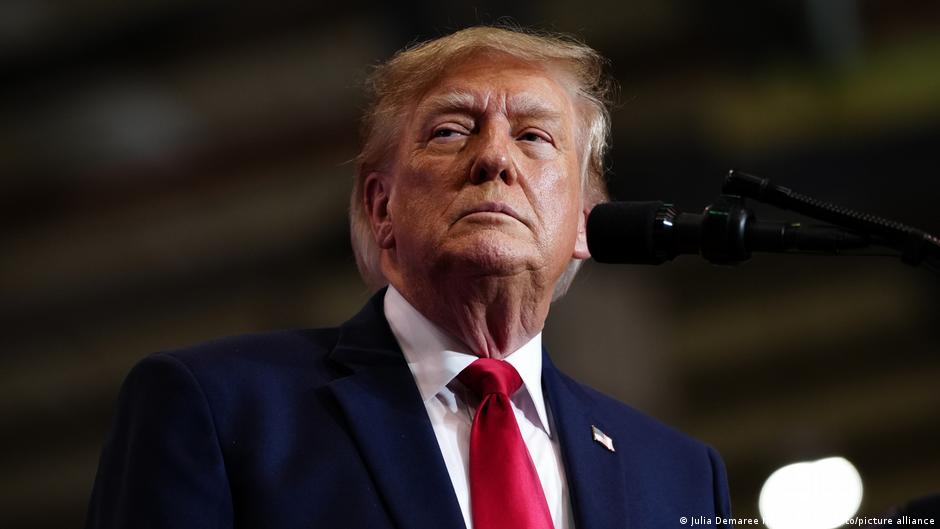
US President Donald Trump said SpaceX had removed restrictions on its Starlink satellite network in Ukraine after the measures created operational difficulties for the Ukrainian armed forces. His statement highlights a broader strategic vulnerability: critical military and communications infrastructure increasingly depends on private technology companies whose decisions can carry consequences for national security, public finances and international economic policy.
Speaking to reporters on Thursday, October 22, Trump said full access had been restored but declined to identify who had instructed SpaceX to reverse the restrictions. Asked whether he had discussed the issue with SpaceX owner Elon Musk, as The Washington Post had previously reported, Trump avoided a direct answer.
“I do not want to comment on that. Whether I called or somebody else did makes no difference. I suppose what matters is that he has restored everything,” Trump said.
Only hours before Trump’s remarks, Ukrainian President Volodymyr Zelensky said Starlink speeds in Ukraine had still not recovered following restrictions introduced in mid-October. The conflicting assessments leave uncertainty over whether service had been fully restored across the network or whether technical and operational effects were continuing in parts of the country.
Private infrastructure becomes a policy lever
Ukraine’s Defence Ministry previously said the restrictions began during the night of October 14. Under the reported limitations, the satellite network stopped functioning on devices moving at high speed. That constraint proved critical for Ukraine’s armed forces, which use Starlink—and specifically the military configuration known as Starshield—to help guide unmanned aerial vehicles during attacks on targets in territories occupied by Russia during its war against Ukraine.
According to publicly available information cited in the source report, Ukrainian forces do not use Starshield for strikes against targets inside Russia because Russian territory is outside the satellite network’s coverage area. Even so, the disruption demonstrated how changes to a commercially operated communications platform can rapidly affect battlefield capabilities and, by extension, negotiations among governments.
The Telegraph and The Wall Street Journal were among the media outlets reporting that Musk had proposed introducing the restrictions for Ukrainian forces. According to those reports, the businessman discussed the idea with the Pentagon and obtained the department’s support. The White House, however, said it had issued no instructions to restrict the satellite network’s operation in Ukraine.
For senior policymakers, the episode raises questions extending beyond the immediate military impact. Governments relying on privately owned satellite systems may face pressure to clarify contractual obligations, continuity guarantees and political oversight. Greater redundancy could require additional public investment in sovereign or allied communications capacity, while tighter regulation could alter costs and incentives across the commercial space sector.
Communications disruption coincides with policy shift
Kyiv encountered difficulties in mid-October not only with Starlink but also with intelligence sharing from the United States. Such intelligence helps Ukrainian forces detect Russian ballistic missile launches. Zelensky said Ukraine went several consecutive nights without receiving warnings from partners about ballistic launches. Trump administration officials attributed the interruptions to weather conditions and software problems.
The timing amplified concerns in Kyiv because the technical disruptions followed another wave of Trump’s criticism of Zelensky for refusing to accept a proposed agreement to end the war. Trump renewed his criticism after an early-October telephone conversation with Russian President Vladimir Putin. Following that call, Trump ordered the removal of US sanctions on Russian diesel fuel and declined to introduce the Russia sanctions associated with Senator Lindsey Graham.
Those decisions carry economic implications beyond Ukraine. Changes to restrictions on Russian fuel can influence trade flows, enforcement expectations and energy-market calculations, while uncertainty over future sanctions may affect corporate risk assessments and investment decisions. At the same time, any weakening of Ukraine’s communications or intelligence access could alter the military balance and therefore the expected duration and fiscal cost of the conflict for Ukraine’s partners.
In a Bloomberg interview published on October 18, Zelensky criticized the White House’s change of position and said recent steps appeared designed to pressure Ukraine into capitulation.
“I believe steps were taken to persuade Ukraine to capitulate. I am not saying that this is precisely the goal pursued by our partners. I do not want to think that Americans believe the war can be ended faster at Ukraine’s expense. But that is what it looks like,” Zelensky said.
The restoration of Starlink access may ease the immediate operational problem, but it does not resolve the underlying governance issue. The episode shows that satellite coverage, software settings, intelligence flows, sanctions and diplomatic bargaining can operate as interconnected instruments of policy. For governments and companies, the long-term consequence may be a reassessment of how essential digital infrastructure is financed, controlled and protected from abrupt political or commercial decisions.