Spain Faces Migrant Surge in Ceuta, Prompting Regional Security and Policy Shifts
Massive influx of migrants into Spanish enclave Ceuta marks a significant challenge to Spain’s territorial integrity and prompts new European border controls.
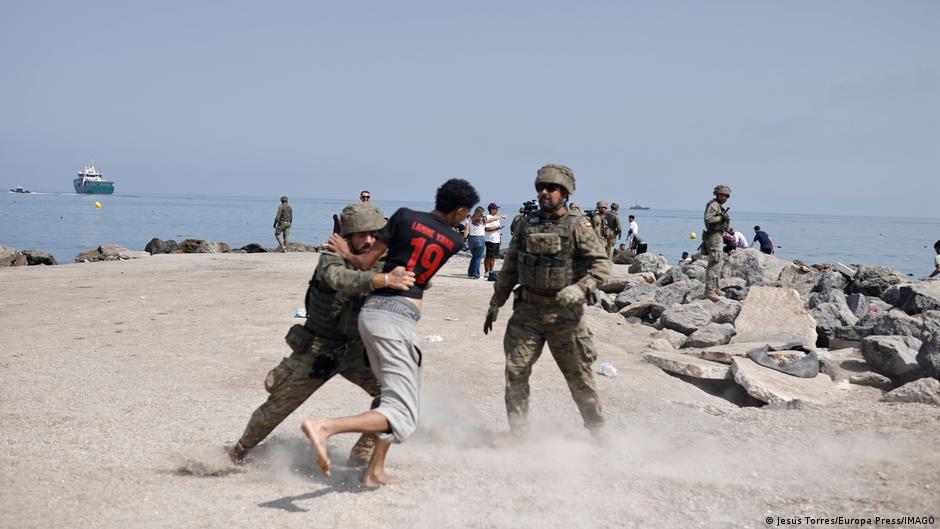
Spain’s Prime Minister Pedro Sánchez declared the recent surge of tens of thousands of illegal migrants into the Spanish enclave of Ceuta in North Africa an "attack" and a violation of the country’s territorial integrity. The situation has prompted Spain to deploy military forces to restore order and has triggered policy responses from neighboring European countries.
Migrant Influx and Immediate Response
Over recent days, approximately 60,000 migrants crossed into Ceuta from neighboring Morocco, a sudden and unprecedented influx for the small Spanish territory with a population of about 85,000. The crisis has resulted in tragic loss of life, with at least 57 migrants reported dead as they attempted the perilous crossing.
Prime Minister Sánchez visited Ceuta amid the crisis, stating that thousands of the migrants have already voluntarily returned to Morocco. Spanish Foreign Minister José Manuel Albares confirmed that by the evening of July 31, the situation had largely stabilized with most migrants having left the enclave.
"This wave of illegal arrivals constitutes an attack on Spain and breaches our territorial sovereignty," Sánchez stated, emphasizing the gravity of the crisis.
In response to the scale of the influx, Spain dispatched military personnel to support local security forces in maintaining order. The local population expressed significant concern, with protests erupting against the government’s handling of the migration surge. Many shops closed amid fears of looting, and residents reported anxiety about their personal safety.
Broader European Implications and Policy Shifts
The crisis in Ceuta has reverberated across Europe, highlighting vulnerabilities in border management and migration policy within the Schengen Area. Notably, Italy took the unprecedented step of unilaterally suspending the Schengen agreement’s free border crossing provisions with Spain. Italian Foreign Minister Antonio Tajani justified the measure as necessary to ensure national security and protect European borders.
This move underscores rising tensions within the European Union on how to address irregular migration flows and the challenges of coordinating responses among member states. The suspension of Schengen provisions represents a significant policy shift with potential long-term implications for European border cooperation.
According to the European Commission, none of the irregular migrants entering Ceuta have reached mainland Europe, highlighting the enclave’s role as a frontline buffer zone. However, the sheer scale of the influx and its human costs have intensified calls for comprehensive migration management strategies and closer cooperation between the EU and neighboring countries.
Economic and Strategic Considerations
The sudden migrant surge into Ceuta carries broader macroeconomic and geopolitical consequences. Spain faces immediate social and security costs managing the enclave, while also confronting pressure to enhance border infrastructure and humanitarian support. Moreover, the incident may strain Spain’s diplomatic relations with Morocco, a key partner in regional stability and migration control.
For the European Union, the crisis exposes challenges in balancing open border policies with security concerns, particularly in peripheral territories susceptible to irregular migration. The suspension of Schengen provisions by Italy signals the risk of fragmentation within the EU’s border policy framework, potentially disrupting the free movement of people and goods.
Longer term, this event may catalyze shifts towards more robust external border controls, increased investment in migration management technology, and reinforced partnerships with origin and transit countries. For senior policymakers and economic strategists, understanding the interplay between migration flows, territorial sovereignty, and regional cooperation is critical in anticipating the future economic and security landscape.
As Prime Minister Sánchez noted upon visiting Ceuta, "The defense of our borders is the defense of our nation’s sovereignty and the safety of our people." The unfolding developments in Ceuta serve as a stark reminder of the complex challenges facing Europe in managing migration amid geopolitical shifts and humanitarian imperatives.