Russia's Missile and Drone Strikes on Kyiv Signal Escalation with Global Economic Implications
The recent Russian attacks on Kyiv underscore growing geopolitical tensions, with potential long-term effects on global supply chains and energy markets.
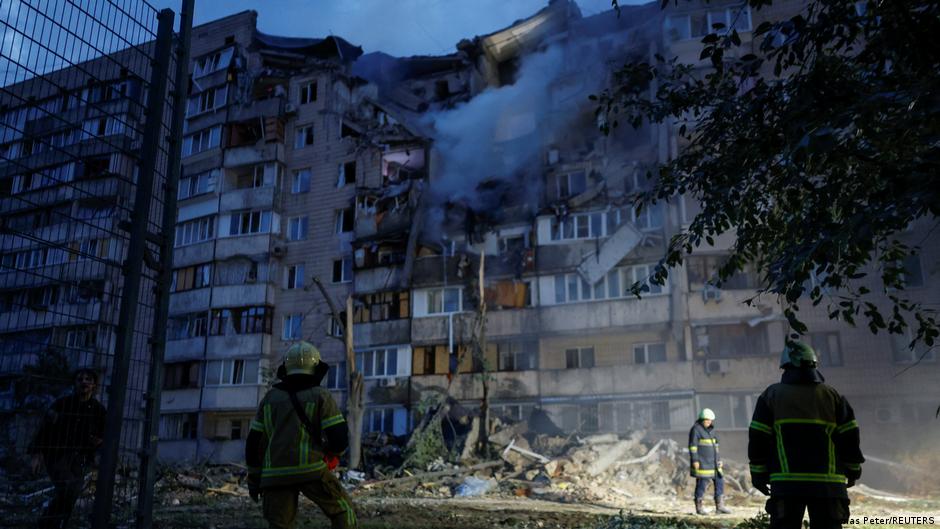
On the night of July 6, Russian forces launched a large-scale missile and drone assault on Kyiv, the capital of Ukraine, resulting in significant civilian casualties and infrastructural damage. Ukrainian authorities reported at least seven fatalities and 24 injuries, intensifying concerns over regional stability and its broader economic ramifications.
Details of the Attack and Immediate Human Impact
The Ukrainian Air Force confirmed that the Russian military employed ballistic and cruise missiles alongside combat drones to target several districts within Kyiv. Among the casualties, 14 individuals required hospitalization, including two children, according to Kyiv Mayor Vitali Klitschko. The Podilskyi district in the northwest of the city suffered considerable destruction, with a residential building partially collapsed and multiple residents trapped on upper floors. Emergency services evacuated 15 people from affected buildings, including six children.
Additional damages were reported in the Darnytskyi and Holosiivskyi districts, where residential buildings were struck, igniting fires and further destabilizing civilian infrastructure. The attack extended beyond the city, with the Kyiv region reporting casualties and damage to private homes and businesses. In Bucha district, one person was killed and ten injured, with six hospitalizations. Neighboring Vyshhorodskyi and Brovarskyi districts also suffered infrastructure damage.
Odessa, a critical Black Sea port city, was also targeted overnight, resulting in injuries and damage to private property. These attacks disrupt key urban centers that are vital for Ukraine’s economic activity and regional logistics.
"This escalation comes at a critical geopolitical moment, coinciding with NATO's upcoming summit and the post-Independence Day period in the U.S., signaling a strategic timing by Moscow," remarked a senior Ukrainian official.
Geopolitical and Economic Implications
President Volodymyr Zelensky, citing intelligence reports, warned of an anticipated intensification of Russian military operations aimed at overwhelming Ukrainian defenses. He highlighted the strategic timing aligned with both the U.S. Independence Day and the NATO summit in Ankara, urging international partners to expedite missile defense support.
This surge in hostilities not only deepens the humanitarian crisis but also threatens to exacerbate disruptions across global supply chains, particularly in energy and agricultural commodities where Ukraine plays a pivotal role. The sustained conflict risks further fragmenting Eastern European markets, complicating energy security for European nations heavily reliant on stable supply routes.
Moreover, increased military activity near critical urban and industrial hubs raises concerns about the long-term reconstruction costs and the potential shifts in regional economic policies. Global investors and policymakers must closely monitor these developments as they could precipitate shifts in trade flows, investment patterns, and international alliances.
As NATO convenes amid rising tensions, the international community faces mounting pressure to calibrate its response in ways that deter further escalation while managing economic vulnerabilities stemming from the conflict.
In conclusion, the July 6 attacks against Kyiv underscore a dangerous escalation in the Ukraine conflict with significant implications beyond immediate security concerns. The intertwined nature of geopolitical stability and global economic health underscores the urgency for coordinated policy responses.