Russia Suspends Military Hardware Display in Moscow Victory Day Parade Amid Security Concerns
For the first time since 2008, Russia’s May 9 Victory Day parade in Moscow will proceed without military vehicles due to operational security considerations.
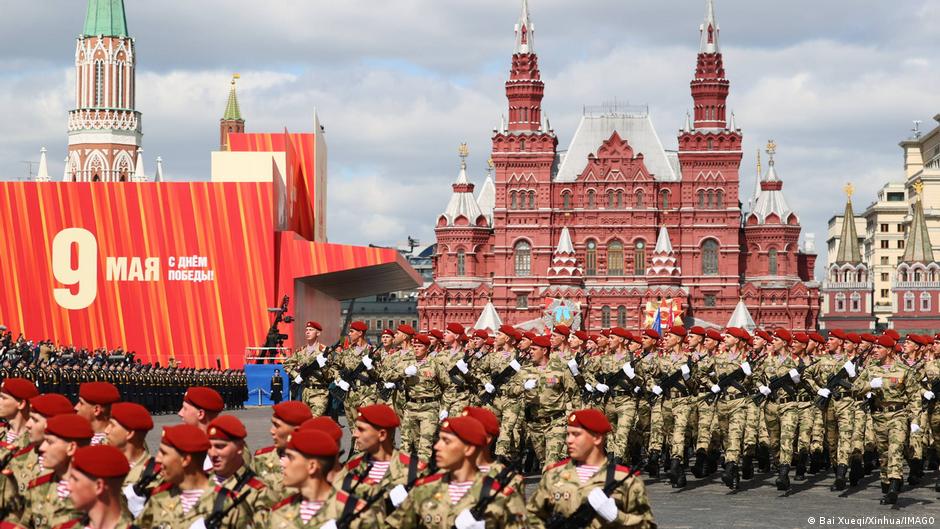
The traditional Victory Day parade in Moscow, held annually on May 9th to commemorate the Soviet Union's victory in World War II, will notably exclude military hardware this year for the first time since 2008. The Russian Ministry of Defense announced the decision via its official Telegram channel on April 28, attributing the change to the "current operational situation." While ground military vehicles will be absent, the parade will still feature combat aircraft flying over Red Square.
Security-Driven Adjustments and Regional Event Cancellations
Alongside Moscow’s scaled-back parade, multiple Russian regions have canceled large public events planned for Victory Day. Cities such as Nizhny Novgorod, Saratov, and regions including Chuvashia and Kaluga have scrapped their parades. Additionally, several oblasts—Voronezh, Kursk, Bryansk, and Belgorod—have called off celebratory fireworks, citing safety concerns.
These security measures follow a series of Ukrainian counterattacks targeting infrastructure facilities within Russia, including strikes on Baltic Sea ports critical for oil exports and an oil refinery in Tuapse. The heightened risk environment appears to have compelled Russian authorities to limit public military displays and gatherings.
"The absence of military hardware and cadet units from the parade signals a significant shift in the Kremlin’s public demonstration of military strength amid ongoing conflict and security challenges."
Notably, Moscow’s parade will also exclude traditionally participating cadet formations from Suvorov and Nakhimov military schools, as well as other cadet corps. This contrasts sharply with the 2025 celebrations marking the 80th anniversary of Victory Day, which showcased over 10,000 troops, including foreign contingents from North Korea, and some 200 military vehicles ranging from historical to modern models.
President Vladimir Putin, who spoke at last year’s parade, drew parallels between the Soviet fight against Nazi Germany and Russia’s current military operations in Ukraine. The 2025 parade attracted high-profile international guests, including Chinese President Xi Jinping, leaders of some former Soviet republics, and representatives from Myanmar, Venezuela, Egypt, among others. Notably, only Slovakia among EU and NATO members was represented by Prime Minister Robert Fico, alongside Serbia’s President Aleksandar Vučić.
The annual inclusion of military vehicles in the Victory Day parade has been a hallmark of Moscow’s event since 2008. The 2026 decision to exclude them underscores the evolving security considerations in the context of Russia’s ongoing military engagements and potential vulnerabilities within its own territory.
From a macroeconomic perspective, these adjustments may reflect broader challenges facing Russia’s internal stability and international posture. The limitation of visible military assets in a key nationalistic ceremony suggests a recalibration of messaging amid operational constraints. It may also influence domestic morale and external perceptions, with potential implications for Russia’s defense spending priorities and political signaling in the near term.