King Charles III Visits US Amid Strained UK-US Ties Over Iran Conflict
King Charles III’s visit to the US marks a diplomatic effort to mend frayed UK-US relations amid geopolitical tensions involving Iran.
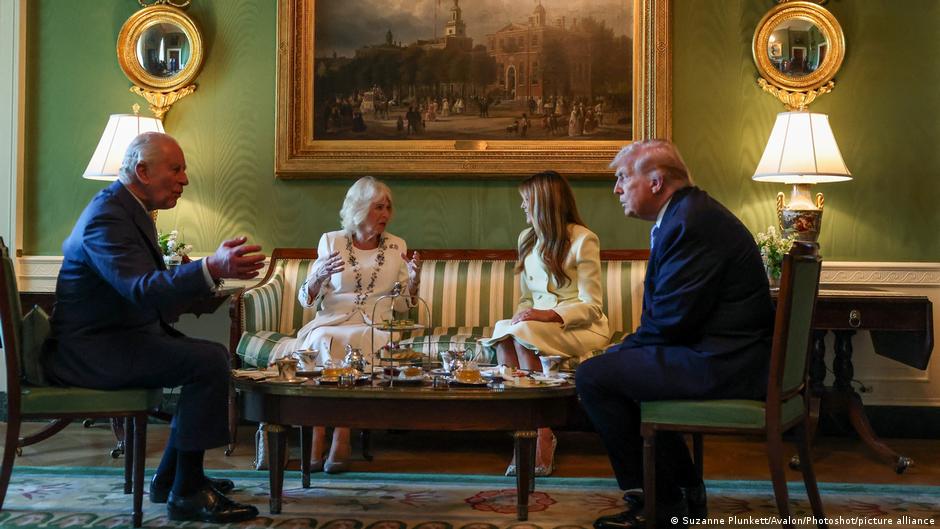
King Charles III and Queen Camilla arrived in the United States on April 27 amid growing tensions in UK-US relations stemming from the war in Iran. The royal couple were warmly received by then-President Donald Trump and First Lady Melania Trump at the White House in Washington, signaling a high-profile engagement between the longstanding allies.
Diplomatic Significance of the Visit
This visit is King Charles III’s first to the United States since 2007 and comes at a delicate moment in transatlantic diplomacy. The king is scheduled to address both chambers of the US Congress on April 28, marking only the second time a British monarch has spoken before the American legislature—the first being Queen Elizabeth II in 1991. Following the congressional address, the royal couple will travel to New York to participate in memorial events honoring victims of the September 11, 2001 terrorist attacks.
Heightened security measures surround the visit due to a recent shooting at the Washington Hilton hotel during the White House Correspondents’ Association dinner, an event attended by President Trump just days before the royal arrival.
According to close observers, King Charles’s mission is to restore the traditionally close Anglo-American partnership, which has been shaken by divergent approaches to the conflict in Iran. Earlier in the spring, UK Prime Minister Keir Starmer declined US requests to use British military bases for strikes against Iran and refused to deploy British naval vessels to the strategically vital Strait of Hormuz.
In a provocative statement published in April, Donald Trump criticized the British navy as "too old" to effectively unblock the Strait of Hormuz. He further branded NATO allies as "cowards" for their positions on the Iran conflict and disparaged the alliance as a "paper tiger," even revealing that he was "seriously considering" withdrawing the United States from NATO.
Prime Minister Starmer, for his part, expressed frustration over the volatility of British energy prices, attributing fluctuations to geopolitical actions by Russian President Vladimir Putin and Donald Trump. In a Guardian column, Starmer emphasized his government’s commitment to investing in domestic energy infrastructure as a means to reduce dependency on external actors who manipulate global gas markets.
“I am fed up with British energy bills swinging up and down because of the actions of Putin or Trump around the world,” said Prime Minister Starmer, underscoring the domestic economic pressures linked to international conflicts.
Despite these disagreements, President Trump downplayed the impact of the strained UK-US relationship on King Charles’s visit, noting that the monarch is not connected to NATO policy and describing him as an "excellent guy" and "friend." This distinction illustrates the nuanced nature of transatlantic relations, where personal diplomacy and state policy may follow differing trajectories.
Long-Term Economic and Strategic Implications
The tensions reflected in King Charles III’s visit underscore broader global economic and security challenges. The UK’s refusal to support US military actions in Iran demonstrates a shift toward more autonomous defense and foreign policies post-Brexit, with potential ramifications for NATO cohesion and Western strategic unity.
Energy security remains a critical concern as fluctuations in global gas prices affect domestic markets and consumer costs. The UK government’s pivot to strengthen its energy independence is a strategic response to external geopolitical volatility but also signals potential shifts in global energy markets.
As senior decision-makers evaluate the implications of these developments, the visit serves as a reminder of the complexity of maintaining traditional alliances in a rapidly changing geopolitical landscape. Balancing national interests with collective security commitments will be vital to sustaining economic stability and geopolitical influence for both the UK and the US.