Russia Develops Shadow Air Fleet to Sustain Military Operations in Africa Amid Sanctions
An extensive covert aviation network bypasses Western sanctions to supply Russian forces in the Sahel region, signaling new geopolitical and economic challenges.
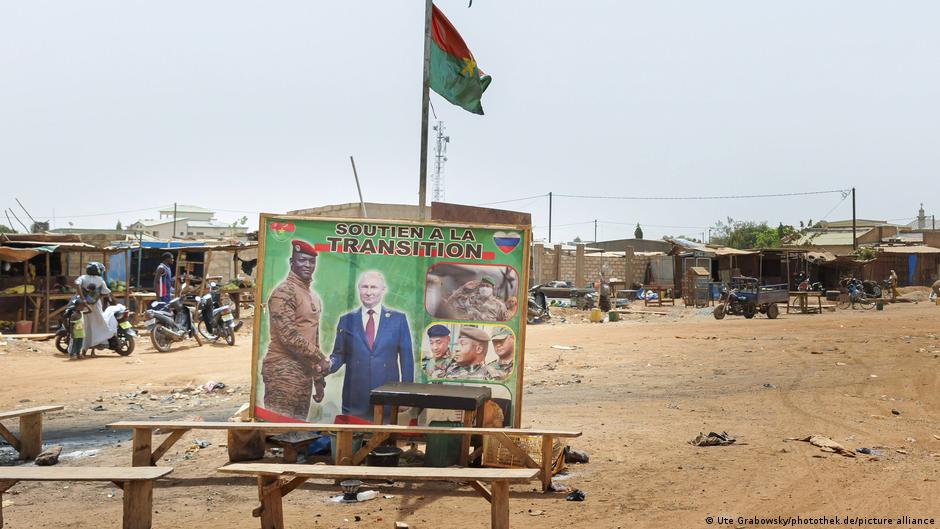
Russia has established a "shadow air fleet" to circumvent Western sanctions and support its military personnel operating in Africa's Sahel region, according to investigative findings reported by the Brussels-based portal Euractiv, referencing the US-based non-governmental organization Center for Advanced Defense Studies (C4ADS).
This covert aviation network comprises a complex web of military and private aircraft facilitating continuous supplies to Russian forces in Mali, Burkina Faso, and Niger. The detailed C4ADS report, released on August 12, reveals that between January 2025 and July 2026, at least 75 flights originated from Russia to these African nations, underpinning Moscow's strategic foothold in the region.
Strategic and Economic Ramifications
The operation involves a blend of military operators, government agencies, and private transport companies, creating a logistics system comparable to Russia's shadow maritime fleet used for circumventing sanctions in oil exports. The 224th Flight Detachment, a unit controlled by the Russian Ministry of Defense and already targeted by US sanctions, is identified as the primary carrier within this network.
Additional actors include private firms such as Sapsan Airlines and Liz Aviation, alongside aviation units from Russia's Ministry of Emergency Situations (MChS). Notably, these entities remain outside the scope of restrictions imposed by the European Union, the United States, or the United Kingdom, highlighting gaps in the current sanction frameworks.
Geopolitically, state-owned aircraft often transit through Russian-controlled bases in Syria and Libya, while private carriers utilize commercial hubs in Turkey, Algeria, and the United Arab Emirates, illustrating a sophisticated utilization of international airspace and infrastructure to sustain military logistics.
"If these aircraft and companies are knowingly transporting Russian military personnel or equipment to support units in Africa, targeted sanctions must be imposed regardless of aircraft registration," asserted Czech MEP Tomas Zdechovsky, emphasizing the urgency for EU institutional response.
This revelation signals a shift in Russia's approach to sustaining overseas military engagements under sanctions pressure, employing hybrid logistics strategies that complicate enforcement measures. The operational scale and network complexity reflect Moscow's intent to maintain and possibly expand its influence across Africa, with significant implications for international security and economic policy.
From a macroeconomic perspective, this strategy underscores the adaptability of state and affiliated actors in evading sanctions, challenging the effectiveness of current economic restrictions and necessitating a reassessment of global sanction enforcement mechanisms. Moreover, the shadow air fleet's existence indicates potential ripple effects on aviation markets and international regulatory norms, signaling broader geopolitical contestations influencing global trade and security architectures.