Reported Drone Strikes Put Russia’s Industrial Resilience in Focus
Reported fires at metals and chemical plants highlight the growing economic exposure of Russia’s strategic industrial regions.
Reported Ukrainian strikes on industrial sites in western Russia have renewed scrutiny of the country’s ability to protect strategically important production capacity as the war extends deeper into its industrial economy.
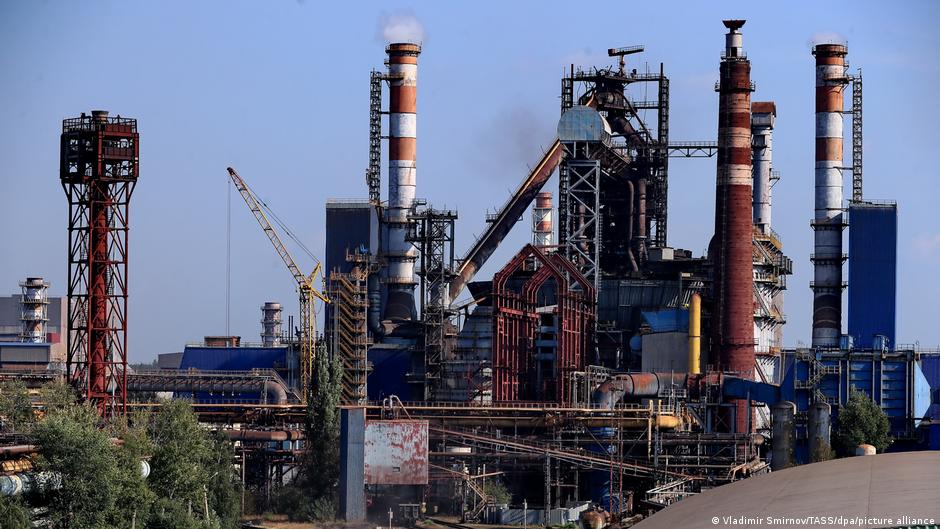
The Ukrainian monitoring channel Exilenova+ said the city of Lipetsk came under attack by jet-powered drones overnight into Wednesday, October 28. According to the channel’s preliminary open-source intelligence assessment, a fire broke out near the Novolipetsk Steel plant, or NLMK, during the strikes, including as local air defenses engaged the incoming targets.
The account had not been independently confirmed at the time of publication. The General Staff of the Armed Forces of Ukraine, Ukraine’s Defense Ministry and the Lipetsk regional authorities had not commented on the reported attack. NLMK had previously been targeted in Ukrainian attacks in 2024.
Strategic industry faces widening risks
For senior economic decision-makers, the reported incident underscores a broader shift in the war’s consequences. Industrial facilities far from the front line increasingly face operational risks from long-range attacks, while air-defense activity itself can compound the danger to nearby plants and infrastructure.
Even when physical damage is limited, repeated alerts and interceptions can disrupt production schedules, transport links, staffing and maintenance. The longer-term economic effect may include higher security and insurance costs, greater pressure to disperse critical capacity and more government intervention in industrial planning. The source material did not provide an estimate of damage or indicate whether production at NLMK was interrupted.
Exilenova+ also reported strikes near a military airfield in Lipetsk. The channel said missile alerts had sounded in several Russian regions and that air defenses had engaged jet-powered targets over the city.
“There is preliminary information about impacts and a fire in the area of the airfield,” the channel said.
The monitoring group published photographs and videos attributed to witnesses that appeared to show Russian air defenses operating. Exilenova+ said one video captured explosions from 30-millimeter ammunition as automatic anti-aircraft guns belonging to a Russian Pantsir air-defense system fired at targets. It asserted that the rounds did not hit their targets.
The channel later cited local residents as reporting an attack followed by a fire at the Azot chemical plant in Novomoskovsk, in Russia’s Tula region. It did not provide further details. According to Ukraine’s Foreign Intelligence Service, the plant supplies nitric acid to the Sverdlov facility in Dzerzhinsk, in the Nizhny Novgorod region, which manufactures explosives.
Tula Governor Dmitry Milyaev said air-defense units were repelling a drone raid on the region. He wrote on Telegram that apartment buildings, private homes and infrastructure in an adjacent industrial zone had sustained damage in Novomoskovsk. He did not confirm the Ukrainian monitoring channel’s specific account of a fire at the chemical plant.
Pressure on interconnected supply chains
The reported attacks matter economically because they concern different but interconnected parts of Russia’s industrial base: steelmaking, chemicals, batteries and defense-related manufacturing. Repeated disruption across such sectors could create bottlenecks that extend beyond individual facilities, particularly where specialized inputs are produced by a limited number of plants.
On October 25, Ukrainian forces carried out another strike on what regional officials described as Russia’s largest battery factory, located in Yelets in the Lipetsk region. Regional Governor Igor Artamonov did not identify the enterprise or disclose the extent of the damage.
According to an open-source assessment by the publication Astra, the target was the Energia plant in Yelets’s industrial zone. Astra reported that the factory produces batteries used in Russian drones, several missile systems and other weapons widely deployed by the Russian military in its war against Ukraine.
Exilenova+ said the site was attacked with several Storm Shadow missiles. The channel reported at least two impacts on two plant buildings and claimed that one production building had suffered extensive destruction. Ukraine’s General Staff confirmed the following day that the facility had been hit and damaged, but did not name the plant or specify which weapon had been used.
Before the October 25 strike, Energia had already been targeted five times by Ukrainian forces. That pattern illustrates the cumulative nature of the economic threat: repeated attacks can force companies and the state to devote resources to repairs, redundancy and protection even when the precise production losses remain undisclosed.
The immediate scale of the latest damage remains uncertain. Nevertheless, the reported incidents point to a sustained contest over industrial capacity. For Russia, the policy challenge is no longer limited to replacing battlefield equipment or managing sanctions. It increasingly includes defending geographically concentrated production networks, protecting civilian communities near industrial zones and maintaining output amid recurring attacks on facilities linked directly or indirectly to the war economy.