Oleshky Ceasefire Opens Narrow Humanitarian Corridor in Southern Ukraine
The temporary truce highlights the mounting economic costs of damaged infrastructure, displacement and restricted access across southern Ukraine.
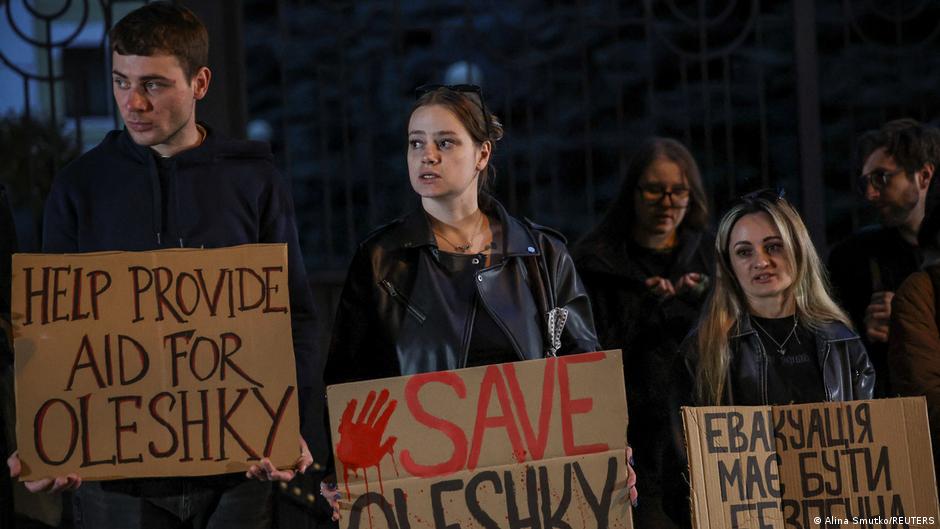
Ukraine and Russia introduced a bilateral ceasefire around the Russian-occupied city of Oleshky in Ukraine’s Kherson region from 03:00 Kyiv time on October 27, creating a temporary window for humanitarian assistance and preparations to evacuate civilians.
The Ukrainian General Staff and Russia’s Defense Ministry both confirmed that the previously negotiated pause in fighting had taken effect. Moscow said Russian forces had stopped firing on the Kherson front from 04:00 Moscow time, while Kyiv described the arrangement as a strictly limited measure intended to deliver aid and prepare for the free movement of civilians out of Oleshky, known in Russian as Aleshki.
Ukraine’s military said it would do everything possible to assist residents and implement measures needed to protect and rescue Ukrainian citizens. The humanitarian mission itself is scheduled to begin on October 29, two days after the start of the ceasefire, Ukrainian President Volodymyr Zelensky said in an interview with TSN.Tyzhden presenter Alla Mazur.
Local relief with broader economic significance
Although geographically narrow and temporary, the agreement illustrates how humanitarian access, infrastructure damage and territorial fragmentation increasingly shape Ukraine’s long-term economic outlook. Safe civilian movement affects labor availability, household welfare and the eventual cost of reconstruction, while mined roads and damaged utilities continue to obstruct normal commerce and public services in frontline regions.
Under the agreement, Russia is expected to clear mines from roads, while Ukraine prepares to evacuate residents trapped in the city. Zelensky said mediation by US first lady Melania Trump helped secure the temporary truce, which Washington announced on October 23.
The White House said Moscow and Kyiv would halt fire to permit the delivery of humanitarian aid and prepare the evacuation of civilians through a specially organized safe corridor. A US administration statement indicated that the first lady’s team played a central role in coordinating the arrangement.
Melania Trump said civilian representatives from Russia and Ukraine would jointly visit Oleshky residents at their homes to determine what assistance they required. Those choosing to leave would receive support and transportation to a destination of their choice.
“I believe some will want to go to Russia and some to Ukraine,” the White House statement quoted her as saying.
Representatives of an independent US media organization will accompany officials from both countries during the visits and document the process, according to the first lady.
Security risks complicate implementation
Zelensky warned that Russian forces could take actions intended to discredit the operation. He said Moscow might try to draw residents to its side and use the evacuation to produce propaganda material. Ukraine’s priority, he stressed, was to save those trapped in Oleshky and help them reach Ukrainian-controlled territory.
The warning underscores the fragility of arrangements that depend on coordination between opposing forces. Any breakdown could disrupt aid deliveries, deepen displacement and further delay the restoration of transport links and essential services. For policymakers and investors assessing Ukraine’s recovery, the episode demonstrates that demining, civilian security and independently documented access will be prerequisites for durable economic normalization in affected regions.
Oleshky is a small city on the Russian-occupied eastern bank of the Dnipro River. Around 24,000 people lived there before Russia’s full-scale war against Ukraine. Current estimates put the remaining population at between 1,700 and 2,000, including at least several dozen children.
The city was almost entirely flooded after the destruction of the Kakhovka hydroelectric power plant in June 2023, which the source attributes to Russia. The flooding compounded damage to infrastructure and access to drinking water. Oleshky has also been under blockade for the past several months.
Ukrainian-controlled Kherson lies only nine kilometers away, but the area surrounding Oleshky is heavily mined, making departure in any direction potentially fatal. This short physical distance, combined with severe barriers to movement, captures a wider economic reality across the front: proximity to functioning markets and services offers little benefit when security hazards sever transport and logistics networks.
Ukrainian forces previously reported delivering food and medicine with heavy drones, while Moscow also said it had supplied the city. Pope Leo XIV was among those who appealed to the Russian president for a halt to fighting in Oleshky.
The immediate test will be whether the ceasefire remains intact through the humanitarian operation and whether civilians can make genuinely free choices about evacuation. Beyond the operation itself, the condition of Oleshky points to substantial future liabilities: clearing mines, rebuilding water and transport infrastructure, restoring public services and supporting a population reduced by war and displacement. The truce offers limited relief, but it also reveals the scale of the institutional and financial commitments that any lasting recovery in southern Ukraine will require.