ICAO Urges Stronger Civil Aviation Safeguards as Conflict Risks Spread
UN aviation body calls for firmer state action to protect civilian aircraft, underscoring broader economic and policy risks from expanding conflict-zone threats.
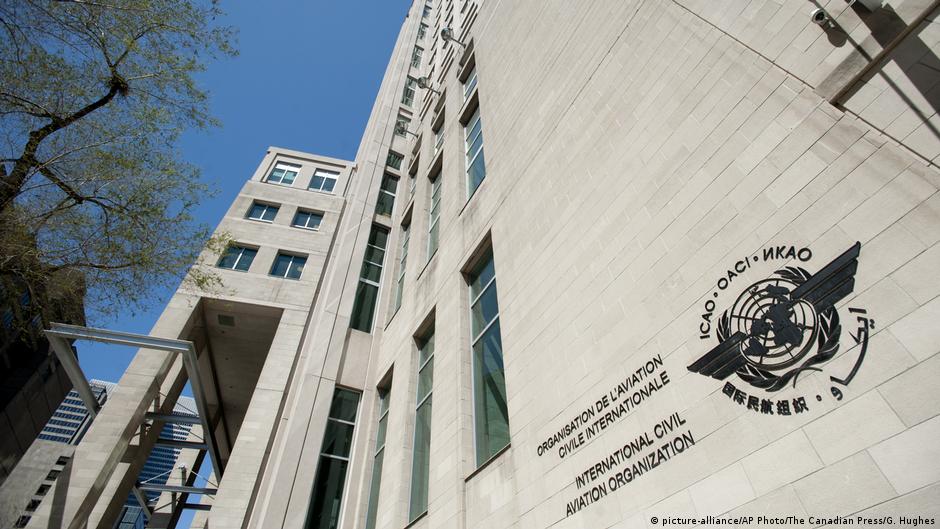
The International Civil Aviation Organization has called on countries to strengthen protections for civilian aircraft operating near conflict zones, sharpening concern over a category of risk that carries implications well beyond aviation safety. The appeal followed Ukraine’s formal notification to the UN-affiliated body that Russian airspace has become unsafe because of intensified military activity.
In a statement published on Wednesday, September 2, ICAO urged all states to take on firmer commitments to shield civil airliners from dangers linked to conflict areas. The organization, whose 193 member states include nearly every country in the world, did not directly name either Russia or Ukraine in its warning. But it said the call reflected a growing global threat from the use of weapons against civilian aircraft and an elevated risk that such aircraft could be attacked or caught in crossfire.
For business leaders and policymakers, the significance extends beyond immediate operational safety. ICAO’s language points to a more persistent re-pricing of geopolitical risk in global transport networks, especially where military escalation, unmanned systems and air defense capabilities overlap with commercial flight paths. In practical terms, that can translate into higher insurance costs, more conservative airline routing, longer flight times, and increased compliance demands for states and carriers alike.
The organization cited several technologies that create danger for civil aviation, including drones, long-range weapons systems, air defense systems, and devices that generate radio-frequency interference affecting navigation systems. That list is notable because it captures a wider evolution in conflict risk: threats to aviation are no longer limited to conventional anti-aircraft engagement, but increasingly include hybrid and electronic forms of disruption.
“Member states should promptly exchange information on threats in cases where certain activity creates risks for civil aircraft, strengthen risk-assessment mechanisms and timely decision-making, and improve coordination between military and civil authorities to prevent the mistaken identification of civilian aircraft as military targets,” the statement said.
From a macroeconomic perspective, the call is a reminder that airspace security has become part of the infrastructure of global commerce. Commercial aviation underpins executive travel, tourism, high-value freight, and the functioning of cross-border supply chains. When confidence in a major country’s airspace deteriorates, the effect can spill into logistics planning, route economics and the broader investment climate. Even absent formal closures, warnings of heightened danger can influence airline behavior and partner-country advisories.
Policy pressure grows around airspace governance
Hours before ICAO issued its statement, Ukrainian Foreign Minister Andrii Sybiha said Kyiv had officially informed the organization that Russian airspace is unsafe because of what he described as increased military activity. “We strongly urge everyone to avoid it,” he said.
According to Sybiha, Russia is consciously ignoring existing threats caused by its aggression against Ukraine, a situation he said has already led to several incidents in recent years. Against what he described as a sharp escalation of terror by Russia against Ukraine, Sybiha said Russian airspace is becoming increasingly unsafe. He said Kyiv’s notification to ICAO was intended to prevent unintended incidents.
The Ukrainian démarche followed remarks on September 1 by President Volodymyr Zelenskyy, who said the airspace over Russia would gradually close because of Ukrainian drones that, in his words, Russian authorities do not properly report. Zelenskyy said the Russian sky is becoming completely unsafe and added that Ukraine does not want innocent people to die, which is why it is warning partners.
Russian President Vladimir Putin responded by calling Zelenskyy’s remarks “a bid for state terrorism.” Speaking on the night of September 2 after the Shanghai Cooperation Organisation summit in Bishkek, Putin said that if such tragedies were to occur, Russia would find a way to respond and that no one should doubt it.
Later on September 2, Russia’s Federal Air Transport Agency, Rosaviatsiya, said together with other authorities it was implementing additional measures for the safe use of Russian airspace and for improving the protection of ground transport infrastructure. The agency stressed that Russian air transport and its ground infrastructure continue to operate as planned and are receiving and dispatching flights, including those of foreign airlines.
The immediate policy question is whether ICAO’s intervention leads to more formalized state behavior on conflict-zone risk disclosure. The organization’s emphasis on rapid threat-information sharing and stronger civil-military coordination suggests a push toward tighter governance standards rather than a one-off reaction. For governments, that could mean greater pressure to disclose airspace hazards faster and with more precision. For airlines, it could mean stricter internal risk reviews and less tolerance for ambiguity in official safety communication.
Over the longer term, this episode may feed a broader shift in how states, regulators and markets assess sovereign responsibility for aviation safety in contested environments. If conflict-zone airspace becomes less predictable, the economic consequences will not stop at aviation ministries. They will reach insurers, exporters, airport operators, tourism-dependent industries and multinational firms whose planning models assume stable transport corridors.
ICAO’s statement therefore lands as both a safety appeal and a policy signal: the governance of airspace in wartime conditions is moving closer to the center of economic risk management. For senior decision-makers, the issue is no longer only whether flights remain technically possible, but whether the institutional systems around them are credible enough to sustain commercial confidence.