Hungary’s Viktor Orban Declines Parliamentary Seat Amid Political Transition
Outgoing Prime Minister Viktor Orban steps down from parliament to focus on party leadership amid shifting national and international policies.
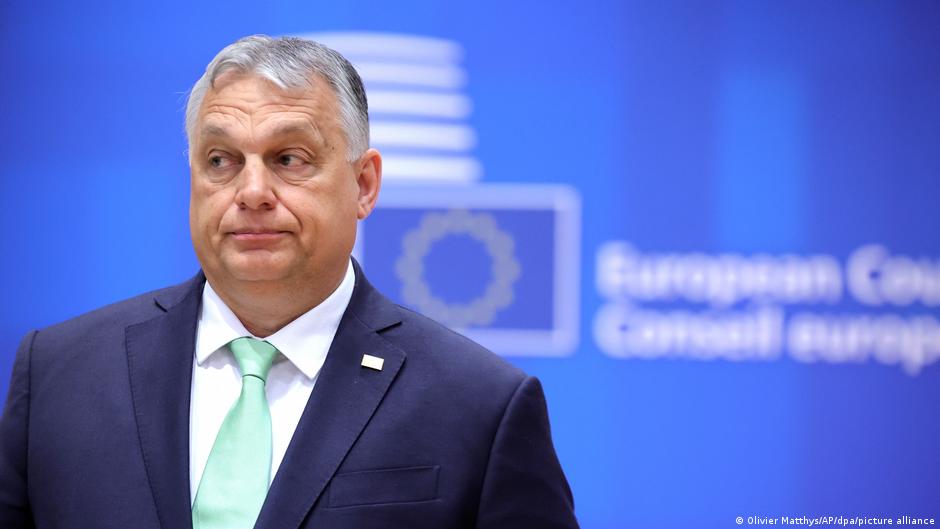
Viktor Orban, Hungary’s outgoing prime minister following his ruling Fidesz party’s defeat in recent parliamentary elections, has announced he will not take up his parliamentary mandate in the new legislature. Instead, Orban intends to concentrate on reorganizing the national movement and maintaining his leadership role within Fidesz.
Leadership Transition and Political Realignment
Orban’s decision marks a significant shift within Hungarian politics. While he will remain chairman of Fidesz pending confirmation at the party congress in June, Orban has appointed Gergely Gulyas, former head of the prime minister’s office, as the new leader of the Fidesz-Christian Democratic People’s Party faction in parliament.
This leadership transition occurs as the victorious Tisa party, led by Peter Madyar, prepares to assume government on May 9. Madyar has pledged to reverse several policies associated with Orban’s tenure, signaling a recalibration of Hungary’s domestic and foreign policy directions.
“The mandate I received as the lead candidate of the Fidesz-KDNP coalition is effectively a Fidesz mandate, which I have decided to relinquish. I am currently needed not in parliament, but for the reorganization of the national movement,” Orban stated.
Policy Shifts with Global Implications
Madyar intends to halt Hungary’s withdrawal from the International Criminal Court (ICC), a process initiated by Orban after the ICC issued an arrest warrant for Israeli Prime Minister Benjamin Netanyahu in 2024. Orban had controversially welcomed Netanyahu despite the warrant and declared Hungary would not comply with ICC orders.
On the European Union front, the new government is poised to end Hungary’s blockade of a €90 billion EU credit package for Ukraine and cease obstructing sanctions against Russia. Reports indicate Budapest agreed to release the funds following Ukraine’s resumption of Russian oil transit to Hungary via the Druzhba pipeline, although Madyar has stressed Hungary will not directly participate in financing Ukraine.
These policy revisions reflect a strategic pivot from Orban’s era, which was marked by close ties with Vladimir Putin’s Russia. Despite Russia’s full-scale invasion of Ukraine, Orban maintained friendly relations with Moscow and continued visits to the Kremlin. Prior to the election, Russian political technologists reportedly intervened to support Orban’s campaign, but these efforts failed to prevent his party’s defeat.
Strategic and Economic Consequences
Orban’s withdrawal from active parliamentary politics and the incoming government’s policy shifts will likely reverberate across Central and Eastern Europe, impacting EU cohesion, energy security, and regional alignment in the ongoing Russia-Ukraine conflict.
Russia’s official response to the election outcome was muted. Kremlin spokesperson Dmitry Peskov refrained from congratulating Madyar, labeling Hungary as a "non-friendly country," yet emphasized hope for "pragmatic contacts" with the new government. Madyar himself has indicated a desire to maintain dialogue with Russia, suggesting continuity in bilateral relations despite changing political dynamics.
For senior economic decision-makers, these developments underscore the fluidity of Hungary's geopolitical positioning and its implications for EU policy coherence, energy transit routes, and sanctions enforcement. The evolving leadership and policy frameworks may influence investment landscapes, regional stability, and economic forecasting in the broader European context.