Germany Awards Yulia Navalnaya for Resistance to Russia’s Authoritarian Regime
Yulia Navalnaya receives European Prize from Bavarian SPD for her advocacy of human rights and democracy amid Russia’s political repression.
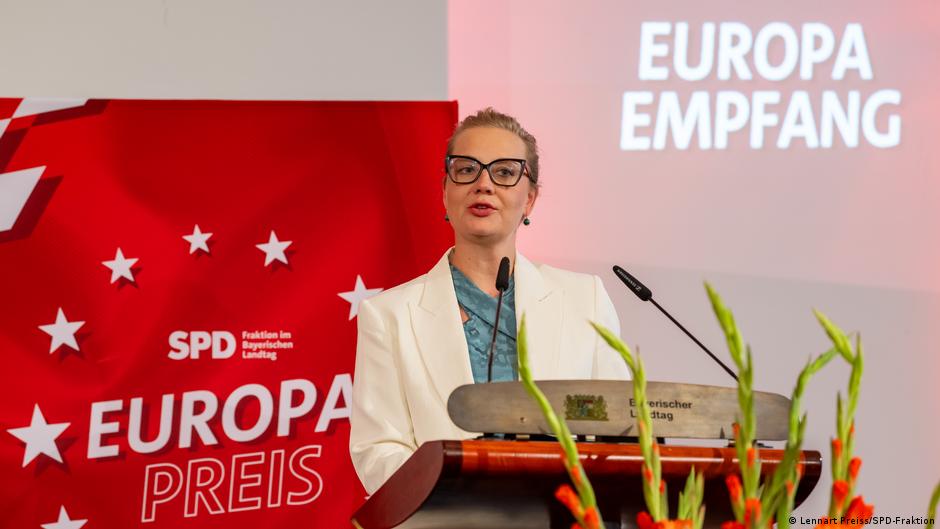
The Social Democratic Party (SPD) faction in the Bavarian Landtag has awarded Yulia Navalnaya the European Prize for her courageous resistance to the authoritarian Russian regime and her ongoing fight for human rights.
In a ceremony held in Munich, the SPD recognized Navalnaya for exemplifying the commitment to democratic values and human rights that underpin Europe’s political framework. Holger Grießhammer, leader of the SPD faction in Bavaria, emphasized that Navalnaya’s work serves as a model for all who seek freedom and democratic governance within Europe.
Symbolism and Significance Amid Geopolitical Tensions
Since the violent death of her husband, opposition leader Alexei Navalny, in February 2024, Yulia Navalnaya has not retreated but intensified her activism against the Putin regime. Her steadfast dedication highlights the ongoing challenges faced by pro-democracy advocates in Russia.
“I believe that Russia is connected to Europe not only by a shared history but also by fundamental values, and that it should move toward a future based on democracy, human rights, and the rule of law,” Navalnaya stated during the award ceremony.
She expressed gratitude toward Europe for defending these core values and supporting those who champion them, underscoring the broader geopolitical implications of fostering democratic resilience in Russia.
The European Prize, awarded annually by Bavaria’s SPD since 2018, honors individuals who have made outstanding contributions to advancing European ideals and the values of the European Union. Navalnaya’s recognition not only honors her personal courage but also signals Europe’s continuing commitment to human rights and democratic governance as strategic pillars in its relations with Russia.
This award reflects a significant policy stance by key European actors amid ongoing tensions with Russia, where support for democratic forces is framed as essential to regional stability and long-term economic cooperation. It also serves as a reminder to senior decision-makers of the intrinsic link between political freedoms and sustainable economic development.