Georgia’s Renewed Protests Raise Risks for Its European Economic Path
A threatened ban on opposition parties is intensifying political uncertainty as Georgia’s dispute over European integration deepens.
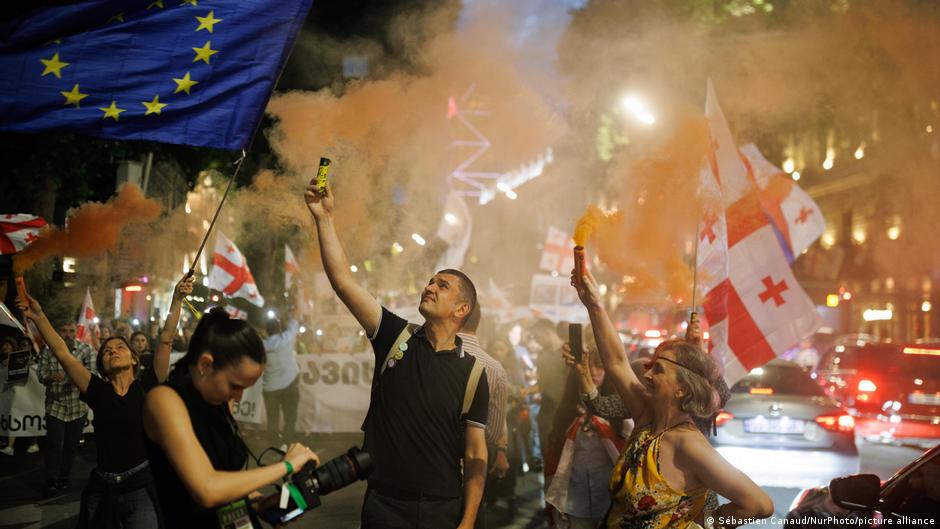
Thousands of demonstrators marched through Tbilisi on Sunday, October 25, as Georgia’s Constitutional Court considered a lawsuit seeking to ban opposition parties, adding a new layer of political uncertainty to a crisis that has increasingly become intertwined with the country’s long-term economic direction.
Organized by opposition representatives and civil society groups, the procession was held under the slogan “Georgia Without Ivanishvili.” Participants walked from Tbilisi State University toward Rustaveli Avenue, carrying the flags of Georgia, Ukraine and the European Union. A large contingent of security personnel was also present.
Opposition leaders described the march as the beginning of a new wave of protests and said a major demonstration was planned for November 28, the second anniversary of the start of mass protests in Georgia. The mobilization comes amid growing concern among government opponents that restrictions on political competition could become more extensive.
Political uncertainty clouds economic strategy
For senior economic decision-makers, the immediate significance of the renewed protests lies in the possibility of prolonged institutional instability. The Constitutional Court proceedings, the threat of opposition-party bans and the planned escalation of street demonstrations could complicate policy planning and weaken confidence in the predictability of Georgia’s political environment.
Nika Gvaramia, leader of the Coalition for Change, characterized the march as the opening stage of a wider protest campaign and called for a strong public turnout on November 28.
“We are starting today, and we definitely need a culmination, whether it is November 28 or in the following days. It is important that there are very many of us on the 28th, so that the wind cannot extinguish the fire.”
The political confrontation is closely connected to Georgia’s relationship with the European Union. Mass protests began in spring 2024 over the law on “foreign agents.” They intensified after the ruling Georgian Dream party won parliamentary elections and developed into a broader crisis in November of that year, when the authorities decided to postpone negotiations on joining the European Union until 2028.
That decision turned the dispute from a domestic political confrontation into a debate over Georgia’s strategic trajectory. European integration had been presented by the opposition as a defining national objective, while the delay in accession negotiations sharpened divisions over governance, institutional standards and the country’s future alignment.
European integration becomes an economic fault line
Gigi Tsereteli, leader of European Georgia, who also attended the march, said the planned November 28 demonstration would be both large and important. He argued that Georgia had moved from being a leading country on the path toward European integration to becoming an outsider.
“What is happening in Georgia today in terms of the destruction of democracy and disruption is truly unimaginable, given that we were a champion country on the path of European integration and today we are outsiders,” Tsereteli said. He added that parties were being banned, political life was effectively being restricted and political prisoners represented another major challenge.
Although the demonstrations are fundamentally political, their longer-term economic implications center on institutional credibility and Georgia’s European orientation. A sustained clash between the government, opposition forces and civil society could leave businesses and policymakers operating amid continued uncertainty over the country’s regulatory and geopolitical course. The dispute over accession talks also raises broader questions about whether Georgia will remain committed to the institutional changes associated with closer European integration.
The next major test will come on November 28, when opposition groups aim to demonstrate the scale and durability of public resistance. The size of that gathering, the authorities’ response and the progress of the Constitutional Court case are likely to shape perceptions of whether the confrontation can remain contained within established institutions.
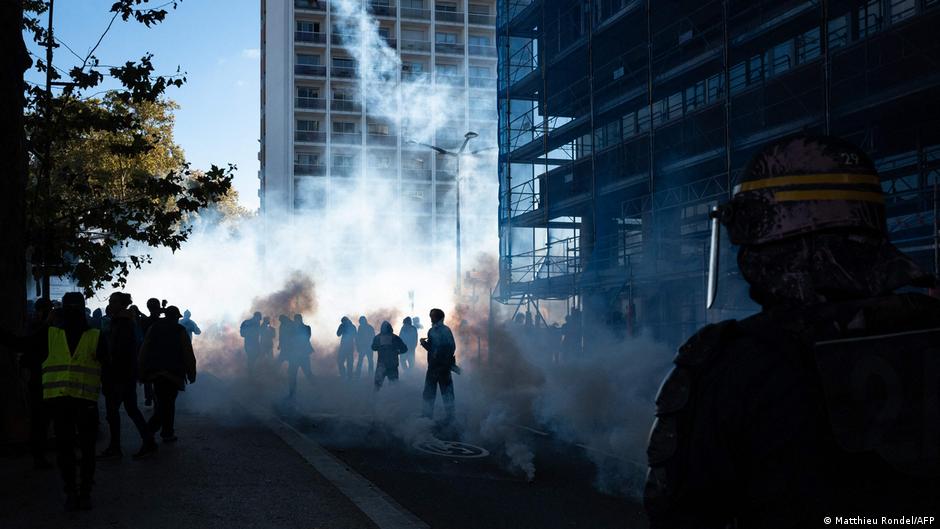
Previous protests have included clashes with police, while security forces dispersed demonstrators using tear gas and water cannons. That history increases the risk that another large mobilization could produce renewed unrest, extending the political crisis and its consequences for confidence and policy continuity.
For Georgia, the central long-term issue is no longer only the fate of individual parties or demonstrations. The confrontation now encompasses the resilience of political institutions, the scope of democratic participation and the credibility of the country’s stated European ambitions. Those factors will help determine whether the current turmoil remains a temporary disruption or becomes a structural constraint on Georgia’s economic development and international positioning.