Founder of Gulagu.net Suspends Project Amid Global Human Rights Crisis and Rising Geopolitical Tensions
Vladimir Osechkin cites escalating repression, international legal decline, and increased security threats as reasons for halting the Russian prison aid initiative.
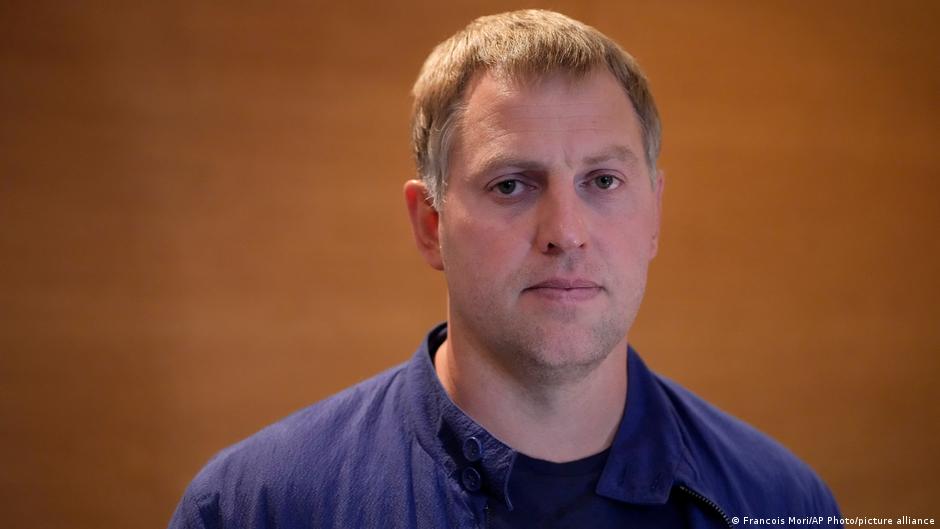
Vladimir Osechkin, the founder of Gulagu.net, has announced the suspension of his human rights project dedicated to assisting inmates in Russian prisons and penal colonies. In an interview with n-tv, released on August 2, Osechkin detailed the factors leading to this decision, highlighting a broader global crisis affecting human rights defenders and the erosion of international legal norms.
Global Crisis and Shrinking Space for Human Rights
"We—and all those who oppose torture, violence, and war—are in a state of global crisis," Osechkin stated. He expressed frustration over the silence of many human rights activists, warning that this quietude damages not only their mission but global human rights efforts at large.
"International law is experiencing a crisis, and human rights have been deprioritized. Headlines focus on billionaires and celebrities while daily deaths become normalized. In this situation, we have lost the ground beneath our feet," he remarked.
Osechkin also revealed that Gulagu.net has yet to receive any human rights awards. He attributed this to the preference of official bodies and international institutions to engage with well-dressed figures delivering polished speeches, rather than with ground-level activists documenting abuses. Notably, he pointed out that prominent opposition figures who were exchanged for freedom were often placed in relatively better conditions prior to their release—contrasting sharply with the ongoing torture of prisoners of war.
Personal Risks and Security Threats
The human rights advocate described his own experience, recalling that he left detention between 2007 and 2010 bald and missing teeth due to abuse. Despite residing in France since 2015, living in exile, he remains under threat from Russian security services.
Osechkin revealed that in October 2025, four Russian agents were arrested in France for plotting his assassination. The French anti-terrorism prosecutor is conducting the investigation. In May 2026, another agent was apprehended near his home. His family and team members are under police protection due to ongoing threats.
"Analysts inform me that after Alexei Navalny, I am Russia’s number one target because I have documented war crimes and smuggled key witnesses out of Russia’s Ministry of Defense and prison system," Osechkin explained.
Implications of Renewed Mobilization and Policy Shifts
Osechkin also predicted a likely new mobilization in Russia this autumn. He emphasized that the legal environment has intensified drastically since 2022, with laws allowing for immediate revocation of passports, suspension of driving licenses, and confiscation of assets. Simultaneously, Western countries have tightened their borders—U.S. borders are closed, Europe is erecting barriers, and visa issuance rates have plummeted.
Since 2015, Osechkin has lived in exile in France after refusing to provide the Russian Federal Security Service (FSB) access to Gulagu.net’s data. Moscow has sentenced him in absentia for alleged fraud and for disseminating false information about the Russian armed forces, with others in Russia receiving prison terms for cooperating with his project.
Most recently, in 2022, Osechkin survived an attempted assassination in France. Although French authorities found no conclusive evidence, the attempt highlighted the increasing risks faced by dissidents abroad.
Broader Economic and Policy Considerations
Osechkin’s suspension of Gulagu.net underlines a broader geopolitical and economic context in which authoritarian regimes intensify repression amid weakening international legal frameworks. These developments could disrupt cross-border cooperation on human rights and complicate diplomatic relations as Western nations respond with tightened immigration controls and security measures.
From a macroeconomic perspective, the targeting of activists and closure of borders may restrict the flow of critical information and human capital, potentially exacerbating geopolitical tensions that influence global trade and investment climates. The international community faces growing challenges balancing security concerns with upholding human rights and rule of law, amid ongoing conflicts and shifting alliances.