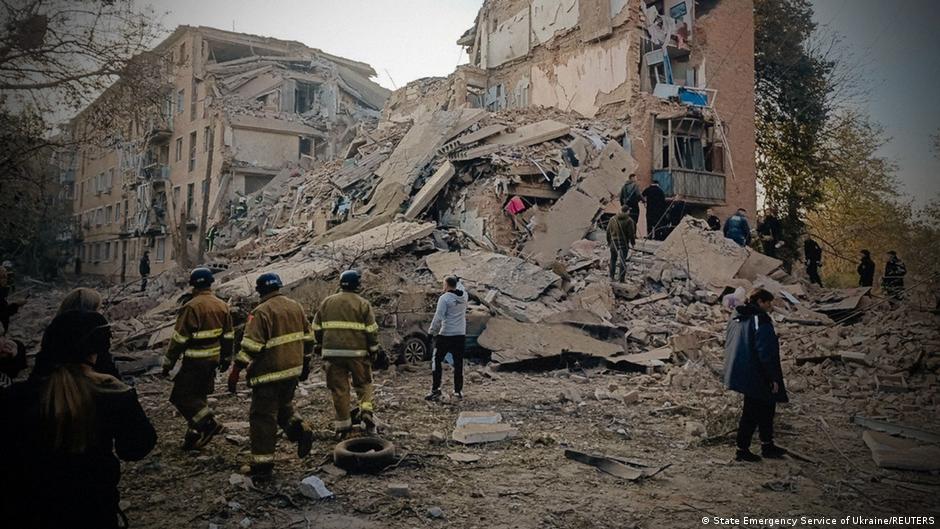
Fire at Ryazan Plant Highlights Data-Center Risk in Wartime Economies
A blaze reported at a sanctioned Russian machine-tool plant that hosts a Yandex data center underscores the economic exposure of digital and industrial infrastructure.
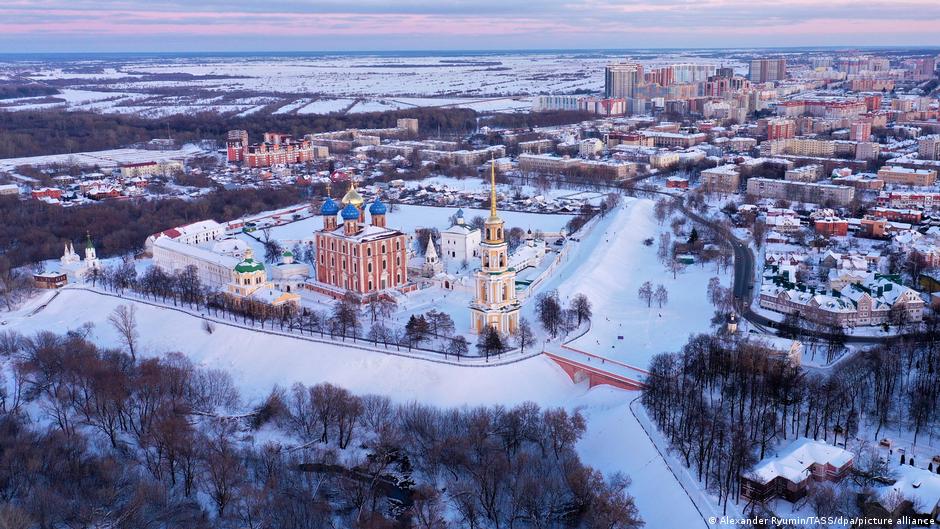
A fire broke out in Sasovo, in Russia’s Ryazan region, on the grounds of the Sasta plant, where a data center operated by Yandex DC is located, according to the Russian outlet Astra. The facility is not only an industrial site: Sasta produces computer numerical control, or CNC, metalworking machines, while the same territory also hosts cloud and data-center infrastructure tied to one of Russia’s most important technology groups.
For senior economic decision-makers, the incident is significant less for the immediate scale of the fire, which was not detailed in the source report, than for what it illustrates about the growing overlap between industrial capacity, digital infrastructure and sanctions exposure. In modern wartime and sanctions-affected economies, a factory site can be simultaneously part of the manufacturing base, the technology ecosystem and the broader infrastructure needed for business continuity.
Astra said its conclusion that the fire occurred on the territory of the Sasta machine-tool plant was based on open-source intelligence analysis. The outlet noted that employees of the data center had shown its equipment last month and directly stated that it was located in Sasovo, in the Ryazan region. The report was published on Astra’s Telegram channel in the early hours of Thursday, October 8.
“Last month, the data center’s own employees showed its equipment and directly stated that it is located in Sasovo, Ryazan region,” Astra wrote.
Industrial Capacity Meets Digital Infrastructure
Sasta’s core business is the production of CNC metalworking machines. According to Astra, the plant’s equipment is used in defense, aerospace, transport and heavy industry. That places the company in a strategically sensitive segment of the economy: it does not need to produce finished weapons to matter to the defense-industrial base. Precision machinery can be a foundational input for the production of high-accuracy metal parts and assemblies.
Astra explicitly framed Sasta’s importance to Russia’s defense-industrial complex in those terms, writing that the company’s significance lies not in the production of completed armaments, but in supporting the production base. Its machines are needed to manufacture precision metal components and units. For policymakers and corporate risk officers, that distinction matters. Sanctions regimes often target not only weapons producers but also the upstream industrial capabilities that sustain military and dual-use production.
The plant is already under sanctions imposed by Canada, Switzerland, the European Union, the United Kingdom, Australia, New Zealand and Japan, according to the outlet. That sanctions profile reinforces the broader macroeconomic issue: Russia’s industrial ecosystem is being shaped by restrictions on access to external markets, components, financing and technology. Incidents affecting such sites therefore carry implications beyond local disruption, especially when they involve sectors linked to precision manufacturing.
The presence of a Yandex DC data center on the same territory adds another layer of economic relevance. Data centers are critical infrastructure for cloud computing, corporate services, digital platforms and consumer-facing applications. When they are colocated with or adjacent to industrial facilities of strategic concern, the risk landscape becomes more complex. Physical disruption at a plant may create questions not only about production continuity but also about digital resilience and cloud availability.
Cloud Resilience and the Cost of Disruption
After the fire report, Astra drew attention to a message about power-supply interruptions affecting a separate availability zone of the Yandex Cloud platform. Around 40 minutes after the appearance of those reports, the Yandex Cloud team said the situation had stabilized. The source does not establish a causal link between the fire and the power issue, and the timing alone should not be treated as proof. Still, the episode highlights the sensitivity of cloud infrastructure to localized power and facility risks.
For large companies, banks, public services and technology platforms, even short interruptions in cloud availability can carry operational costs. The article does not provide figures on the affected workload, customers or financial impact. But at the macro level, the event fits a wider pattern in which digital infrastructure has become central to economic continuity. Cloud regions and availability zones are no longer a narrow concern for IT departments; they are part of the operating environment for commerce, communications and state services.
The report also comes against the backdrop of attacks on Ukrainian telecommunications and data infrastructure. On the evening of September 25, Russian forces began striking infrastructure belonging to the Ukrainian telecom operator Cosmonova, including a data center. As a result, Kyiv experienced disruptions to internet and television services, according to the source article.
On October 3, Ukrainian President Volodymyr Zelensky commented on strikes against Ukrainian data centers, saying that such attacks affect people and are not military infrastructure. He asked how data centers and mobile communications could be targeted, adding that communications are used not only in Ukraine but also in Moscow.
The juxtaposition is important for economic analysis. The same categories of infrastructure that enable private commerce, public administration, logistics and media access are now exposed to wartime disruption. In Ukraine, the reported effects included interruptions to internet and television service in the capital. In Russia, the reported fire occurred at a site combining machine-tool production with a Yandex data center, while Yandex Cloud separately reported stabilization after an availability-zone power disruption.
Longer term, the economic consequence is likely to be a stronger focus on redundancy, geographic dispersion and infrastructure hardening. Governments and corporations operating in high-risk regions may face pressure to reassess whether industrial and digital assets are too tightly clustered, whether power dependencies are adequately backed up, and whether sanctions-hit industrial sites create additional exposure for adjacent commercial infrastructure.
The incident also illustrates how infrastructure risk is becoming harder to classify. A machine-tool plant can be relevant to industrial policy and military production capacity. A data center can support ordinary business activity, public communications and cloud services. When these assets intersect geographically, a single disruption can raise questions across defense economics, technology resilience, sanctions enforcement and investor risk assessment.
No final assessment of damage, cause or operational impact was provided in the source article. What is clear is that the reported fire in Sasovo has drawn attention to a strategically important industrial site, a sanctioned manufacturing base and the vulnerability of data-center infrastructure in an economy under geopolitical pressure.