EU Sees No Russian Readiness for Ukraine Talks at G20 Meeting
Kaja Kallas said Moscow must demonstrate its willingness to negotiate through actions as European officials called for greater pressure.
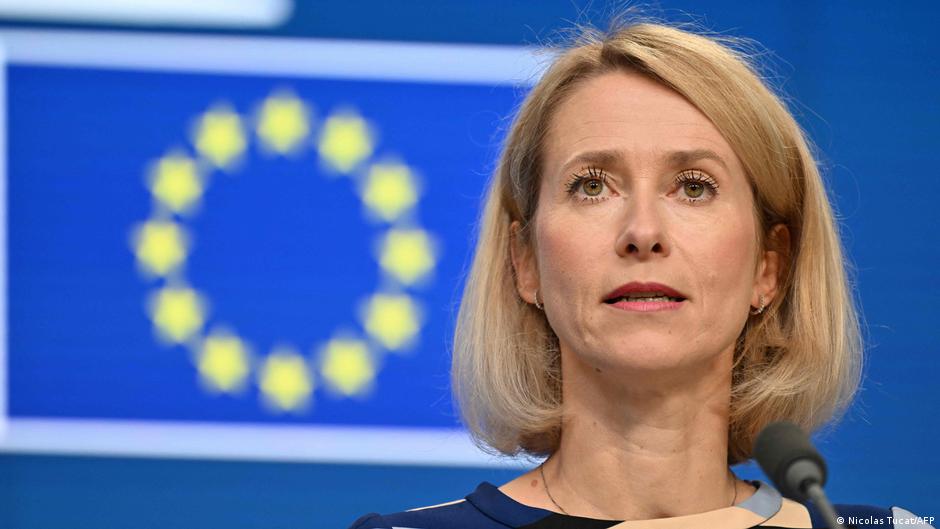
Russia offered no indication that it was prepared to enter meaningful peace negotiations over Ukraine during a meeting of Group of 20 foreign ministers in Atlanta, according to Kaja Kallas, the European Union’s high representative for foreign affairs and security policy.
Kallas said on Friday, October 30, that Russian Foreign Minister Sergei Lavrov had not demonstrated any readiness by Moscow to make concessions or pursue talks aimed at ending the war. Her assessment points to a continued divide between Russia and European governments over both the conditions for negotiations and the evidence required to establish that a diplomatic opening is genuine.
Asked by an AFP journalist whether Lavrov had signaled a willingness to compromise, Kallas replied that he had not. She argued that statements alone would be insufficient to establish a change in Russia’s position.
“Even if they claimed otherwise in words, their actions say something different,” Kallas said.
Russia must prove “in practice that it is ready for negotiations,” she added. Kallas cited the human cost of the conflict, saying July, August and September had been the deadliest months for Ukrainian civilians.
Pressure remains central to Europe’s policy
Kallas also accused Lavrov of presenting false and distorted information during the G20 meeting. “Of course, he voiced many lies, many distorted facts, which we were subsequently able to refute,” she said. She called for increased pressure on Moscow, indicating that the EU continues to view coercive measures as necessary in the absence of a credible shift in Russian conduct.
For senior economic and policy decision-makers, the exchange suggests that expectations of a near-term diplomatic breakthrough remain limited. Without visible progress toward negotiations, governments and companies must continue to account for the possibility that the war and the policy responses surrounding it will persist. The central uncertainty is not simply whether diplomatic contacts occur, but whether they lead to verifiable changes in behavior.
That distinction carries long-term economic consequences. A prolonged confrontation can keep policy planning focused on resilience, security and the management of geopolitical risk rather than a return to prewar assumptions. It also complicates decisions that depend on a stable outlook for relations between Russia and Europe. Kallas’s emphasis on actions over declarations indicates that European policymakers are unlikely to treat rhetoric at international forums as sufficient grounds for changing course.
Her appeal for stronger pressure also underscores the likelihood that economic instruments will remain closely connected to diplomatic strategy. The remarks did not specify additional measures, but the policy direction was clear: Europe sees pressure on Moscow as a means of encouraging a substantive negotiating position, not merely as a symbolic response to the conflict.
European officials reject a return to normal engagement
The political distance was also evident in the conduct of European participants at the G20 gathering. German Foreign Minister Johann Wadephul said earlier that European foreign ministers had declined to join a group photograph with Lavrov because of the continuing war in Ukraine.
“There are no normal relations with Russia,” Wadephul said. He acknowledged that contact with Russian representatives remained necessary to discuss disagreements, while stressing that such exchanges should not create the impression that conventional relations had resumed.
This approach defines a narrow channel for engagement: communication can continue where it is needed, but without the diplomatic symbolism associated with normalized relations. For the G20, that creates a difficult institutional balance. The forum brings together governments with sharply divergent positions, making it a venue for direct contact while also exposing the limits of consensus on major geopolitical disputes.
The refusal to appear in a shared photograph was symbolic, but it reinforced a substantive European policy message. Officials are seeking to preserve the ability to communicate with Moscow without allowing participation in multilateral meetings to be interpreted as political normalization. That separation between necessary contact and restored relations is likely to shape European diplomacy as long as the war continues.
From a macroeconomic perspective, the absence of a negotiating signal means uncertainty remains embedded in the policy environment. Senior decision-makers cannot assume that high-level meetings will quickly produce conditions for de-escalation. Instead, Kallas’s remarks suggest that European policy will continue to be calibrated around observable Russian actions, sustained political pressure and a refusal to normalize relations before meaningful change occurs.