Drone Attacks on Major Russian Logistics Centers Highlight Emerging Security and Supply Chain Risks
Drone strikes on Ozon logistics centers in Krasnodar and Stavropol regions disrupt operations and expose vulnerabilities in critical supply chains.
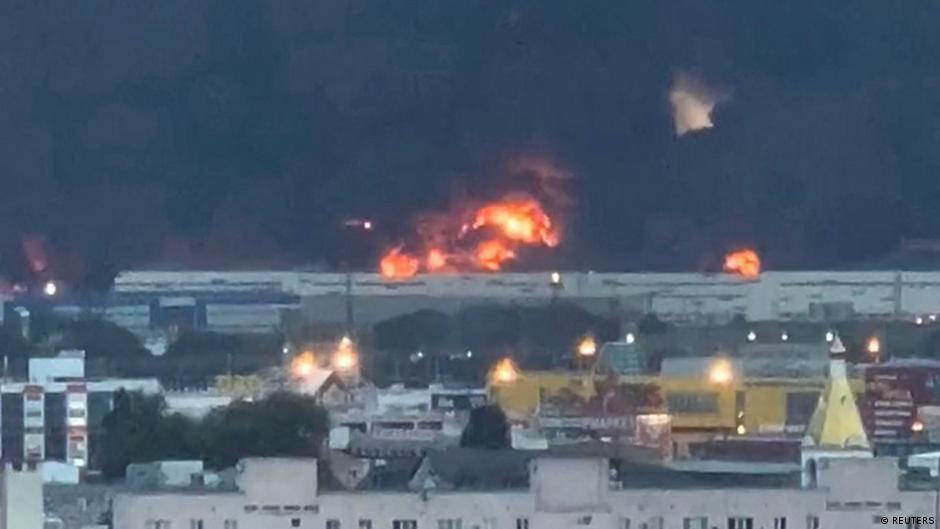
Recent drone attacks on key logistics hubs operated by Russia's leading e-commerce platform Ozon in the Krasnodar and Stavropol regions have raised serious concerns about the security of distribution networks and the broader implications for regional supply chains and economic stability.
Impact on Logistics Operations and Regional Infrastructure
On August 24th, a logistics center in Krasnodar was targeted by unmanned aerial vehicles (UAVs), resulting in a large fire and significant operational disruptions. Local authorities confirmed that employees were safely evacuated, and there were no initial casualties reported at the facility itself. However, debris from the intercepted drones fell into residential areas within the Prikubansky district, tragically resulting in the deaths of two children and injuries to nine others, including both adults and children.
"Fragments of the drones fell across multiple addresses, including a private children's center, causing casualties and raising urgent safety concerns," noted the mayor of Krasnodar.
The fire broke out in warehouse premises, forcing the immediate halt of warehouse operations and the suspension of goods acceptance and order fulfillment from this site. Ozon has redirected logistics routes to alternative facilities to maintain continuity, but the disruption is expected to have short-term ripple effects on supply availability for consumers relying on online orders.
Simultaneously, a large-scale drone attack targeted another Ozon logistics facility in Nevinnomyssk, Stavropol Krai. This warehouse spans over 93,000 square meters and serves as a critical node for storage, sorting, and distribution of food and non-food products. Residents reported explosions and visible smoke plumes, with local air defense systems actively repelling the drone incursions aimed at the region's industrial zone.
Broader Economic and Security Implications
These attacks underline the growing vulnerability of vital supply chain infrastructure to emerging drone warfare tactics. For Russia, the disruption of logistics centers has immediate consequences for e-commerce supply chains, consumer access to goods, and regional economic activity.
From a macroeconomic perspective, escalating threats to logistics infrastructure can exacerbate inflationary pressures by constraining product availability and increasing transport costs. Moreover, the need to re-route shipments and invest in enhanced protective measures may raise operational expenses for logistics providers, costs that could shift to consumers.
Policy-wise, these incidents highlight the imperative for governments and businesses to bolster critical infrastructure resilience against asymmetric warfare tactics. This includes investing in drone detection and interception technologies, reinforcing physical security at key nodes, and developing diversified logistics networks to mitigate single-point failures.
In the longer term, disruption in supply chains caused by such attacks may influence global trade patterns, particularly if foreign investors and partners reassess risks associated with operating in conflict-affected regions. The economic fallout could extend beyond immediate damage, impacting employment, regional development, and consumer confidence.
As drone technology becomes more accessible and sophisticated, the integration of robust countermeasures into economic infrastructure protection strategies will be critical to maintaining supply chain stability and economic security.