Drone Attack on Russian Border City Belgorod Raises Security and Economic Concerns
A drone strike on Belgorod damaged residential and strategic infrastructure, highlighting escalating regional tensions with potential economic fallout.
Drone Strikes Target Belgorod Amid Rising Regional Instability
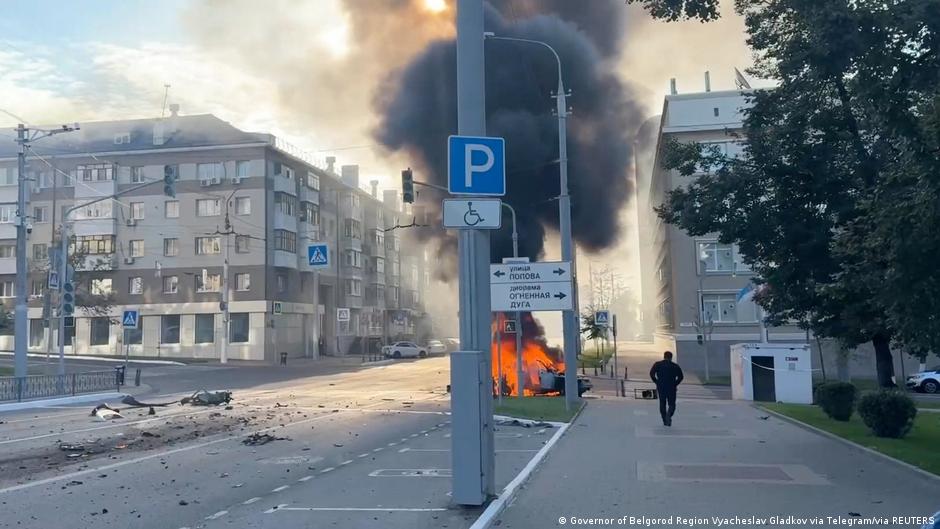
In the early hours of August 9, the Russian border city of Belgorod experienced a series of drone attacks resulting in widespread damage and casualties. According to local authorities, 13 people were injured, including two children, as explosions rocked the city located near the Ukrainian border.
The attacks involved multiple unmanned aerial vehicles (UAVs) identified as belonging to the Ukrainian Armed Forces. The drones targeted key civilian and governmental sites, damaging more than four multi-story residential buildings as well as administrative, social, and commercial facilities. The destruction extended to critical infrastructure, most notably a building housing the regional Federal Security Service (FSB) department and a residential building approximately 600 meters from the city's thermal power plant (TPP).
Open-source intelligence (OSINT) analysis confirmed the proximity of damaged buildings to strategic targets, suggesting a deliberate attempt to disrupt both governance and energy supply. The thermal power plant, a vital energy producer for the region, suffered damage to its upper floors, raising concerns about potential impacts on local energy availability and economic activity.
"The deployment of multiple UAVs over Belgorod indicates an escalation in cross-border tactical operations, with significant implications for regional security and infrastructure resilience," noted an OSINT analyst.
Videos and images circulated on social media and local Telegram channels showed extensive fires and smoke plumes, underscoring the scale of the attacks. Eyewitness reports detailed dozens of combat drones operating over the city during the incident.
Macro-Economic and Policy Implications
These strikes on Belgorod, a key Russian administrative center near the Ukrainian border, highlight escalating regional instability that could reverberate through broader macroeconomic and policy frameworks. The targeting of energy infrastructure—such as the thermal power plant—poses risks not only to local power supply but also to industrial output and public services that depend on steady energy provision.
Damage to residential buildings and administrative offices may undermine investor confidence, disrupt labor markets, and place additional strain on public finances to fund reconstruction efforts. The socio-economic toll could extend beyond immediate recovery costs, potentially affecting regional growth trajectories and resource allocations.
From a policy perspective, the attacks may prompt heightened security protocols and increased defense spending, potentially diverting resources from economic development initiatives. Furthermore, the incident underscores the vulnerabilities of critical infrastructure in conflict-adjacent zones, emphasizing the need for resilient energy systems and strategic contingency planning at national and regional levels.
In the long term, persistent security threats could influence Russia's macroeconomic stability and its economic relations with neighboring countries. The evolving conflict dynamics necessitate careful monitoring to assess their impacts on supply chains, energy markets, and geopolitical risk assessments that inform senior decision-makers.