China Warns U.S. Against Preparing for War in Space After Weapons Disclosure
Beijing’s response to Washington’s first official confirmation of orbital weapons highlights rising strategic and economic risks around space infrastructure.
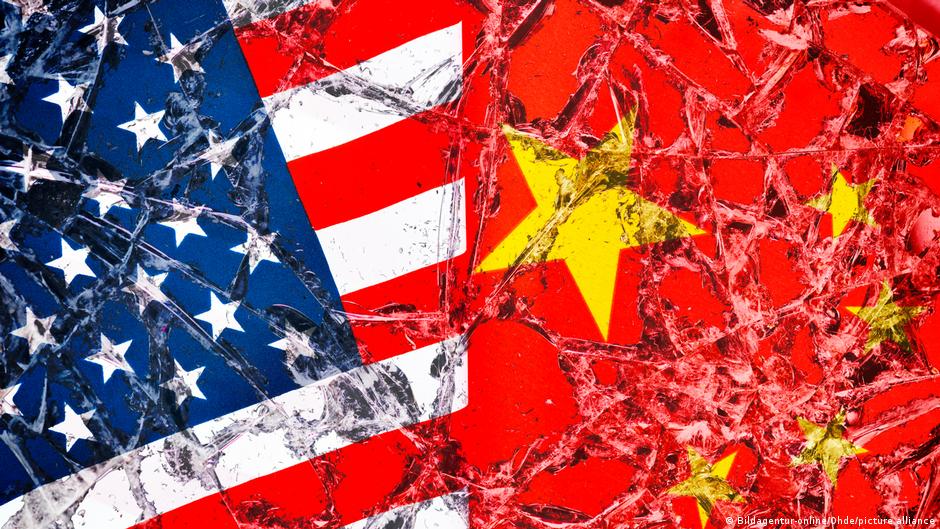
China has urged the United States to stop preparing for warfare in space after U.S. officials confirmed for the first time that Washington has weapons systems deployed in orbit with both defensive and offensive potential. The exchange underscores how quickly space is becoming a central domain of geopolitical competition, with implications extending beyond military planning to global communications, navigation, surveillance and the long-term stability of critical infrastructure.
The Chinese Foreign Ministry issued its warning on Tuesday, September 15, after the United States acknowledged the existence of orbital systems operated by the U.S. Space Force. Beijing cautioned against the “militarization of space,” turning it into a battlefield, and fueling an arms race beyond Earth’s atmosphere.
“We urge the U.S. side to stop building up military capabilities and preparing for war in space,” Foreign Ministry spokesperson Guo Jiakun said at a briefing.
The statement came one day after U.S. Air Force Secretary Troy Meink said on September 14 that the United States has “space control capabilities that are on orbit.” He said the assets available to the U.S. Space Force are capable of protecting a joint combat force from hostile action, but did not provide details about the weapons themselves.
The U.S. Space Force statement said space control includes capabilities needed to ensure control over and protection of space, and that these can be used for both offensive and defensive purposes. It also referred to the use of kinetic and non-kinetic means. While the statement did not describe specific systems, the language marks a notable shift from ambiguity toward formal acknowledgment of military assets already positioned in orbit.
Space Assets Become a Macro-Economic Vulnerability
For senior economic decision-makers, the confrontation is not only a defense issue. Modern economies depend heavily on space-based systems for military and civilian functions alike. Satellites support telecommunications, financial transaction timing, energy-grid coordination, weather forecasting, navigation, logistics, agricultural monitoring and disaster response. A more openly militarized space environment raises the possibility that assets once treated as background infrastructure could become strategic targets in future conflicts.
The U.S. statement separately cited China and Russia as threats in space. It said China is developing and operating assets for space operations and counter-space defense systems as part of its military modernization strategy. Russia, according to the statement, views space as a theater of military operations and assumes that dominance in space will be a decisive factor in future conflicts.
The framing reflects a broader policy shift in which orbit is increasingly treated as an operational domain rather than a protected global commons. That has long-term consequences for public budgets, private investment and insurance assumptions. As governments expand military space programs, contractors and technology firms may see new demand, but commercial operators could also face higher security costs, regulatory burdens and exposure to disruption.
The United States created the Space Force in 2019 during Donald Trump’s first presidential term, establishing it as a separate branch of the armed forces in response to potential threats from Russia and China. The latest confirmation suggests that the institutional shift has matured into a more explicit operational posture, with Washington signaling that it already has systems on orbit to defend U.S. and allied capabilities.
Historically, the greatest concern surrounding weapons in space centered on nuclear arms. The 1967 Outer Space Treaty prohibits the placement of nuclear weapons in space. The United States, Russia and China are among the parties to the treaty, which requires that space exploration be conducted for peaceful purposes. However, the treaty does not apply to conventional weapons placed on satellites or spacecraft.
That gap has become more consequential as technologies evolve. Current risks increasingly involve satellite hacking, interference, signal disruption and potential attacks on satellites that support communications, observation and navigation. These capabilities may fall outside the most familiar arms-control frameworks, leaving policymakers to manage escalation risks without a comprehensive treaty structure covering many modern counter-space tools.
Arms Control Gaps and Private-Sector Exposure
Russia has been suspected of developing weapons against Starlink satellites used by the Ukrainian military. Russia, the United States, China and India are all studying options for activity beyond the limits of existing treaty arrangements, including strikes against opponents’ satellites that play a key role in military communications, surveillance and navigation, AFP has noted.
The growing relevance of commercial satellite networks introduces a further complication. Privately operated systems can become embedded in military operations, as seen with satellite communications used in wartime settings. That blurs the boundary between civilian and military infrastructure and could increase the risk premium for companies operating in orbit or relying on satellite services on Earth.
For global markets, the concern is not limited to the destruction of a small number of satellites. Even non-kinetic interference can disrupt data flows, navigation accuracy and operational continuity across sectors. Kinetic action, meanwhile, could create debris risks that threaten other spacecraft and raise the cost of maintaining safe orbital activity. The more crowded and commercially important low-Earth orbit becomes, the greater the economic consequences of escalation.
China’s warning therefore points to a larger strategic dilemma. Major powers are unlikely to abandon military space capabilities when satellites are integral to national security. Yet the more openly they prepare for conflict in space, the greater the incentive for rivals to accelerate their own programs. This dynamic could produce a costly arms race with uncertain rules, high technical opacity and potentially systemic effects for the global economy.
The immediate diplomatic exchange between Beijing and Washington may not change deployment decisions. But it makes clear that space security is moving from a specialist defense issue into the core of macro-economic risk assessment. Governments, investors and multinational firms will increasingly need to treat orbital resilience, communications redundancy and policy uncertainty as part of the strategic environment in which global growth, trade and security are shaped.