Brazilian Supreme Court Sentences Eduardo Bolsonaro to Prison in Political Corruption Case
Eduardo Bolsonaro, son of former president Jair Bolsonaro, sentenced in absentia for lobbying US sanctions against Brazil’s judiciary.
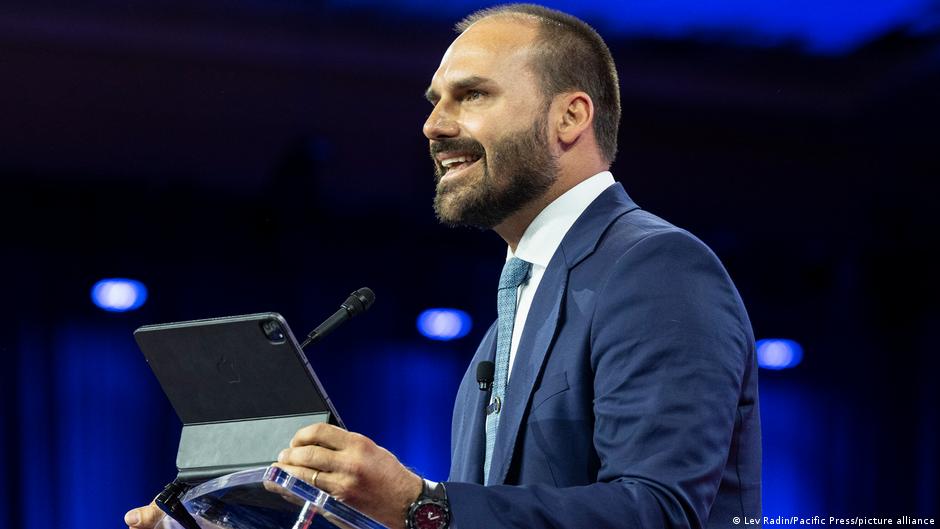
The Brazilian Supreme Court has sentenced Eduardo Bolsonaro, son of former President Jair Bolsonaro, to four years and two months in prison. The sentence was handed down in absentia as Eduardo Bolsonaro currently resides in the United States.
The conviction stems from Eduardo Bolsonaro's actions urging the United States to impose sanctions on Brazil related to judicial proceedings against his father. The court determined that these calls constituted a threat to Brazil’s judiciary and other branches of government.
Implications for Brazilian Political Stability and Governance
Judge Alexandre de Moraes stated that Eduardo Bolsonaro was convicted for "lobbying abroad for interests that run counter to those of his own country." Alongside the prison term, Eduardo Bolsonaro is barred from holding public office for eight years. He served as a member of Brazil’s lower house of Congress from 2015 to 2023.
"Such actions undermine the independence of Brazil's judicial system and threaten the separation of powers," said a legal analyst following the verdict.
Eduardo Bolsonaro's sentence and political banishment highlight escalating tensions within Brazil’s political elite ahead of the presidential elections scheduled for October 2026. His father, Jair Bolsonaro, who served as president from 2019 to 2023, was convicted last year and sentenced to over 27 years in prison for attempting a coup d’état and violent overthrow of the government.
These developments signal a significant shift in Brazil’s political landscape, reflecting a judicial crackdown on anti-democratic activities. Eduardo Bolsonaro’s arrest will be enforced if he returns to Brazil, further complicating the Bolsonaro family's political influence.
Meanwhile, the upcoming elections are shaping into a contest between current President Luiz Inácio Lula da Silva and Flávio Bolsonaro, another son of Jair Bolsonaro, who aims to challenge the incumbent despite the family’s legal troubles.
Broader Economic and Political Consequences
Political instability and heightened judicial actions against former leadership could impact Brazil’s economic policies and international relations. The Bolsonaro family has maintained a nationalist and market-oriented economic agenda, whereas Lula da Silva emphasizes social reforms and expanded state intervention.
Foreign investors and global markets will closely monitor how Brazil manages these internal political conflicts, as policy shifts could influence trade, foreign investment, and macroeconomic stability in Latin America’s largest economy.
Brazil’s judicial resolve to prosecute high-profile political figures may also signal a commitment to strengthening institutional checks and balances, which is critical for sustainable economic governance and democratic resilience.