Audi’s $4 Billion Georgia Plant Signals a Shift in Industrial Policy
The investment illustrates how US tariffs are reshaping global production networks while raising difficult questions for Europe’s industrial base.
Audi plans to invest approximately $4 billion in a new factory in the US state of Georgia, marking a significant shift in the premium carmaker’s production strategy and underscoring the growing influence of trade policy on global capital allocation.
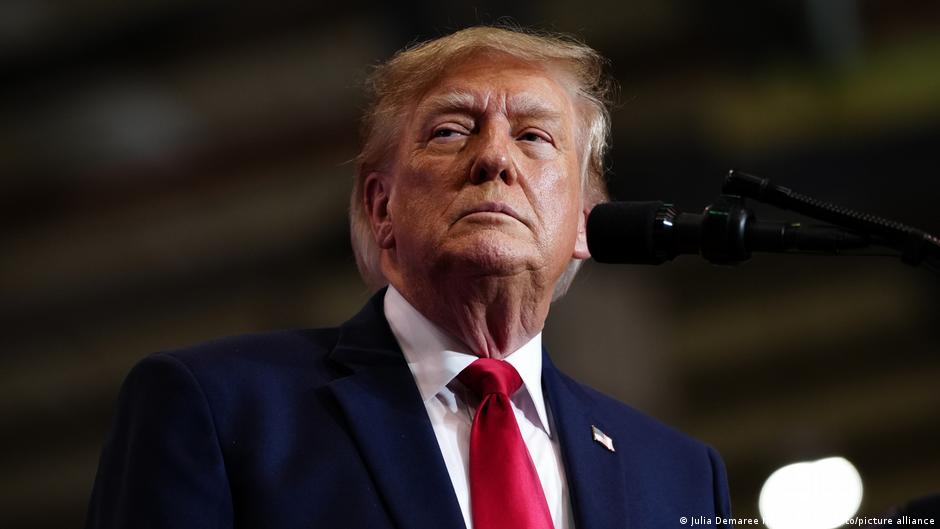
The German automaker, part of Volkswagen AG, intends to manufacture premium sport utility vehicles at the facility in Macon. US President Donald Trump announced the project on Saturday, October 24, during a campaign event in Perry, Georgia. He said the plant was expected to produce 200,000 vehicles annually.
Audi Chief Executive Gernot Döllner, appearing alongside Trump, said the company would manufacture its largest and most premium SUVs in Macon. He described the project as a long-term investment reflecting Audi’s confidence in the US market.
The Georgia project is a long-term commitment to the American market, according to Audi’s chief executive.
Construction is scheduled to begin in 2027, with production expected to start in the early 2030s, according to the company. The factory is projected to create about 4,500 jobs, adding a major advanced-manufacturing employer to Georgia’s industrial economy.
A US administration official told Reuters that the facility would assemble the Audi Q7, Q8 and Q9. Audi also plans to produce 25,000 vehicles annually in neighboring South Carolina.
Tariffs accelerate the localization of production
Until now, Audi has imported every vehicle sold in the United States from Europe or Mexico. That model has become considerably more expensive under tariffs introduced by Trump. The trade measures cost the automaker €1.2 billion in 2025, while Audi’s US sales declined by 16% in 2026, Reuters reported.
The combination of higher import costs and weaker sales provides the immediate economic context for the Georgia investment. A factory capable of producing 200,000 vehicles a year would give Audi a substantial domestic manufacturing base and reduce its exposure to tariffs on imported finished vehicles. It could also shorten supply chains for one of the company’s most important markets, although the degree of protection would depend on where Audi sources components and how future trade rules are applied.
Since beginning his second presidential term in January 2025, Trump has pressed foreign companies to move manufacturing to the United States, threatening high customs duties if they do not. He has promised to remove import tariffs for companies that comply with that demand.
Audi’s decision therefore offers a clear example of tariffs operating not merely as a border measure but as an instrument of industrial policy. The prospect of avoiding recurring trade costs can alter the relative attractiveness of production locations even when building a new factory requires billions of dollars and several years. For senior executives and policymakers, the case highlights how persistent tariff regimes can redirect foreign direct investment and reshape multinational supply chains.
US gains may deepen pressure on Europe
The project also carries consequences beyond the American market. Volkswagen’s supervisory board approved a cost-cutting program in September 2026 under which the group plans to eliminate roughly 50,000 additional jobs worldwide over the coming years. At the same time, the future of four Volkswagen factories—in Emden, Zwickau, Hanover and Neckarsulm—has come into question.
Volkswagen has said production volumes at those sites are not guaranteed beyond 2030, casting doubt on their continued operation. Audi’s planned US factory is expected to begin production during the same broad period, sharpening the contrast between expanding capacity in the United States and uncertain utilization at European plants.
The announcement does not by itself establish that American investment will directly replace production at any particular European facility. Nevertheless, it points to a broader allocation challenge for global manufacturers. Capital directed toward tariff-protected markets may leave less room for investment in existing export-oriented plants, particularly when parent companies are already pursuing large-scale cost reductions.
For the United States, the expected benefits include employment, productive capacity and a larger domestic base for premium vehicle manufacturing. Georgia would gain approximately 4,500 jobs, while Audi would gain a hedge against trade barriers and greater proximity to US consumers. The investment may also strengthen the case for using market access as leverage to attract foreign manufacturing.
For Europe, the longer-term issue is whether its industrial centers can remain competitive as companies localize production in major sales markets. Audi’s move suggests that trade fragmentation may increasingly influence where multinational groups place factories, employment and technological capabilities. The $4 billion commitment is consequently more than a corporate expansion: it is a measure of how quickly the geography of global manufacturing can change when tariffs, market access and industrial policy converge.