Russian Strikes on Zaporizhzhia Highlight Rising Civilian Casualties and Regional Instability
Recent Russian attacks on Ukrainian cities Zaporizhzhia and Kharkiv exacerbate civilian harm amid ongoing conflict, raising broader geopolitical and economic concerns.
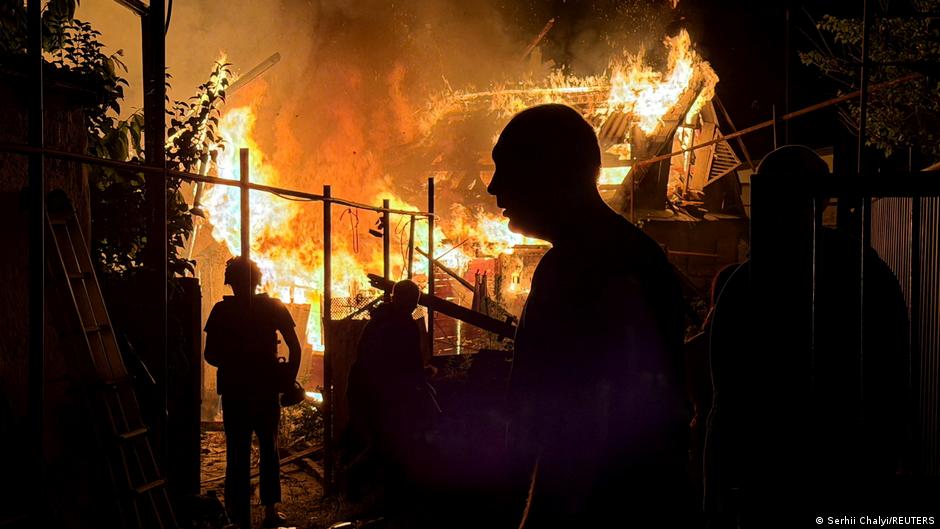
In the early hours of June 23, Russian military forces launched strikes on the Ukrainian city of Zaporizhzhia, resulting in civilian casualties and damage to critical infrastructure. Regional authorities reported that at least two elderly civilians were injured, and several residential buildings, auxiliary structures, and a gas station were damaged or caught fire. Emergency services later extinguished the fires caused by the attack.
Escalating Conflict and Civilian Impact
The attacks in Zaporizhzhia occurred simultaneously with strikes in the southeastern Slobidskyi district near Kharkiv, where two missiles impacted residential areas. Additional Russian drone incursions were reported targeting northeastern districts of Kharkiv, signaling a persistent threat to urban centers in eastern Ukraine. These coordinated assaults underscore the growing intensity of the conflict and its direct toll on civilian populations.
“The rising number of civilian casualties signals a disturbing shift in the nature of the conflict, with broader implications for regional stability and humanitarian conditions,” noted an analysis of recent developments.
The attacks come amid intensified diplomatic activity, including an emergency United Nations Security Council meeting convened on June 22 at Ukraine’s request following a series of mass Russian strikes earlier in June. These strikes notably damaged the Kyiv-Pechersk Lavra, a UNESCO World Heritage site, highlighting the conflict's destructive reach.
Humanitarian and Geopolitical Ramifications
According to the United Nations High Commissioner for Human Rights, May 2024 saw the highest monthly toll of civilian casualties since April 2022, with at least 274 deaths and 1,763 injuries reported. This surge reflects a deteriorating security environment that exacerbates humanitarian needs and complicates conflict resolution efforts.
From a macroeconomic perspective, this escalation risks deepening regional instability, disrupting supply chains, and deterring investment in Ukraine and neighboring markets. The sustained military pressure undermines reconstruction prospects and economic recovery, while escalating tensions could prompt further international sanctions or shifts in energy and trade policies.
Policymakers must weigh these developments carefully, as prolonged conflict may exacerbate global economic uncertainties, particularly in energy markets and commodity supply chains that rely on Ukrainian and Russian outputs. Strategic responses will need to balance diplomatic engagement with support for Ukraine’s sovereignty and efforts to mitigate civilian suffering.
As the situation evolves, continuous monitoring of conflict dynamics and civilian impacts remains essential to inform effective international policy and economic forecasting.