Russia Extends Use of Euro-3 Fuel Standard Until End of 2026 Amid Energy Crisis
Russian government permits circulation of higher-sulfur Euro-3 gasoline and diesel domestically, excluding Eurasian Economic Union exports.
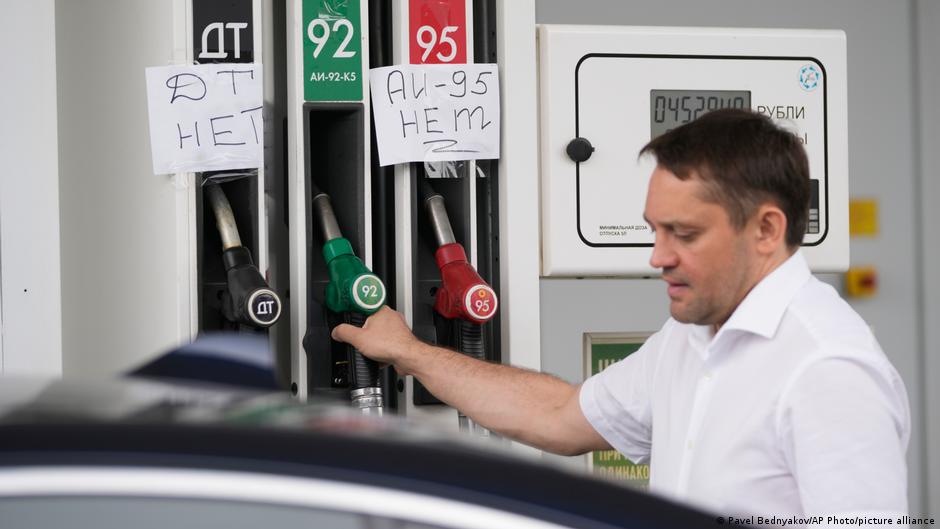
In a significant policy shift, the Russian government has authorized the continued circulation of gasoline and diesel fuels meeting the outdated Euro-3 environmental standard until the end of 2026. The decision, formalized in a government decree signed by Prime Minister Mikhail Mishustin on July 2, represents a strategic response to the escalating fuel supply crisis within the country.
Policy Context and Technical Details
The Euro-3 standard, originally implemented in Europe between 2000 and 2005, permits substantially higher sulfur content in fuels compared to modern benchmarks. Specifically, sulfur concentrations may reach up to 150 mg/kg in gasoline and 350 mg/kg in diesel under Euro-3, compared to just 10 mg/kg allowed under the current Euro-5 standard. This relaxation enables certain Russian oil refineries, constrained by damage or technological limitations, to produce and circulate fuel that would otherwise be considered non-compliant with the latest environmental requirements.
Crucially, the government’s decree stipulates that this lower-standard fuel will not be labeled with the unified product circulation mark used within the Eurasian Economic Union (EAEU) and will be prohibited from export to other EAEU member states. This measure aims to prevent environmental and trade conflicts within the regional bloc while addressing domestic supply stabilization.
"The decision to relax fuel quality requirements represents a preventive measure designed to avoid internal market destabilization," said the Ministry of Energy.
Macroeconomic Drivers and Risks
The reintroduction of Euro-3 fuels reflects deeper structural and geopolitical challenges facing Russia’s energy sector. Since late May, the Russian fuel supply has been severely disrupted by targeted strikes from Ukrainian armed forces on critical refining infrastructure, including the Moscow-area Kapotnya refinery, which supplies approximately 40% of the capital’s fuel. The refinery is expected to remain offline until late 2026 or early 2027.
Consequently, domestic gasoline production has dropped by 25% year-on-year to approximately 85,000 tons per day, while summer consumption demands rise to around 110,000 tons daily. These production shortfalls have triggered official fuel sales restrictions across over 40 Russian regions, with shortages reported in 85 administrative units, including occupied Ukrainian territories.
According to analytics firms, gasoline reserves have shrunk by several hundred thousand tons in recent months, reflecting tightening supply conditions that Russian President Vladimir Putin has publicly acknowledged. The move to permit lower-grade fuels effectively extends the operational capabilities of refineries unable to meet stringent Euro-5 requirements, enabling them to continue producing usable fuel under less demanding specifications.
Dmitry Prokofiev, Communications Director at NEFT Research, highlighted that utilizing lower standards simplifies production by allowing the use of crude oil without deep refining. However, he also warned that Euro-2 or Euro-3 fuels may pose safety and compatibility risks for a significant portion of modern vehicles.
Implications for Russia and Global Energy Markets
This policy pivot carries wide-ranging macroeconomic consequences. Domestically, it signals a pragmatic, if temporary, prioritization of supply security over environmental standards amid ongoing conflict and infrastructure constraints. The decision may alleviate fuel shortages in the short term but could increase pollution and degrade vehicle performance, potentially impacting public health and transport efficiency.
Externally, restricting Euro-3 fuels from EAEU exports preserves regional environmental commitments but also illustrates the divergence of Russia’s energy policies from broader Eurasian integration efforts. The move underscores how geopolitical tensions and military actions can disrupt established energy supply chains and prompt regulatory retrenchments.
For international markets, Russia’s challenges contribute to global energy volatility by constricting exports and heightening uncertainty over its refining capacity. Energy-importing nations dependent on Russian fuels may face supply constraints or need to seek alternative sources, potentially accelerating shifts in global fuel trade patterns.
Overall, Russia’s extension of Euro-3 fuel circulation epitomizes the complex trade-offs governments face amid geopolitical conflicts: balancing urgent economic stabilization against environmental and technological standards with long-term implications for energy security and sustainability.